

Quick Answer
Here's the thing. If your material costs went up 3.5% and you added 3.5% to your quotes, you still lost money. That's because most P&H business owners confuse mark-up with margin, and that maths error costs them thousands every year. To properly reprice, you need to understand your true cost base (materials, labour, overheads, AND employer NI), apply the correct margin percentage, present three pricing tiers so customers feel in control, and communicate the change without apologising for it. This guide walks you through exactly how to do all of that.
Table of Contents
- The 3.5% squeeze: what's really happening to your margins
- Why "just add 3.5%" to your quotes won't fix it
- Mark-up vs margin: the maths most P&H businesses get wrong
- The three-tier repricing framework
- Where to cut costs before you raise prices
- How to tell customers your prices are going up
- Building recurring revenue as a margin buffer
- The repricing timeline: when to adjust and how often
- What tradespeople are saying
- Recommended videos
- Frequently asked questions
- My verdict
The 3.5% squeeze: what's really happening to your margins

Let's cut to the chase. If you're running a plumbing and heating business in 2026, your costs went up. You already knew that. What you might not know is exactly how much, and where the damage is actually coming from.
According to the BCIS (Building Cost Information Service), UK construction costs rose 3.5% in 2025. The material price index for "all work" was up 3.0% year-on-year by November 2025. But those are averages. If you're buying copper, M&E components, or boiler parts, you're looking at 6 to 8% increases in some categories. Plumbing and mechanical and electrical elements have been hit hardest.
And materials are only part of the picture. From April 2025, employer National Insurance went from 13.8% to 15%, with the threshold dropping from £9,100 to £5,000. For a P&H business with three engineers, that's hundreds more per month before you've bought a single fitting. If you use subcontractors, the Construction Industry Scheme adds another layer of tax complexity that directly affects your cost base.
The SNIPEF State of Trade report for Q4 2025 paints a stark picture. 47% of plumbing and heating firms reported falling profit margins, up from 35% the previous quarter. Meanwhile, 93% faced rising input prices. The workload hasn't dropped. The work is still there. But the money left at the end of each job is shrinking.
Why "just add 3.5%" to your quotes won't fix it

Sound familiar? Your supplier puts prices up 3.5%. So you add 3.5% to your next quote. Problem solved. Except it is not.
Here's why. Say you're quoting a combi boiler swap at £3,000. Your materials cost £1,200 and your labour is £800. That leaves £1,000 for overheads and profit. Now materials go up 3.5%. Your new material cost is £1,242. That is £42 more.
If you add 3.5% to the total quote, you get £3,105. That is £105 extra on the price. Sounds like you have covered the £42 material increase with room to spare. But hold on. Your labour cost went up too, because of the NI increase. Your van insurance renewed at a higher premium. Your fuel costs crept up. Suddenly that £105 is not covering everything, and you are working harder for less margin than you thought.
The real problem runs deeper. Most P&H business owners apply percentage increases to the wrong number. They add a percentage to the selling price when they should be recalculating from the cost base up. That distinction, between working from costs and working from price, is the difference between a business that is actually profitable and one that is just busy.
Mark-up vs margin: the maths most P&H businesses get wrong
I call a spade a spade. This is the single most expensive misunderstanding in our industry. I have seen it in hundreds of P&H businesses, from one-man bands to firms with 20 engineers. The confusion between mark-up and margin silently eats profit every single month.
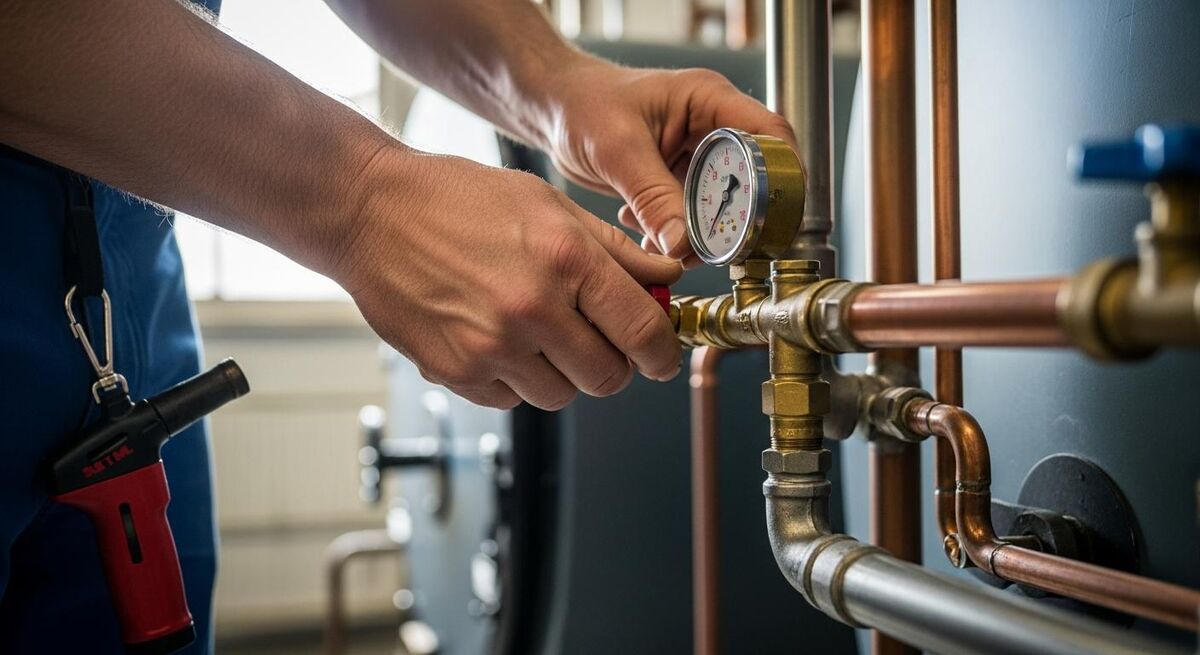
Here is the breakdown. Imagine you are pricing a pump that costs you £100. You decide to add a 20% mark-up. That gives you a selling price of £120 and a £20 profit. Most people think they have just made 20% profit. They have not.
Your profit margin is actually 16.67%. Why? Because margin is calculated on the selling price (£20 divided by £120 equals 16.67%), while mark-up is calculated on the cost (£20 divided by £100 equals 20%). To achieve a genuine 20% profit margin, you would need to add 25% to your cost, giving a selling price of £125.
That gap between 16.67% and 20% might seem small on a single pump. Multiply it across every job, every material, every quote you send out over a year, and you are looking at thousands in lost profit. I have sat with business owners who thought they were running at 25% margins and were actually running at 19%. On a £500,000 turnover, that is £30,000 less than they expected.
The three-tier repricing framework
Here's the thing about repricing. The worst thing you can do is send out a single number and hope the customer says yes. In my eyes, you should always present three options. Not because it is a sales trick, but because it puts the customer in control and anchors the conversation around value, not price.
I use a three-tier approach: Value, Standard, and Premium. Each tier delivers the same core job but at different levels of specification, warranty, or aftercare.
Take a boiler replacement. Your Value tier might include the boiler, standard flue, basic controls, and a 5-year warranty. Your Standard tier upgrades to a smart thermostat, system flush, and 7-year warranty. Your Premium tier adds a magnetic filter, annual service plan for the first year, and a 10-year warranty with priority call-out.
Research consistently shows that most customers choose the middle option. That is your Standard tier, and it should be priced where you want to land. The Value tier exists to show what the minimum looks like. The Premium tier shows what "the full works" costs. Both make the Standard look like the sensible choice.
When you reprice using this framework, you are not just adding 3.5% to one number. You are rebuilding each tier from the cost base up, applying the correct margin (not mark-up), and giving the customer a genuine choice. If you are unsure whether to quote per job, per day, or per metre, our guide to project-based vs day-rate vs per-square-metre pricing covers which model suits different types of work. That is working ON your business, not just IN it.
| Component | Value | Standard | Premium |
|---|---|---|---|
| Boiler and installation | ✓ | ✓ | ✓ |
| Smart thermostat | ✗ | ✓ | ✓ |
| System powerflush | ✗ | ✓ | ✓ |
| Magnetic filter | ✗ | ✗ | ✓ |
| First-year service plan | ✗ | ✗ | ✓ |
| Warranty | 5 years | 7 years | 10 years |
| Price guide | £2,400 - £2,800 | £3,200 - £3,600 | £4,000 - £4,500 |
Where to cut costs before you raise prices
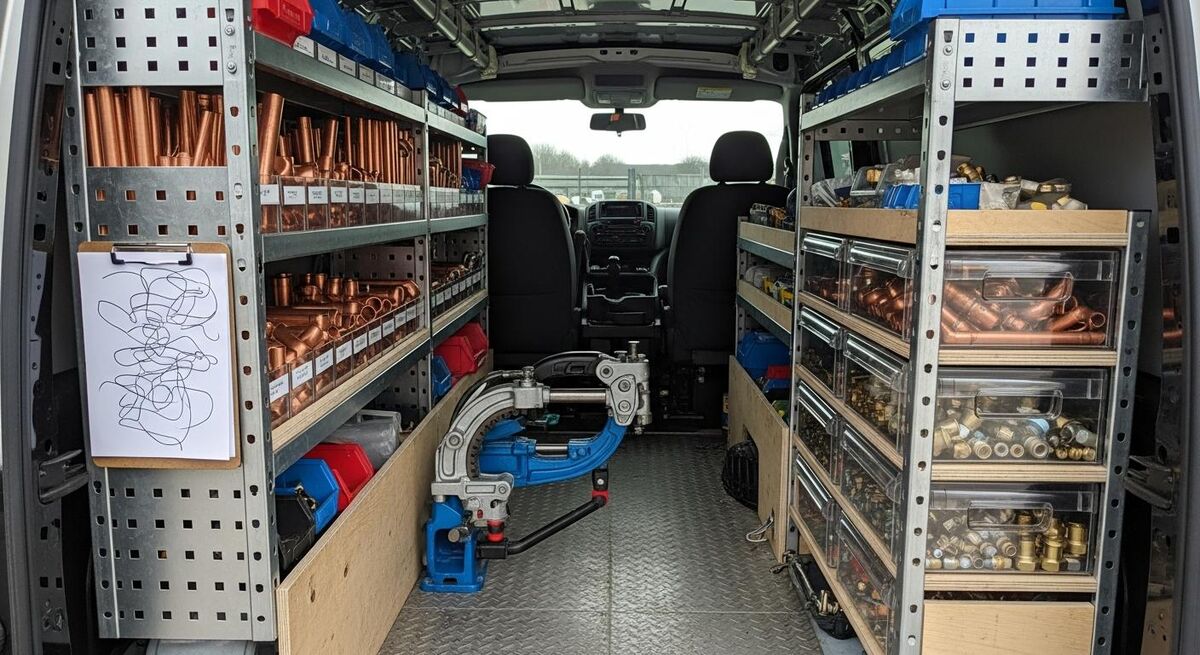
Before you put your prices up, ask yourself a harder question first. Are there costs you can cut? Not corners. Costs. There is a difference.
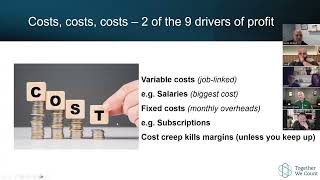
Every P&H business has three types of cost: variable, fixed, and stepped. Variable costs move with your workload, things like materials, fuel, and subcontractor fees. Fixed costs stay the same regardless of how many jobs you do: insurance, rent, vehicle leases, admin salaries. Stepped costs stay flat until you hit a threshold, then jump, like hiring a new engineer when you outgrow your current team.
Start with variable costs. Are you getting the best trade rates from your merchants? When did you last compare prices across two or three suppliers for the same fittings? A job estimate spreadsheet with auto-calculated margins can help you track exactly where your money goes on each project. Fuel is another one. The average UK fuel card user overpays by 7 to 8 pence per litre. On a fleet of three vans doing 25,000 miles a year, that quietly adds up to hundreds wasted.
Then look at fixed costs. When did you last review your insurance? Your accountancy fees? Your software subscriptions? Most businesses sign up, set a direct debit, and forget about it. An annual review of every standing order and direct debit leaving your account takes an afternoon and can save you £2,000 to £5,000 a year.
Cutting costs is the first lever. But it has limits. At some point, you have trimmed what you can trim and there is nothing left to cut without hurting quality. That is when the second lever, raising prices, becomes not just an option but a necessity. And there is nothing wrong with that.
How to tell customers your prices are going up
This is where most tradespeople freeze. They know they need to charge more. They just do not want to have the conversation. So they absorb the cost increase and hope it sorts itself out. It will not.
Let's face it, no one wants to hear that prices are going up. But customers understand cost pressures. They are dealing with the same thing in their own lives: mortgages, energy bills, food shopping. What they do not respect is silence followed by a surprise.
Be upfront. If you are sending quotes at new rates, include a short note explaining why. Not a sob story. A fact. Something like: "Our rates have been adjusted to reflect increases in material costs, employer National Insurance, and insurance premiums since April 2025. We remain committed to delivering the same quality of work and aftercare you expect from us."
That is it. No apology. No lengthy justification. Just transparency. Customers who value your work will stay. Customers who leave over a 5% increase were never going to be loyal anyway. And frankly, those are the customers who haggle on every invoice and pay late.
Building recurring revenue as a margin buffer
Here's the thing about margin pressure. It hurts worst when every pound depends on the next job walking through the door. Recurring revenue changes that equation entirely.
A heat care plan or annual service agreement gives you predictable income that lands in your account every month, regardless of season, regardless of whether the boiler breaks down in July or January. Even 50 customers on a plan at £15 per month is £9,000 a year in guaranteed revenue. That is not all profit, but it is a foundation you can build on.
When recurring revenue covers some of your fixed costs, your reactive work does not need to carry the entire burden. That takes the pressure off your quotes. You can price for genuine profit instead of pricing to keep the lights on.
Structure your plans in tiers, bronze, silver, gold, just like your quotes. The entry-level plan covers an annual service and priority booking. The mid-tier adds breakdown cover. The top tier includes parts, labour, and a replacement guarantee. Price each one from the cost base up, applying your target margin, not mark-up. A bronze plan might cost you £120 a year to deliver, so at a 25% margin you would charge £160 plus VAT. Do the maths properly from the start and each plan is profitable from day one.
The repricing timeline: when to adjust and how often
Repricing is not something you do once and forget about. Costs do not rise once a year in a neat 3.5% block. They shift constantly: copper one month, insurance the next, NI the next. You need a system for reviewing and adjusting your rates on a regular cycle.
Here is the repricing calendar I recommend to every P&H business I work with.
January: Annual cost audit
Review every line item in your cost base. Materials, labour rates, insurance, fuel, subscriptions, accountancy fees. Compare against what you budgeted. Note what has changed and by how much.
February: Set new rates
Rebuild your pricing from the cost base up. Calculate the correct margin (not mark-up). Update your quoting templates with new figures for all three tiers. Test the numbers on a sample job before going live.
March: Communicate to existing customers
Send a brief, professional note to your customer base explaining that rates are being adjusted from April. One month's notice. No drama. Keep it factual.
April: New rates go live
All quotes from this date use updated pricing. Service plan renewals reflect new rates. Any work quoted before April at old rates should be honoured, but set a clear 30-day expiry on all future quotes.
July: Mid-year margin check
Run your management accounts. Compare your actual gross and net margins against your January targets. If costs have moved since April, and they often do mid-year with fuel and materials, adjust your rates promptly.
October: Pre-winter review
Heading into your busiest quarter, confirm your pricing is where it needs to be. Higher demand means better conversion rates, so this is the time to hold firm on your margins, not discount to fill the diary.
What tradespeople are saying
Recommended videos
The plumbing pricing strategy that doubled my profit margin
Trades business coaching
The financial side of running a heating and plumbing business
Industry webinar series

Avoid this pricing mistake: mark-up vs margin
Trades business advice
How much does a plumber cost? Pricing explained
Real pricing from a working plumber

Should you charge flat rate or hourly?
Pricing strategies for plumbers

How to price plumbing jobs
Step-by-step pricing guide
Frequently asked questions
Twice a year minimum. I recommend a full cost audit in January and a margin check in July. If your supplier changes pricing mid-year, do not wait for the schedule. Adjust promptly.
Then they are either absorbing the cost and will not be around long, or they are not VAT-registered and have a different cost base entirely. You cannot set your rates based on what someone else charges. You set them based on what it costs you to deliver the work, plus a fair profit. Competing on price alone is a race to the bottom.
No. Different jobs have different cost profiles. A boiler install is material-heavy, so a 6% rise in boiler prices hits harder there. A bathroom refit might be more labour-heavy, and labour costs have risen at a different rate. Reprice each job type from its own cost base.
Honour any quote that has been accepted. For outstanding quotes that have not been accepted, add a clear validity period. Thirty days is standard. After that, the customer gets a new quote at current rates. Stop sending quotes without expiry dates. It is costing you money.
Some, yes. And that is fine. The customers you lose over a 5% price increase were shopping on price alone. The ones who stay value your reliability, your quality, and the confidence they have in your work. Those are the customers you want.
My verdict
Let's face it, nobody in this industry got into the trade to spend their evenings worrying about margins. But if your costs have gone up 3.5% and you have not repriced properly, you are giving yourself a pay cut. Know the difference between mark-up and margin. Rebuild your quotes from the cost base up. Present three tiers so the customer has a genuine choice. Communicate price changes with transparency, not apology. You deserve to be paid properly for the work you do. A well-run P&H business should be targeting 20 to 25% net profit. If you are below that, something needs to change, and it starts with how you price.