
Quick Answer
Upselling means offering a better version of what the customer already wants. Cross-selling means offering a related thing they will also need. The trick for trades is to do both without sounding like a salesperson. The probability of selling something to an existing customer sits around 60 to 70 percent. For a new one it is 5 to 20 percent. Build trust on the first job, present three clear options on every quote, and ask the right question after the work is done. That is the whole game.
Table of Contents
- What upselling and cross-selling actually mean for trades
- Why existing customers are six times cheaper to grow
- The five touchpoints where value gets added
- Good, better, best: the quote structure that does the selling for you
- The "I noticed" approach: recommending without pressure
- Service plans, maintenance contracts, and recurring revenue
- AI-assisted follow-ups that feel personal
- The line between honest upselling and the cowboy quote
- What tradespeople and customers are saying
- Recommended videos
- Frequently asked questions
- My verdict
 Tradify
 ServiceM8
 Payaca
 Fergus
 ChatGPT
What upselling and cross-selling actually mean for trades

Strip the jargon out and these two ideas are simple. Upselling is offering a better version of the thing the customer already wants. The mid-spec boiler instead of the entry-level one. The pre-finished oak floor instead of the laminate. Cross-selling is offering a related thing they will also need. Power flushing the system while you are fitting the new boiler. Adding a smart thermostat to the same job sheet. Booking the next annual service before you leave.
For trades, both happen on site, usually mid-conversation, often standing in a hallway holding a torch. That makes them different from the upsell at a checkout in a shop. The customer can see you. They can see the job. They can read your face. If anything in your voice says "I am about to sell you something," they shut down. Get it right and they thank you for telling them. Get it wrong and they tell their friends you are a chancer.
The line between the two is paper thin, and it is mostly about timing and motive. Recommending a £40 magnetic filter when you are draining a system that has not had one is good practice. Recommending a £6,000 replacement boiler when a £435 gas valve clean would solve the problem is the kind of thing that ends up on Trustpilot. We will get to where that line sits later in the piece.
Why existing customers are six times cheaper to grow
Run a job once for someone, do it well, and you become the default for the next decade of work in that house. They will not shop you around. They will not get three quotes. They will text the number they have already got. That is the whole opportunity, and most trades leave it on the floor.
The numbers behind this are old, well-documented, and ignored by most of the industry. Research summarised by Shopify and others shows repeat customers spend roughly 67 percent more than first-time buyers, and over time they generate around 65 percent of a typical small business's revenue. The probability of a sale to an existing customer sits at 60 to 70 percent. For a cold prospect it is 5 to 20 percent. Acquiring a new customer costs five to seven times what it costs to keep one. Pick whichever number frustrates you most.
The maths most trades never run
Say your average job is £450. A customer who calls you twice a year for ten years is worth £9,000 in lifetime value. If you upsell a £180 annual service plan on top, that same household becomes a £10,800 customer. Three of them and you have replaced the cost of a Transit van. Without ever paying a lead-generation company.
Tradespeople know this in the abstract. Where it falls apart is the follow-up. The first job goes well, the invoice gets paid, and then nothing. No diary entry for a service reminder, no Christmas text, no "we will be near you next Tuesday if there is anything else you need." Twelve months later the customer has forgotten your number and is back on Checkatrade.
The five touchpoints where value gets added
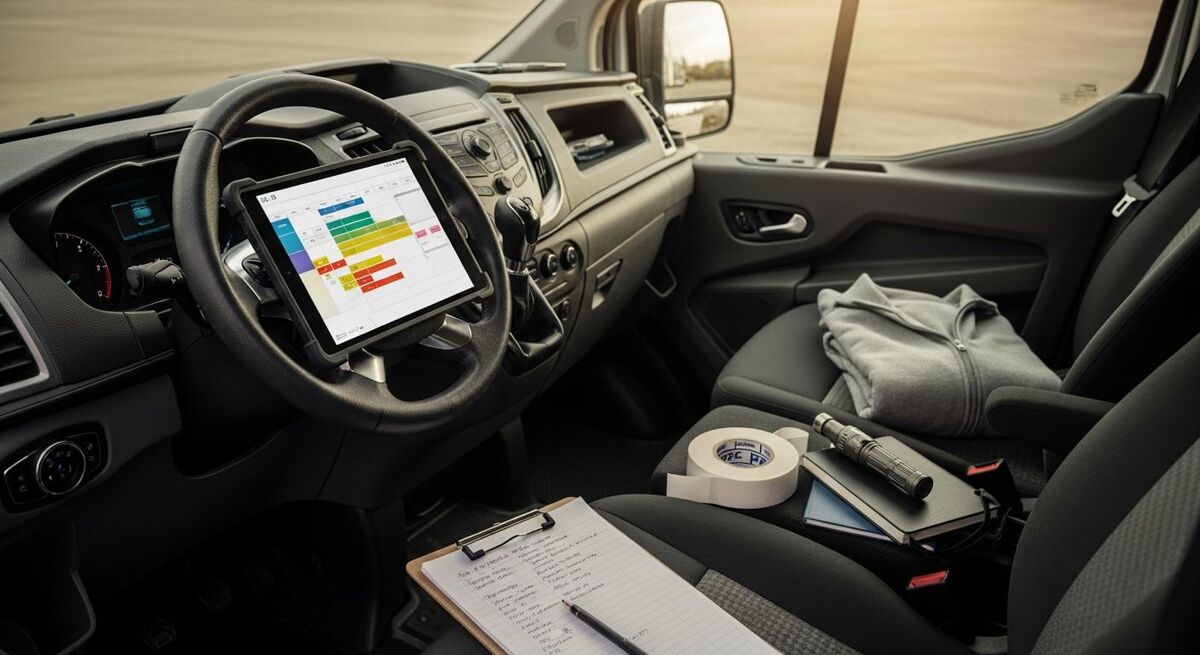
Upselling is not a moment, it is a sequence. Five places where the customer either thinks "this is the firm I want" or thinks "thank you, that will do." Each one matters. Each one is missable.
1. The first phone call or enquiry form
Before you have priced anything, before you have set foot in the house, you are already setting the tone. The customer who calls about a dripping tap is also wondering whether the pipework downstairs is fine, whether the boiler is on its last legs, whether the kitchen tap should match. If your first conversation only addresses the tap, you have already narrowed the job. A simple "while I am there shall I have a look at anything else that is bothering you?" turns a £90 fix into a fact-finding visit.
2. The quote
This is where most trades undersell. A single line that says "supply and fit Worcester Bosch 30Si, £3,200" is leaving money on the table. The same job presented as three options with clear differences will, on the available research, see roughly two-thirds of customers pick the middle one. We go deep on this in the next section.
3. On site, mid-job
You see things the customer does not. A dodgy isolation valve. Cables sharing a chase with no separation. A consumer unit that should have gone in the bin in 2008. The site is the highest-trust moment in the relationship because you are physically demonstrating expertise. Mention what you have seen, photograph it, leave the decision with them. Most customers do not want to be sold to. They do want to be told.
4. On completion, before you pack up
Two questions in the doorway are worth more than a year of marketing. "Is there anything else you wanted me to look at while I am here?" and "Do you want me to set up a reminder for next year's service?" The first finds the small extra job that pays for the return visit. The second turns a transaction into a relationship.
5. Follow-up, days and months later
A photo of the finished work sent over WhatsApp the next morning. A reminder twelve months on for the boiler service. A note about a regulation change that affects their property. Each touchpoint costs you almost nothing and pays back across years.
Good, better, best: the quote structure that does the selling for you
If you only take one thing from this article, take this. Most quoting software lets you build templated options. Most trades do not use it. They write a single price and email it. Then they wonder why customers ghost them and shop around.

The behavioural research on this is consistent and old. When three similar items are priced low, medium, and high, around two-thirds of buyers pick the middle. Marketers call it the compromise effect and it shows up in study after study, from cameras to mouthwash to broadband packages. The "best" tier carries the average up. The "good" tier makes the middle feel reasonable.
For trades, the structure looks like this on a typical job.
| Tier | What it includes | Who picks it |
|---|---|---|
| Good | Core job done to standard. Mid-market parts. Six-month workmanship cover. | Cost-driven buyers, landlords, end-of-tenancy work. |
| Better | Core job plus the obvious add-on (filter, surge protection, smart thermostat, full system flush). Tier-one branded parts. Two-year cover. | Most homeowners. The default choice. |
| Best | Everything in Better plus annual service plan, premium parts, longer warranty, priority response. | Customers who hate hassle more than they hate spending. |
A few rules that matter. Good must not be bad. If the cheapest option is half-finished, untrustworthy, or missing things the customer expects, it makes you look greedy rather than helpful. Good has to be a complete job that you would still be proud to put your name on. The Better tier is where the real margin lives. Best is for the customer who reads the page once and ticks it because they cannot face making the decision.
Tools that make three-tier quoting painless include Payaca, Tradify, and ServiceM8. All three let you save line-item libraries, build option sets, and send the quote as a proper proposal rather than a PDF attachment. Payaca's interactive proposal is strong for higher-value installs. We have a deep dive on Payaca's proposal builder for solar installers that covers the setup in detail.
The two-minute rule for option building
If it takes more than two minutes to add the better and best options to a quote, your template is wrong. Build them once, into your job-type library, and they appear automatically. Every time you re-type them by hand you are paying yourself less.
The "I noticed" approach: recommending without pressure
The single line that does more for upselling than any sales course is this: "I noticed something while I was under the sink. Want me to show you?"
Three things going on. You are saying "I noticed" rather than "you have a problem", which keeps the conversation neutral. You are offering to show, not telling. You are putting the decision back with them. The customer who feels in control buys more, complains less, and recommends you to two other people.

The mechanics matter. Take a photograph. Show it on the phone. Write down what you think the consequences are if it is not addressed and what it would cost to put right. Send the photo and the quote over WhatsApp before you leave. That moves the conversation from a doorstep sales pitch (high pressure, low trust) to a written record (low pressure, high trust). The customer can think about it overnight, share the photo with their partner, and come back with a yes. Most do.
What this approach is not is a script. It is a habit. Every job, every visit, look for one extra thing worth mentioning. Sometimes there is nothing. Saying nothing builds more trust than inventing something. The customers I have known over the years who run the most profitable trades businesses are also the ones who routinely tell customers "honestly, this is fine, leave it." It sounds counter-intuitive. It is the most powerful sales move in the trade. Strong portfolio work helps here too. Our guide on before-and-after photography for trades covers how to capture the proof that makes "I noticed" recommendations land.
Service plans, maintenance contracts, and recurring revenue
The biggest single upsell most trades never offer is an annual service plan. A simple agreement, billed monthly or yearly, that gives the customer scheduled visits, priority response, and a small discount on parts. Done well, it turns one-off jobs into a base of guaranteed annual revenue that does not need re-selling.
Typical UK pricing sits at £150 to £300 a year for a residential plan covering an annual gas safety check and service, with bolt-ons for plumbing or electrics. Some firms charge monthly direct debits. Others bill annually with a discount for upfront payment. Trade Mastermind reports that trades businesses with maintenance divisions typically see a 25 to 40 percent uplift in annual turnover compared to those that only chase new installs.
What a basic residential service plan looks like
Annual boiler service and gas safety certificate. Priority emergency response (four hours rather than queued). 10 percent discount on any parts and labour during the year. Reminder texts in advance of each visit. Monthly direct debit of £14.99, annual £180 if paid upfront. That is a model many UK plumbing firms use and customers happily sign up to because the upfront cost is small and the peace of mind is real.
The reason most trades do not sell service plans is not customer demand. Customers love them. The reason is admin. You need a way to bill recurringly, to schedule the visits, and to remember to actually do them. Software solves all three. ServiceM8 and Tradify both have recurring job scheduling baked in. Tools like Stripe Billing or GoCardless handle the monthly direct debits without you having to chase. Build it once and it runs in the background.
If you want a much deeper look at how to wire the back-office plumbing for this, our systems playbook for trades covers the seven operating systems every business needs to scale beyond the owner. Customer-comms automation is one of them.
AI-assisted follow-ups that feel personal

This is where 2026 actually changes the game. Two years ago a personalised follow-up meant typing one out for every customer. Most trades did not bother. Now you can dictate three lines of context into ChatGPT or Claude and get a professional, customer-specific message back in fifteen seconds. The customer reads something that mentions their kitchen, their boiler model, the dog you stepped over. They feel seen. They reply.
The workflow that actually sticks looks like this. After every job, take a thirty-second voice note on the way back to the van. "Mrs Patel, Wandsworth, Worcester 30i, fitted magnetic filter, mentioned she might want to move the radiator in the dining room before Christmas." Drop it into a free transcription tool like Otter or just use the iPhone voice-to-text. Paste it into a ChatGPT prompt: "Write a friendly two-line follow-up text from a plumber. Reference the work done and the dining room radiator question. British English, no exclamation marks." Send.
If you want this fully automated, our guide to AI-generated marketing content for trades walks through how to chain ChatGPT, Make.com, and your CRM so that the follow-up sends itself with no extra clicks. The same article covers the prompts that work and the ones that produce wooden, obviously-AI replies that hurt rather than help.
The line AI must not cross
Do not use AI to claim things that did not happen. Do not have it invent flattery about a customer's home that you never set foot in. Do not have it reference photos it has never seen. Use it for tone and time-saving. Keep the facts yours. The minute a customer suspects a message is generated, the relationship is damaged.
The other place AI quietly helps is quote follow-up. Most trades send a quote and forget. A short chase three days later, in plain language, lifts conversion rates. The prompt is simple: "Polite chase email to a customer who has not responded to a quote for a boiler installation sent three days ago. Offer to answer any questions. British, warm, two short paragraphs, no pressure." Paste in the original quote. Done.
The line between honest upselling and the cowboy quote
There is a version of this conversation that does not get had often enough in the industry. Aggressive upselling, especially by some larger national firms, has done real damage to public trust in trades. Trustpilot reviews of national chains contain accounts of customers being quoted thousands of pounds for boiler replacements when the actual fix was a cleaned gas valve or a £200 part. One reviewer described being quoted £6,000 for a full replacement before a second opinion fixed the original boiler for £435 in parts. That kind of practice is not upselling. It is something else.
The honest test is brutally simple. If you would not recommend this work to your mum or your best mate, do not recommend it to a paying customer. If the recommendation only makes sense because you need the work today, it is the wrong recommendation. Customers can smell desperation, even when they cannot prove it.
The four upsell red flags
Refusing to do the requested job unless the customer also approves more expensive extra work. Naming a fault that another tradesperson cannot find. Recommending replacement when a repair under £500 would do. Using time-pressure tactics ("this needs doing today or it will fail by the weekend") for non-emergency work. Any one of these and the customer is right to walk.
A useful frame I have always come back to is the question: would I be happy if the next plumber the customer calls is shown the work I just sold them? If the answer is no, the upsell was wrong. If the answer is yes, it was probably the right call. The industry would be a better place if every quote got auditioned against that test.
Reputation is the moat that protects an honest trades business from the chancers. The platforms make this brutally visible now. A customer who feels ripped off goes to Google, Trustpilot, or Checkatrade the same day. Two of those a year and your local pack ranking starts to slide. The long game is the only game. Honest, useful, well-priced upsells build a business that compounds. Aggressive ones build one that needs to keep buying leads. If you are picking which lead-gen platform to use in the meantime, our breakdown of Checkatrade vs Rated People vs MyBuilder covers what each does for repeat custom and what it costs.
What tradespeople and customers are saying
I have lifted the following from real public threads on PistonHeads, UK Business Forums, and a widely-shared LinkedIn essay. Names, quotes, and links are theirs.
Recommended videos
How to up sell on the job as an electrician
Scolmore Group
How to SELL Electrical Work: Pricing, Quotes, Closing the Deal
The 360 Electrician
How to Raise Your Electrical Service Tickets (Without Being Pushy)
Million Dollar Electrician

Electricians: How to Dramatically Improve Your Average Ticket
The Successful Contractor
The 6 Options Secrets for Electricians
Million Dollar Electrician

20% More Revenue: This Cross-Sell Framework Changes Everything
Shawn Casemore

Upsell & Cross-Sell: Grow Revenue from Existing Customers
CodeLucky

How to Scale Your Electrical Business Past $1 Million
Electrician U
Frequently asked questions
Show, do not tell. Photograph anything worth flagging, explain it in plain language, and leave the decision with the customer. The "I noticed" framing keeps it neutral. Drop the pressure and the conversion goes up, not down. A customer who feels in control buys more.
Upselling is a better version of what they were already buying. Cross-selling is a related thing they will also need. On a boiler swap, the upsell is the higher-spec model. The cross-sell is the magnetic filter and the smart thermostat. Both belong on the quote.
Yes. Research summarised by groups like Channel Dynamics finds around 87 percent of buyers prefer having a choice. The compromise effect means roughly two-thirds will pick the middle option. A single take-it-or-leave-it price loses both groups.
Most trades report a 15 to 30 percent uplift in average job value once three-tier quoting is in place. A service plan layered on top adds another £150 to £300 per customer per year. Combined, you are looking at a 25 to 40 percent annual turnover lift, which mirrors what Trade Mastermind have reported across the trades they coach.
Payaca for higher-value interactive proposals (great for solar, heat pumps, full bathrooms). Tradify for general trades quoting and invoicing. ServiceM8 for mobile-first job management. All three support saved option libraries and recurring service plan billing.
For jobs over about £3,000 it is worth considering. Customers pay monthly, you get paid in full upfront from the finance provider. Brokers like Kanda and Propensio are common in UK trades. Add the option to the quote without making it the lead. Customers who can afford to pay outright still appreciate the option.
Aim for 15 to 25 percent of annual turnover from service plans and maintenance contracts within three years of starting them. That is the level where the recurring base actually smooths cash flow over winter and gives you the breathing room to be choosier about new work.
When you would not recommend it to your own family. When you refuse the requested job unless extra work is approved. When you invent a fault. When you use time pressure on non-urgent work. When you replace what could be repaired for a fraction of the cost. Any one of those and the line has been crossed.
My verdict
Stop selling. Start serving.
The best upsellers in the trade do not feel like upsellers. They feel like the engineer who told you the truth, gave you a few options, and let you choose. That is the entire skill. Build three-tier quotes by default. Use the "I noticed" line on every job. Send a follow-up the next morning. Offer a service plan to anyone who calls you twice. Use AI to write the follow-ups so they actually go out. Honest, useful upselling builds a business that compounds. Aggressive selling builds one that needs to keep buying leads. Pick the long game.