
Quick Answer
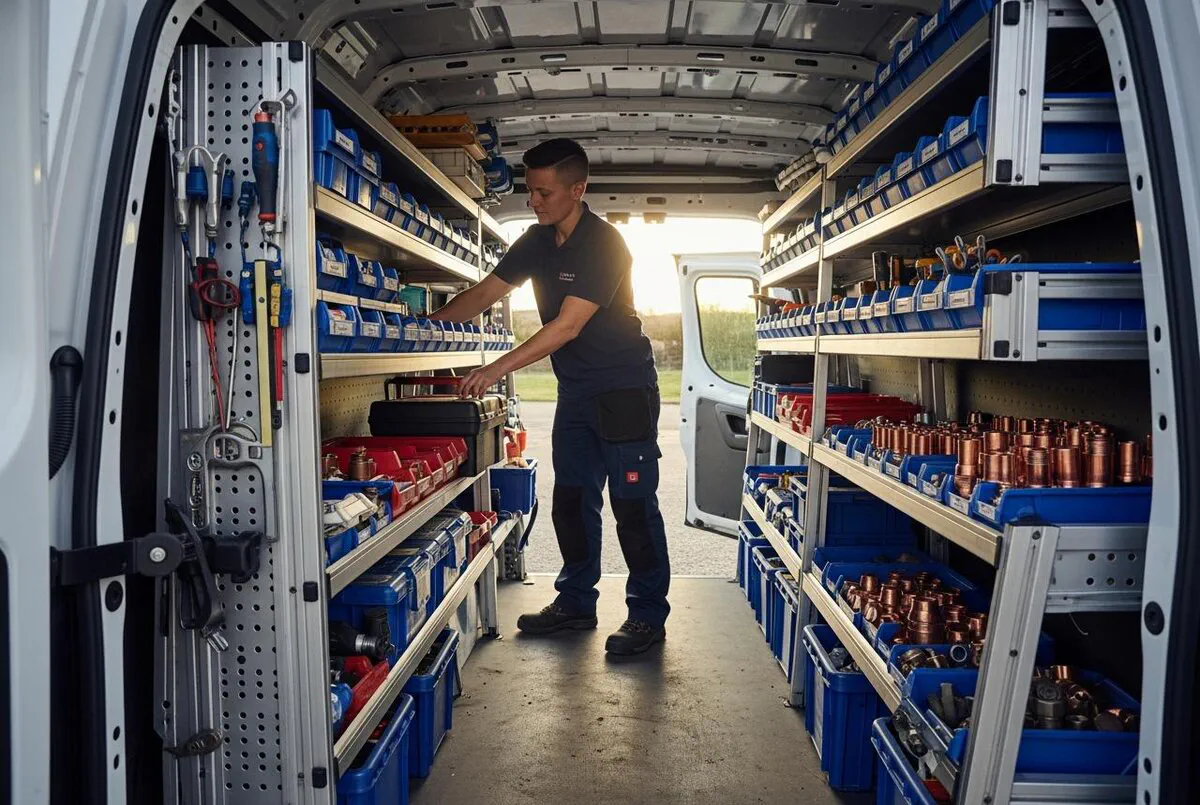
A properly fitted van saves around 38 hours a year in lost tool time. That is nearly a full working week. For most trades, you are looking at three tiers: DIY plywood at £150–£400, aluminium kits like Van Guard at £500–£1,300, or professional systems from Bott or Sortimo at £1,500–£5,000. Aluminium weighs roughly half what plywood does and lasts three times as long. Plan your layout around how you actually work, check your payload limits before you commit, and get it sorted sooner rather than later.
Table of Contents
- Why van organisation pays for itself
- Types of van racking: steel, aluminium and plywood
- The top UK van racking brands
- Matching racking to your van model
- DIY plywood fitout: costs and how to do it
- Professional fitout: what you get for the money
- Planning your layout
- UK payload regulations you need to know
- Digital inventory and tool tracking
- What tradespeople are saying
- Recommended videos
- Frequently asked questions
- My verdict
 Bott
Bott Sortimo
 Van Guard
 Modul-System
Why van organisation pays for itself
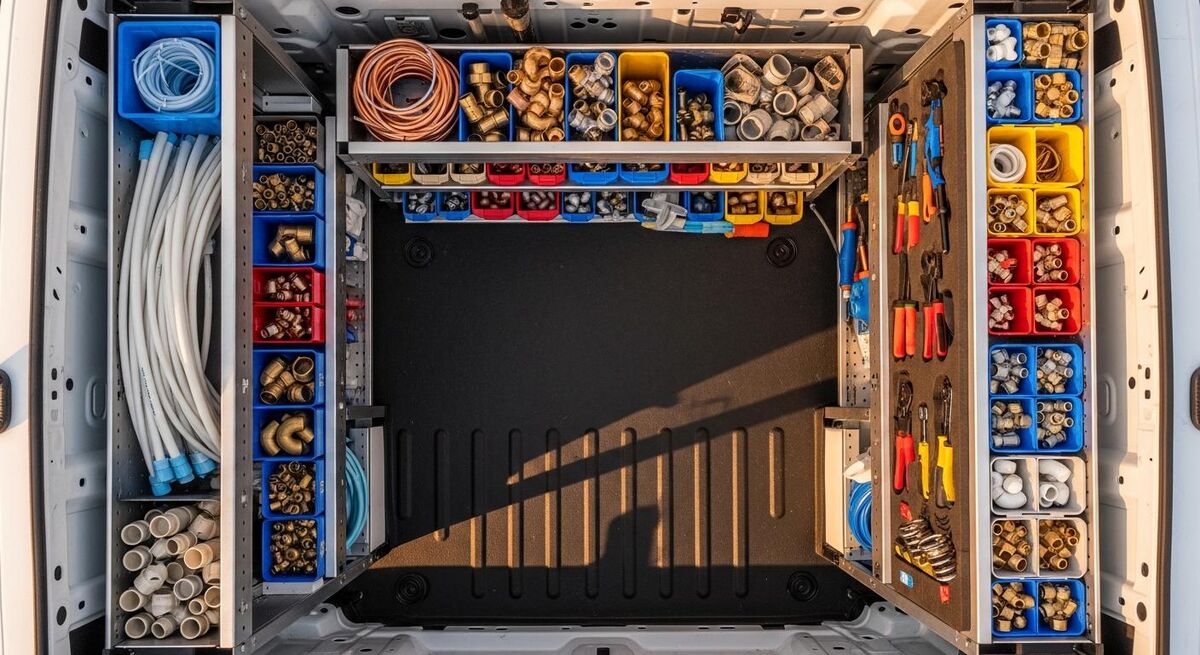
Construction workers spend 38 hours a year looking for tools. That comes from an ABAX study, and when you scale it up, a 10-person team loses 380 hours annually. At £25 an hour, that is close to £10,000 a year vanishing into the back of a messy van.
There is a security angle too. A well-organised van with proper racking and locking compartments is harder to rob quickly. Tool theft cost UK tradespeople £40 million in 2024, with the average incident running to £1,565. One theft every 21 minutes. If a thief opens your rear doors and sees labelled, locked drawers instead of loose tools on the floor, they are more likely to move on to an easier target. We covered this in detail in our van security guide.
Then there is fuel. Every 100 kg of additional weight increases fuel consumption by about 5%, costing £180–£250 extra per year. A documented fleet in Manchester reported 0.8–1.2 mpg improvement across 12 vehicles after switching from plywood to lightweight aluminium racking. Over a five-year racking lifespan, that fuel saving alone can cover a third of the upgrade cost.
And there is the professional presentation side. When you open your van doors at a customer's home, what they see shapes their confidence in you. A clean, organised workspace signals that you take your craft seriously. That matters more than most tradespeople realise.
38 hours of lost time at £25/hr = £950/year per person. Add fuel waste from carrying unnecessary weight and the cost of replacing tools you already own but cannot find, and most tradespeople are losing £1,500–£2,000 a year to poor van organisation. A decent racking system pays for itself within 12–18 months.
Types of van racking: steel, aluminium and plywood
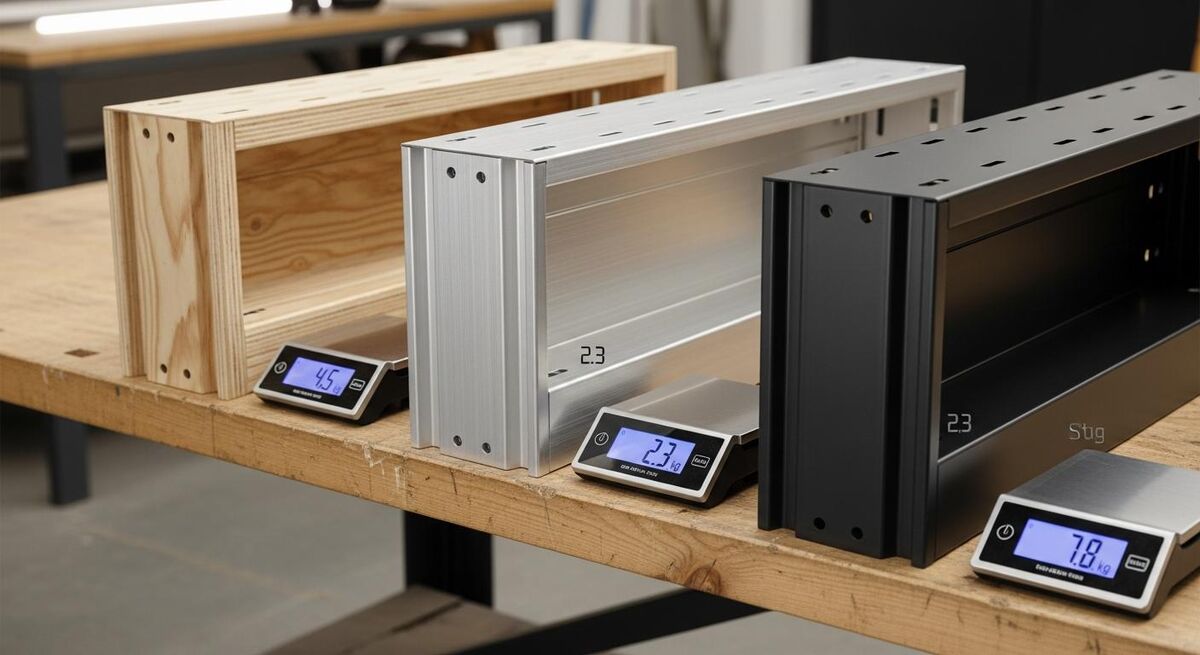
Every van fitout starts with the same question: what material? The three options each suit a different stage of business and budget. Here is how they compare on the numbers that actually matter.
| Factor | DIY plywood | Aluminium (Van Guard etc.) | Steel (Bott, Sortimo etc.) |
|---|---|---|---|
| Typical system weight | 150–170 kg | Under 90 kg | 200–320 kg |
| Material cost | £150–£400 | £500–£1,300 | £800–£3,000+ |
| Installation time | 12–16 hours (self) | 1.5–3 hours (self) | Professional (1 day) |
| Lifespan | 3–5 years | 10+ years | 15+ years |
| Rust resistance | Swells with moisture | Fully rust-free | Needs coating |
| Crash tested | No | Most brands | Yes (Bott, Sortimo) |
| Reconfigurable | Fixed once built | Modular | Fully modular |
| Best for | Tight budgets, carpenters | Mid-range, most trades | Fleets, long-term investment |
Plywood is cheap and familiar. If you are a carpenter, you can build exactly what you need in a weekend. But plywood absorbs moisture, gets heavier over time, and cannot be reconfigured when your tool kit changes. One documented full plywood build weighed 169 kg, including 20 kg of lining, 105 kg of 18 mm ply, 24 kg of 12 mm ply and 20 kg of fasteners.
Aluminium is the sweet spot for most sole traders. It is roughly half the weight of plywood for equivalent structural strength, completely rust-free, and most systems are modular enough to reconfigure when you change van or trade focus. Van Guard, a British manufacturer, sells individual units from £440 and full kits from £638 inc VAT.
Steel is the professional fleet standard. Brands like Bott and Sortimo crash-test their systems and offer 15-year-plus lifespans. The downside is weight: a full steel setup can add 200–320 kg to your van. That said, Modul-System now makes ultra-high-strength steel racking that achieves aluminium-like weights at four times the structural strength of conventional steel.
If you drive an electric van, battery mass already eats into your payload. The good news: UK law now allows electric vans up to 4,250 kg on a standard Category B licence. But every kilogram still counts for range. Bott and Modul-System both offer EV-specific racking with no-drill mounting using aviation-grade adhesive, avoiding any risk to the battery housing.
The top UK van racking brands
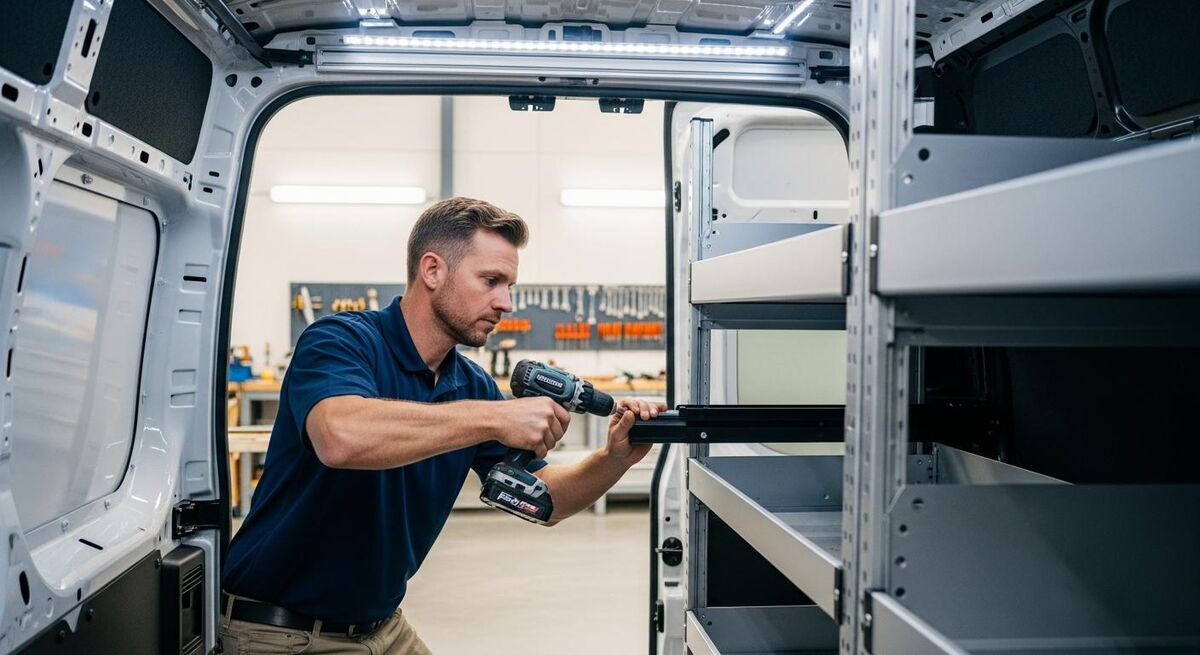
The UK van racking market has five serious players and a handful of budget alternatives. Here is what you need to know about each one.
Bott (from £229 per module)
German-engineered, UK-stocked. The Bott vario3 and modulo3 systems are crash-tested to ECE R17 standards and compatible with Festool and Makita system cases. Their Smartvan online configurator gives you live pricing as you build your layout. Self-fit modules from £229; full professional fitouts from around £1,500–£3,500. They dispatch within 24 hours and have a national installation network.
Sortimo (configurator pricing)
The SR5 is their fifth-generation modular system. Sortimo do not publish fixed prices, but their online configurator at mysortimo.co.uk shows real-time costs as you add components. Free consultations and non-binding quotes available. Free shipping over £75. They are the premium option, but the build quality is exceptional.
Van Guard (from £440 per unit)
Designed and manufactured in Britain. Lightweight aluminium construction with a tiered system: Bronze (£638–£1,270 inc VAT), Silver (from £767), and Gold (full-featured with drawers, bins and rubber matting). Available at Screwfix, which means next-day collection from 800+ stores. Self-fit in around 1.5 hours.
Modul-System (quote-based, formerly Tevo)
The specialist choice for fleets and electric vehicles. Their ultra-high-strength steel is four times stronger than conventional steel at comparable weight. They offer a full CAD design service and EV-specific solutions using glued attachment points. Contact their UK team on 01628 528034. Worth the quote if you are running five or more vehicles.
System Edström (quote-based)
Swedish manufacturer chosen by Renault UK for their dealer network. Shelves hold up to 70 kg each; drawers hold 40 kg and extend to 105% depth. Five-year warranty. UK stock dispatched within seven days. Their online configurator helps you design before requesting a price.
Budget options: Vanimal and Vanrack
Vanimal makes pre-cut FSC-certified plywood racking in North Yorkshire. Push-fit mortise and tenon joints, no tools needed, assembly in about 10 minutes. Vanrack (4.8 stars from 35 Google reviews) sells pre-assembled shelves that ship flat and bolt together. Both are solid options if you want something between pure DIY and professional aluminium.
Matching racking to your van model
The loadspace dimensions of your van dictate what racking fits. Here are the five most common trade vans in the UK and their key measurements.
| Van model | Load length (SWB/LWB) | Width between arches | Load height | Volume |
|---|---|---|---|---|
| Ford Transit Custom L1/L2 | 2,555 / 2,922 mm | 1,351 mm | 1,406 mm | 6.0–6.8 m³ |
| Mercedes Sprinter L1/L2 | 2,732 / 3,397 mm | 1,412 mm | 1,789–2,009 mm | 9–14 m³ |
| VW Transporter T7 L1/L2 | 2,602 / 3,002 mm | 1,250 mm (est.) | 1,410 mm | 5.8–6.8 m³ |
| Vauxhall Vivaro L1/L2 | 2,512 / 2,862 mm | 1,258 mm | 1,397 mm | 5.3–6.6 m³ |
| Citroën Berlingo M/XL | 1,817 / 2,167 mm | 1,200 mm (est.) | 1,200 mm | 3.3–3.9 m³ |
The Transit Custom is the default UK trade van for good reason: the 1,351 mm width between wheel arches fits a standard 1,250 mm racking unit perfectly with clearance. Bott, Sortimo, Van Guard and Modul-System all offer Transit Custom-specific kits.
If you drive a Berlingo or similar small van, space is tight. Mike from Residual Current fitted Bott Smartvan racking into a Berlingo and spent weeks planning the layout. His advice: measure everything, use the online configurator, and accept that you will need to be more selective about what you carry.
For Sprinter and Crafter owners, the extra height opens up three-tier racking. That means you can run a full shelf system on one side, a drawer unit on the other, and still have floor space for larger items like boilers or lengths of pipe.
The width between wheel arches is the dimension that limits racking width. It varies by 150+ mm between van models. Every racking brand sells vehicle-specific kits for a reason. Do not assume a Transit kit fits a Vivaro.
DIY plywood fitout: costs and how to do it
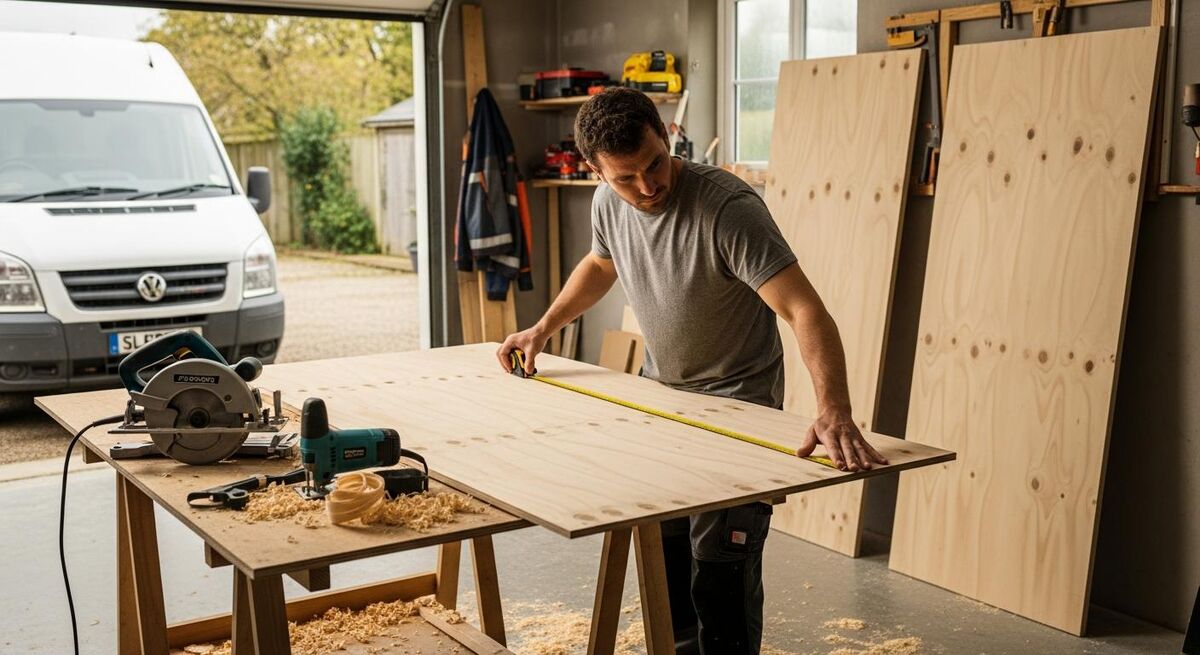
If your budget is under £500, plywood is the realistic option. Here is what it actually costs.
Materials breakdown
Quality birch plywood runs £45–£65 per sheet (18 mm). Most vans need 3–4 sheets. Professional-grade mounting hardware (brackets, screws, treatment) adds £80–£120. Total materials: £150–£400. You will need a circular saw, jigsaw, drill, and measuring tools. If you do not own these, tool hire runs £30–£50 for the project.
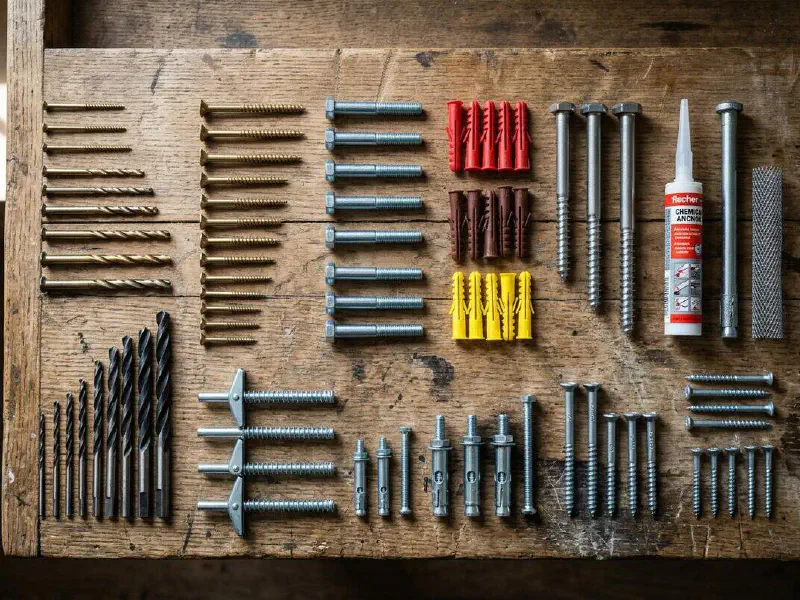
Use 12–15 mm ply for shelves and 18 mm for structural uprights and any span over 600 mm. Treat all cut edges with PVA or yacht varnish to slow moisture absorption. The fixings guide covers the best fastener choices for securing to van metalwork.
Common mistakes to avoid
The number one mistake is not lining the van first. Bare metal sweats in cold weather, and that moisture will swell your plywood within months. Line with 3 mm ply or carpet first. The second mistake is building fixed shelves that cannot be adjusted. Leave yourself some flexibility, even if it means adding extra bolt holes you might not use straight away.
Third: forgetting about weight. A full plywood build including lining can hit 170 kg. On a Transit Custom with a 3,500 kg GVW and 1,000 kg payload, that is 17% of your carrying capacity gone before you load a single tool. Think carefully about whether the weight trade-off makes sense for your situation.
Professional fitout: what you get for the money
A professional fitout from a company like Bott or Sortimo starts around £1,500 for a standard medium van and can reach £5,000+ for a fully bespoke large van. Van Fit Solutions quote £1,800 for a standard small-to-medium van installation, completed in a single day.
What does that money buy? Crash-tested racking (ECE R17 standard), precise vehicle-specific mounting, professional wiring for any 12V accessories, and a warranty of 5–15 years depending on the brand. The racking arrives pre-assembled with vehicle-specific brackets. Installation typically takes 3–5 hours.
The crash-testing matters more than most people think. In a 30 mph collision, a loose 5 kg drill becomes a 150 kg projectile. Crash-tested racking keeps your tools in place. That protects you, your passenger, and anyone you might hit. It also protects your insurance claim. If an accident investigation finds unsecured tools contributed to injuries, your liability position gets complicated fast.
All van modifications must be declared to your insurer, no matter how minor. Failure to declare can void your policy entirely. The upside: security upgrades like locking racking and alarm systems can actually reduce your premiums. Get the fitout documented and notify your insurer the same week.
Planning your layout
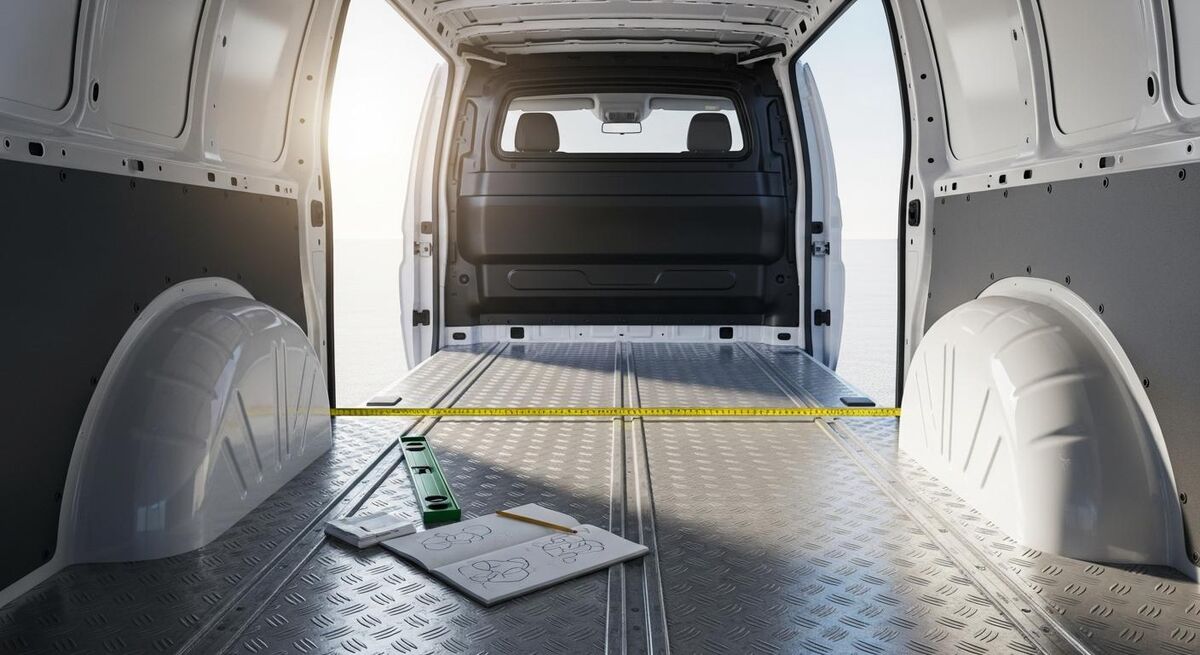
The best van fitouts start with a plan, not a purchase. Spend a week tracking which tools you reach for on every job. You will find that about 20% of your tools get used 80% of the time. Those go in the quick-access zone: near the side door, at waist height, with no other tools blocking them.
Think in three zones. Zone one is quick-access: hand tools, meters, common consumables. This faces the side sliding door so you can grab what you need without climbing in. Zone two is bulk storage: lengths of pipe, cable drums, spare parts. This goes at the back or on the floor. Zone three is secure storage: power tools, testing equipment, anything expensive. This goes in locked drawers or a vault at the bottom of the racking.
Glen Wakeling, a plumber and heating engineer from Leicester, puts it plainly: the beauty of modular racking is that you can change it as your needs evolve. He has bought Bott systems five times now, upgrading each time he changed van. That flexibility is worth the premium over fixed plywood.
If you are planning for a fleet, standardise the layout across all vehicles. When an engineer can jump into any van and know exactly where the 22 mm compression fittings live, you save time across every job. It also makes stock checks faster and apprentice onboarding smoother, because there is one system to learn, not seven.
UK payload regulations you need to know
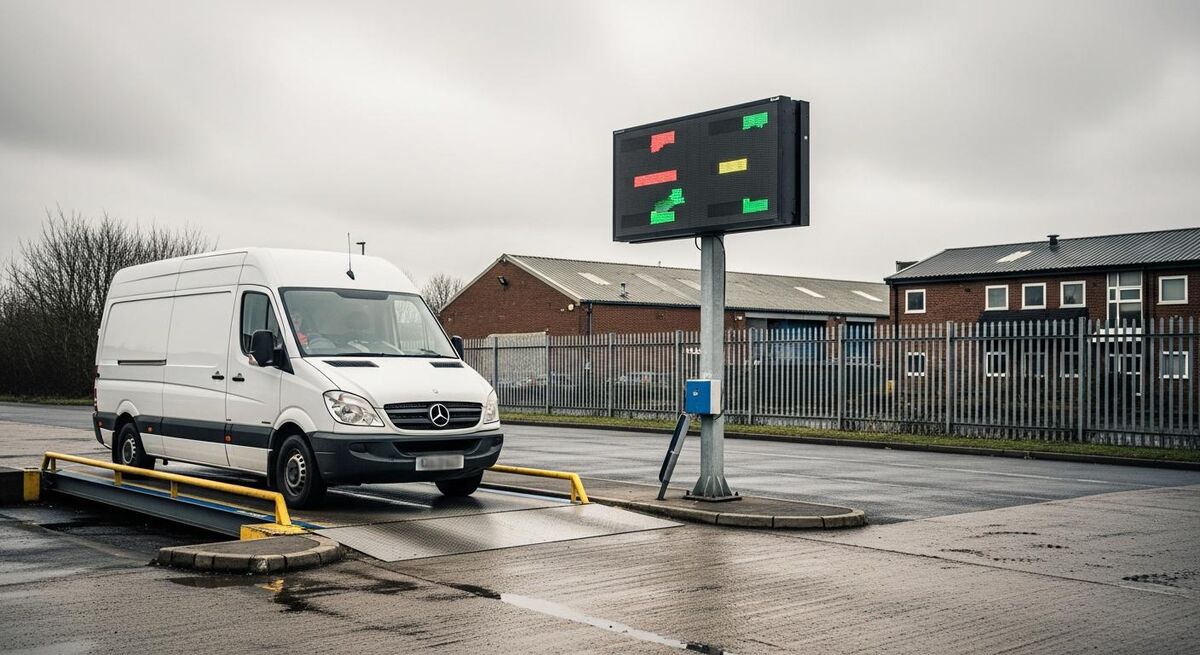
The maximum gross vehicle weight for a standard Category B licence is 3,500 kg. That is non-negotiable unless you drive an electric van, which can go to 4,250 kg. Everything above the kerb weight, including you, your tools, your racking, your materials, and your breakfast, counts towards that limit.
The enforcement numbers are sobering. In 2025, van overloading fines in the UK hit £450,000, a record year. Sixty percent of all light goods vehicle offences between 2021 and 2025 were overloading-related. The average fine per conviction in Q1 2025 was £9,882. The DVSA allows a 5% leeway before penalties kick in, but on a 3,500 kg van, that is only 175 kg of buffer.
If you are over the limit at a roadside check, the penalties escalate: £100 for 0–9.99% over (after the 5% leeway), and court prosecution up to £5,000 per axle point for serious overloads. A maximum of six axle points means a theoretical ceiling of £30,000. Both the driver and the employer can face fines and criminal charges.
Load securing rules
Under HSE guidance and the DfT Code of Practice for Safety of Loads on Vehicles, your load securing system must withstand forces of 100% of the load weight forward, 50% sideways, and 50% rearward. In plain terms: if your tools weigh 200 kg, they need to stay put under a force equivalent to 200 kg pushing them towards the cab in an emergency stop.
Crash-tested racking from brands like Bott and Sortimo meets this standard by design. DIY plywood racking does not come with any load-securing certification. That does not mean it is illegal, but it means the responsibility for proving it is adequate falls entirely on you. If a 15 kg angle grinder comes loose in a collision and injures someone, you and your employer are liable.
Visit a public weighbridge (£10–£15) before and after your racking install. Subtract the result from your GVW to know your true remaining payload. A 170 kg plywood build on a Transit Custom with 1,000 kg payload leaves you just 830 kg for tools, materials and yourself. That can vanish fast on a boiler install day.
Digital inventory and tool tracking
Physical organisation is only half the job. If you do not know what is in your van without opening every drawer, you are still wasting time. Digital inventory tools close that gap.
Hilti ON!Track is the industry leader for tool tracking. It uses durable asset tags and inventory gateways to track tools automatically from warehouse to van to job site. The desktop and mobile apps give you real-time visibility of every tagged asset, including cost reporting by job, time period, or individual tool. It is not cheap, but for a business running £10,000+ of tools across multiple vans, the ROI comes from reduced loss and faster audits.
For fleet-level tracking, GPS platforms like Fleetsmart and Ram Tracking (5 out of 5 on Trustpilot) combine vehicle tracking with driver behaviour analysis. The numbers are persuasive: 16% reduction in fuel costs, 22% lower accident costs, and 16% cut in labour costs according to fleet management industry data. Geofencing lets you set alerts when a van leaves or enters a defined area, which is useful for both security and job scheduling.
Even a simple spreadsheet beats nothing. List every tool by category, value, and which van it lives in. Update it monthly. When you know you own 14 adjustable spanners spread across three vans, you stop buying a 15th because you cannot find one. The software stack guide covers broader automation options for trades admin.
What tradespeople are saying
Recommended videos
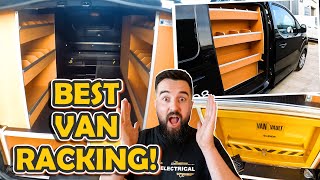
THIS VAN RACKING IS UNREAL!
Finney Electrical Top Electrician
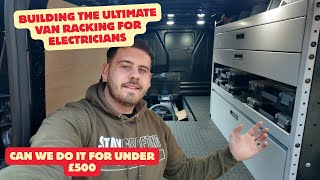
Ultimate van racking for electricians, under £500?
OM Electrical
Building the Ultimate Van Racking for a Plumber
SmartPipe Plumbing
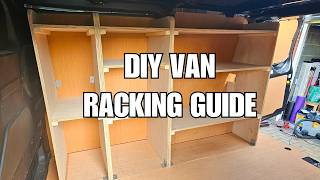
Building DIY Van Racking in 48 hours! FULL Guide
retro_restorations
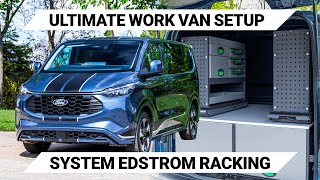
System Edström Racking in Ford Transit Custom
CBS Automotive
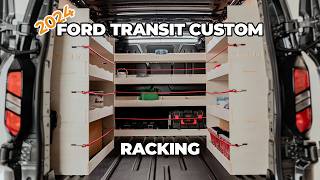
Ford Transit Custom Ply Van Racking
Vanimal

BEST small van racking for a plumber
professor plumb

Ford Transit Custom Racking Upgrade, Electrician Setup
Eastway Electrical
Frequently asked questions
DIY plywood: £150–£400. Aluminium kits (Van Guard): £500–£1,300. Professional systems (Bott, Sortimo): £1,500–£5,000. The sweet spot for most sole traders is aluminium at around £700–£900 for a single-side kit.
Plywood systems typically weigh 150–170 kg. Aluminium systems sit under 90 kg. Steel systems can reach 200–320 kg. Always check your remaining payload after fitting. A public weighbridge costs £10–£15 and takes five minutes.
Yes, always. All modifications must be declared. Failure to declare can void your policy entirely. On the plus side, security-enhancing modifications like locking drawers can lower your premium.
Plywood racking is legal, but it is not crash-tested. The responsibility for proving your load is properly secured falls on you under the Road Traffic Act. If tools come loose in a collision and injure someone, you face liability. Crash-tested metal racking removes that risk.
Modular aluminium and steel systems from Bott, Sortimo and Van Guard are designed to be transferred. You may need new vehicle-specific mounting brackets (typically £50–£100), but the shelves and drawers move across. Plywood racking is generally single-use.
Bott Smartvan and Van Guard both make Berlingo-specific kits. With only 3.3–3.9 m³ of space, focus on a single racking unit with maximum drawer density. Plan meticulously and be selective about what you carry daily.
My verdict
Your van is your workshop, your stockroom, and often the first thing a customer sees. Treating it as an afterthought costs you time, money and professional credibility. Invest in a proper racking system, plan the layout around how you actually work, and keep your payload legal. For most sole traders, an aluminium kit from Van Guard at £600–£900 is the right balance of weight, cost and longevity. If you are running a fleet, Bott or Modul-System will give you the standardisation and crash-testing your insurance company wants to see. Either way, get it sorted. The PPE guide and drone survey guide cover other essential kit investments for 2026.
Get more practical guides for your trades business
TrainAR Academy publishes free, no-nonsense guides for UK tradespeople every week. From fixings and materials to van security, business software, and compliance, it is all written by people who have actually done the work.
Explore TrainAR Academy