
Quick Answer
A full van wrap costs between £1,500 and £3,500 depending on vehicle size. It lasts 5 to 7 years and generates roughly 30,000 impressions per day in urban areas. The cost per thousand impressions sits under £0.10, compared to £4 to £10 for radio. For most mobile trades businesses, a wrapped van is the single most cost-effective form of local advertising you can buy.
Table of Contents
- The real cost of van wrapping in 2026
- How many impressions does a wrapped van actually get?
- Tracking enquiries back to your van
- Full wrap vs partial wrap vs vinyl lettering
- Design principles that generate enquiries
- AI route planning and maximising exposure
- Tax deductions and insurance implications
- Durability, maintenance, and when to replace
- What tradespeople are saying
- Recommended videos
- Frequently asked questions
- My verdict
 Quartix
 Vimcar
 Teletrac Navman
The real cost of van wrapping in 2026
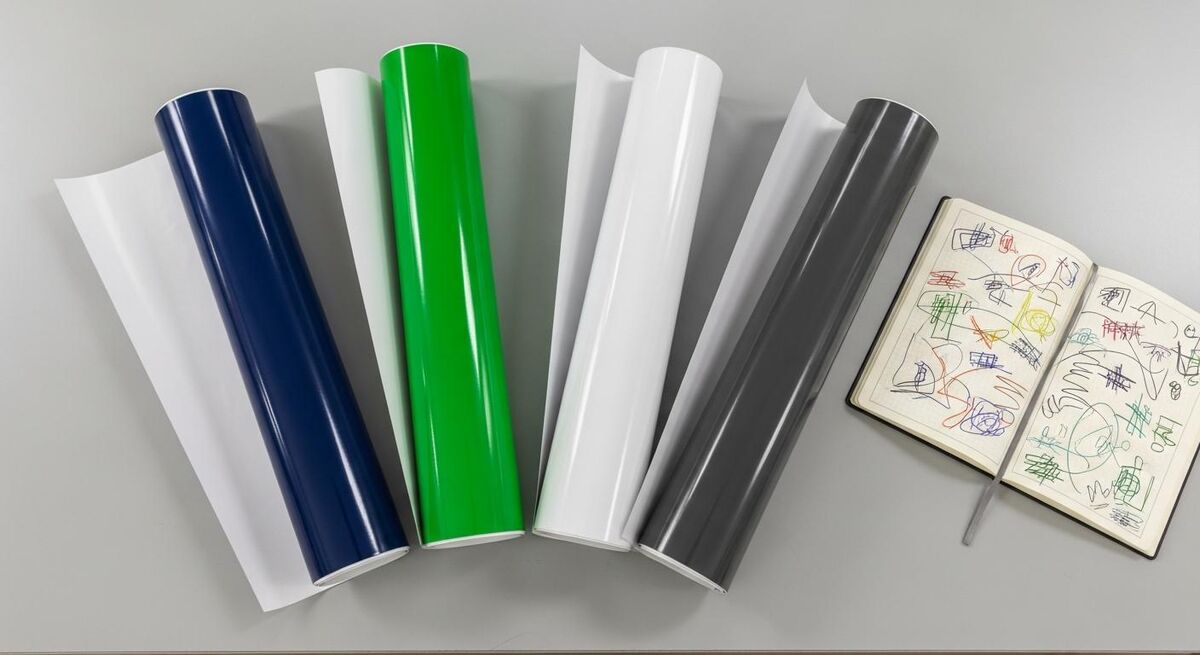
Van wrapping costs vary widely. A basic set of vinyl letters with your name and number starts at around £200. A full wrap on a large Sprinter or Crafter can push past £3,500. The table below pulls together current UK pricing from multiple suppliers.
These figures exclude VAT. Most wrap companies quote ex-VAT, so add 20% to get your actual outlay. If you are VAT-registered, you claim that back.
Design work is sometimes included, sometimes not. Budget £150 to £500 for bespoke artwork if your wrap company does not bundle it in. A few will offer templated designs for less, but those rarely stand out on the road.
| Wrap Type | Small Van (Transit Connect, Caddy) | Medium Van (Transit Custom, Trafic) | Large Van (Sprinter, Crafter) |
|---|---|---|---|
| Basic vinyl lettering | £200 - £400 | £250 - £500 | £300 - £500 |
| Logo and text package | £400 - £650 | £500 - £800 | £600 - £800 |
| Partial wrap (sides and rear) | £750 - £1,000 | £800 - £1,200 | £1,200 - £1,500 |
| Full wrap | £1,500 - £2,200 | £1,750 - £2,500 | £2,200 - £3,500 |
| Fleet rate (5+ vans, per van) | £1,350 - £2,000 | £1,575 - £2,250 | £2,000 - £3,150 |
Most wrap companies offer 5% to 10% off per van for orders of five or more vehicles. If you are running a fleet, ask for a volume rate before you commit. The per-van saving on a 10-van fleet can easily reach £1,500 or more across the order.
Additional costs to factor in: van cleaning and degreasing before application (£50 to £150), removal of existing graphics (£100 to £300), and any paint correction needed on older panels. A reputable installer will not apply wrap film over damaged paint, so factor this in if your van has seen better days.
How many impressions does a wrapped van actually get?
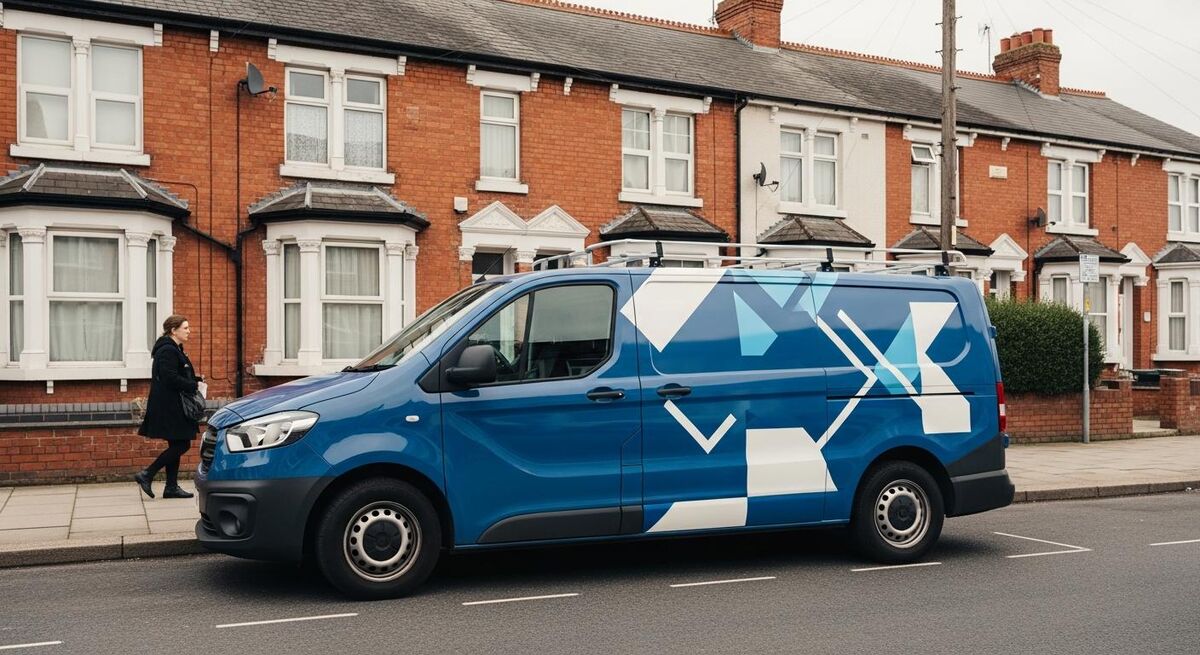
The numbers here are striking. Industry data from the Outdoor Advertising Association shows a single wrapped vehicle generates between 30,000 and 70,000 impressions per day, depending on location and driving patterns. That figure accounts for both moving traffic and stationary exposure while parked on residential streets or outside job sites.
For context, 91% of people notice vehicle graphics according to 3M fleet research. And 75% of those who notice develop a favourable impression of the company. Those are not numbers you get from a Facebook post or a flyer through a letterbox.
The real advantage for tradespeople is that your van is already going where your customers live. You are not paying for billboard space on a motorway that your target market drives past once a week. Your van sits outside Mrs Henderson's house for four hours while you fit her new boiler, and every neighbour who walks past clocks your name and number.
In dense urban areas, expect the higher end of the impression range (50,000 to 70,000 per day). Suburban areas typically deliver 30,000 to 50,000. Rural routes with lower traffic volume sit around 10,000 to 20,000, but the audience is more targeted since there are fewer competing trades in the area.
A useful benchmark: industry data puts van wrap impressions at roughly 400 to 600 per mile driven. With the average UK van covering around 8,000 miles per year, that translates to somewhere between 3.2 million and 4.8 million impressions annually from one vehicle.
Compare that to the cost. A £2,000 full wrap lasting five years delivers roughly 16 to 24 million impressions over its lifetime. That works out at £0.04 to £0.06 per thousand impressions. Radio advertising in the UK costs £4 to £10 per thousand. Television sits at £8 to £20. A wrapped van is cheaper by quite some margin.
Tracking enquiries back to your van
The biggest criticism of van advertising has always been the same: you cannot track it. That was true ten years ago. It is not true now.
Here are the methods that actually work for trades businesses.
Dedicated tracking number. Put a unique phone number on your van that forwards to your main line. Services like CallRail or even a second SIM card let you see exactly how many calls come from the van versus your website, Google listing, or lead management systems. This is the simplest and most reliable approach. Cost: £5 to £30 per month depending on the provider.
QR code on the rear panel. Link it to a landing page with a specific URL (e.g. yourcompany.co.uk/van). Track visits in Google Analytics. QR codes work well on the rear of the van where people are stationary behind you in traffic. Less effective on side panels because pedestrians rarely stop to scan.
"How did you hear about us?" Ask every single new enquiry. Record the answer in your CRM or job management software. This sounds basic but most tradespeople do not do it consistently. Over six months, the data builds a clear picture of which channels drive your work. The van will almost certainly show up more than you expect.
Unique landing page URL. Print a memorable, short URL on the van (e.g. yourcompany.co.uk/van or a custom short link). Monitor that page's traffic separately. Combine with the tracking number and you have two data points from the same source.
The most effective approach is layering two or three of these methods together. A dedicated phone number plus a consistent "how did you hear about us" question will capture the majority of van-generated leads.
Van advertising is a slow-build channel. The first month after wrapping, you might see only a handful of van-attributed calls. By month three, the numbers start to compound as repeat exposure drives recognition. Do not judge the ROI of a wrap after two weeks.
Full wrap vs partial wrap vs vinyl lettering
There is no single right answer here. The best option depends on your budget, how long you plan to keep the van, and how competitive your local market is.
| Feature | Vinyl Lettering | Partial Wrap | Full Wrap |
|---|---|---|---|
| Cost (medium van) | £250 - £800 | £800 - £1,200 | £1,750 - £2,500 |
| Lifespan | 3 - 5 years | 5 - 7 years | 5 - 7 years |
| Visual impact | Low to moderate | Moderate to high | High |
| Paint protection | Minimal | Partial | Full coverage |
| Removal difficulty | Easy | Moderate | Professional required |
| Best for | Sole traders, tight budgets | Growing businesses, leased vans | Established firms, brand-building |
| Resale impact | Negligible | Protects panels | Protects entire body |
A common middle-ground approach: partial wrap with full coverage on both sides and the rear doors, leaving the roof and bonnet in the original paint colour. This gives you roughly 80% of the visual impact of a full wrap at 50% to 60% of the cost.
If you are on a lease and need to return the van in original condition, a partial wrap is often the safer option. Full wraps protect the paint underneath, but removal adds £200 to £400 to your end-of-lease costs.
Magnetic signs deserve a mention too. They cost £80 to £200, can be moved between vehicles, and removed when you want to drive unmarked. The trade-off is they look less professional, can scratch the paint if grit gets underneath, and tend to fly off at motorway speeds if not secured properly.
Design principles that generate enquiries
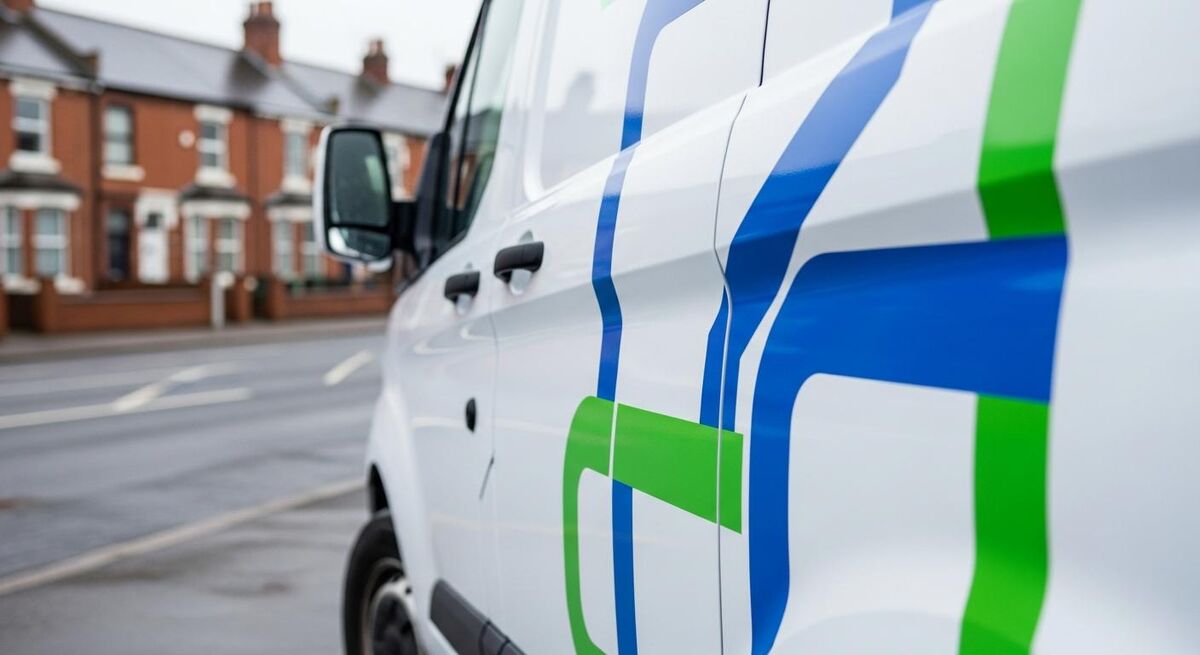
A van wrap that looks impressive in the car park but cannot be read from across the street is a waste of money. Design for readability first, aesthetics second.
Phone number size. Your phone number should be readable from at least 10 metres. That means a minimum height of 150mm on the sides and 200mm on the rear. If someone behind you in traffic cannot read your number, you have lost that lead.
Essential information. Three things matter: your company name, what you do, and how to contact you. That is it. An electrician's van should say the company name, "Electrician" (not "Electrical Contractor", which means nothing to a homeowner), and a phone number. Website and email are optional extras.
Colour contrast. Dark text on light backgrounds or light text on dark backgrounds. Avoid white text on pale blue, or dark grey on black. The van will be seen in all conditions: bright sun, rain, streetlights at dusk. High contrast works in all of them.
Keep the design clean. The impulse to fill every panel with services, accreditations, and social media handles is understandable, but resist it. A cluttered van communicates nothing. Three pieces of information, clearly presented, will outperform a panel crammed with twelve.
Several tradespeople on forums report van break-ins linked to signwritten vans parked outside their homes. Thieves know a trades van likely contains power tools. Use your business postcode area or town name instead of a full address, and consider parking in a garage or behind a gate overnight.
QR code placement. If you use one, put it on the rear of the van. Make it at least 100mm square with a clear call to action underneath ("Scan for a free quote"). Side-panel QR codes get almost zero scans because people are moving too fast relative to the van.
Finally, drive as if your name is on the van. Because it is. Every aggressive lane change, every blocked driveway, every bit of pavement parking is now associated with your brand. This is the hidden cost of van advertising that nobody puts in the brochure.
AI route planning and maximising exposure
Here is where modern fleet technology connects with traditional advertising. If your van is a mobile billboard, then the route it takes matters as much as the design on it.
Fleet tracking tools like Quartix, Vimcar, and Teletrac Navman were originally built for fuel efficiency, driver behaviour, and job scheduling. But the data they collect has a second use: understanding where your van spends its time and who sees it.
Modern route optimisation systems use AI to plan the most efficient sequence of jobs across the day. The side effect is they also determine which roads, streets, and neighbourhoods your van passes through most frequently. That data is gold for understanding your advertising reach.
A few practical applications:
Heatmap your coverage. Most fleet tracking dashboards show where your vehicles have been over a given period. Overlay that with your enquiry data and you can see whether the areas your van frequents match the areas generating leads. If there is a mismatch, you might adjust your route preferences.
Time-of-day exposure. Your van parked outside a school at 8:45am reaches a very different audience than the same van on a dual carriageway at 2pm. Fleet data shows when your van is most visible to pedestrians versus other drivers, which matters for different types of trades work.
Multi-van coordination. If you run three or more vans, AI scheduling can distribute jobs so your branded vehicles cover different parts of your service area rather than clustering in one postcode. Better coverage means more diverse impressions.
If you use a dedicated phone number on your van, you can correlate call volumes with fleet GPS data. When calls spike on a particular day, check the route your van took. Over time, this reveals which routes and neighbourhoods generate the most enquiries per mile driven.
Tax deductions and insurance implications
Van wrapping is a legitimate business advertising expense. HMRC treats it the same as any other marketing cost, provided it is incurred wholly and exclusively for business purposes.
The practical implications for trades businesses:
Corporation tax or income tax relief. The full cost of the wrap reduces your taxable profits. For a limited company paying 25% corporation tax, a £2,000 wrap costs £1,500 after tax relief. Sole traders get relief at their marginal income tax rate.
VAT recovery. If you are VAT-registered, you reclaim the 20% VAT on the wrap cost. A £2,400 invoice (£2,000 plus £400 VAT) costs £2,000 because you recover the VAT portion.
Combined saving. A VAT-registered limited company paying £2,400 for a wrap (including VAT) recovers £400 in VAT and saves £500 in corporation tax. The effective cost drops to £1,500, which is 37.5% less than the headline price.
Keep your invoice, proof of payment, and photographs of the wrap for your records. If HMRC queries the expense, you need to demonstrate it is genuine business advertising.
Insurance. Notify your insurer when you wrap the van. Most commercial vehicle policies cover signwriting and wraps as standard modifications, but some require it to be declared. Failing to declare could affect a claim. A small number of insurers offer reduced premiums for signwritten vans, on the logic that a branded van is less likely to be driven recklessly and more likely to be recovered if stolen.
Durability, maintenance, and when to replace
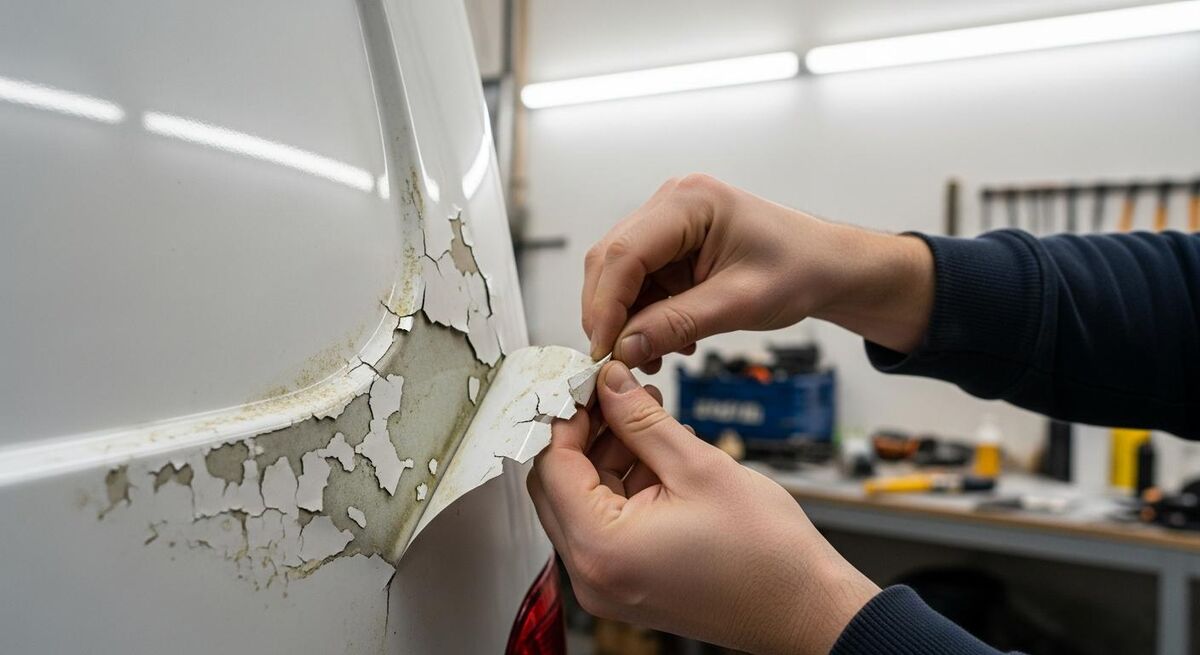
Cast vinyl film, the material used in quality full wraps, lasts 5 to 7 years under normal UK conditions. Printed wrap films (used for complex graphics) have a slightly shorter lifespan of 3 to 5 years. Basic cut vinyl lettering sits around 3 to 5 years.
These figures assume the wrap was applied correctly and the van is maintained properly. Several things shorten the lifespan:
Jet washing. High-pressure washers lift the edges of wrap film, especially around panel joins, door handles, and mirrors. Hand wash with warm soapy water and a soft sponge. If you must use a pressure washer, keep the nozzle at least 30cm from the surface and avoid direct hits on edges and seams.
Fuel spills. Diesel and petrol dissolve adhesive. Wipe up any spillage around the fuel cap immediately. Consider a clear protective film over that area if your filler cap is on a wrapped panel.
Tree sap and bird droppings. Remove these promptly. Both are acidic and will etch into the vinyl surface if left for days. An isopropyl alcohol solution works well for stubborn sap.
Signs it is time to replace: visible fading (especially red and orange pigments), edges lifting or curling, cracking on curved surfaces, and the wrap looking dull despite cleaning. Most trades businesses get a solid four to five years of good-looking coverage before the wrap starts to show its age.
What tradespeople are saying
Recommended videos
How Much Does a Van Wrap REALLY Cost? Contractors Need to Know This
Contractor Business Tips

How a Vehicle Wrap Improved Our Visibility and Leads
Business Growth Channel
How to Design a Van Wrap Like a Pro
Vehicle Graphics Tutorial

Van Wrap Masterclass: Deep Recess Technique
Justin Pate
Mercedes Sprinter Van Wrap: Avery SW900 Matte Charcoal
CK Wraps

Creating Stunning Vehicle Wraps: A Comprehensive Guide
Vehicle Graphics Design
Frequently asked questions
Yes, but check your lease agreement first. Most finance companies allow wraps provided they are professionally removed before the van is returned. Budget £200 to £400 for professional removal. Some lease companies charge for any adhesive residue left behind, so use a reputable wrap installer who uses quality materials.
A full wrap typically takes 2 to 3 days. A partial wrap can be done in 1 to 2 days. Basic vinyl lettering takes a few hours. Plan for the van being off the road during installation. Most wrap companies work Monday to Friday, so factor that into your scheduling.
It can actually help. A quality wrap protects the original paintwork from stone chips, UV fading, and minor scratches. When removed, the paint underneath is often in better condition than an unwrapped equivalent. The resale benefit depends on the paint condition being better than average after removal.
It depends on the paint condition. If the paint is flaking, badly scratched, or has extensive rust, a wrap will not adhere properly and may peel prematurely. If the paint is sound, a wrap on an older van works fine. Ask your installer to inspect the panels before committing.
Probably not with a permanent wrap. Magnetic signs are a better fit for subcontractors because you can remove them when working under another company's brand. Several forum users recommend magnetics for exactly this reason. Cost is £80 to £200 and they transfer between vehicles.
Traditional signwriting uses hand-painted lettering directly on the van. Wrapping uses adhesive vinyl film applied over the panels. Modern "signwriting" usually means cut vinyl lettering, not paint. Wrapping covers larger areas with printed graphics. Both are effective, but wrapping offers more design flexibility and paint protection.
My verdict
The numbers speak plainly. A £2,000 wrap on a medium van delivers somewhere between 16 and 24 million impressions over five years. The cost per thousand impressions is a fraction of any other advertising channel. And unlike Google Ads or lead generation platforms, there are no monthly fees after the initial outlay. If you are a mobile tradesperson and your van is not wrapped, you are leaving the cheapest form of local advertising on the table. Start with a partial wrap if budget is tight. Add a tracking phone number from day one. Measure the results for three months. The data will make the case for you.