
Quick Answer
The Warm Homes Plan commits £15 billion over five years to upgrade up to five million UK homes by 2030. Most of that money flows through four routes: the Boiler Upgrade Scheme (£7,500 per heat pump, £9,000 for off-gas oil and LPG homes), the Warm Homes Local Grant (£500 million for low-income retrofit through councils), the Warm Homes Social Housing Fund Wave 3 (£1.29 billion for social landlords), and ECO4 (extended to 31 December 2026). To get paid from any of these you need MCS certification for renewable installs, or TrustMark plus PAS 2030:2023 for whole-house retrofit. The work is there. The question is whether your paperwork is ready.
Table of Contents
- What the Warm Homes Plan actually is
- The four funding routes installers can access
- Boiler Upgrade Scheme: the £7,500 grant in detail
- Warm Homes Local Grant and Social Housing Fund
- ECO4 to December 2026 and what comes next
- The certifications you need: MCS, TrustMark, PAS 2030
- What certification actually costs and how long it takes
- How to position your business for grant-funded work
- The numbers: market size and installer demand
- What tradespeople and trade bodies are saying
- Recommended videos
- Frequently asked questions
- My verdict
What the Warm Homes Plan actually is
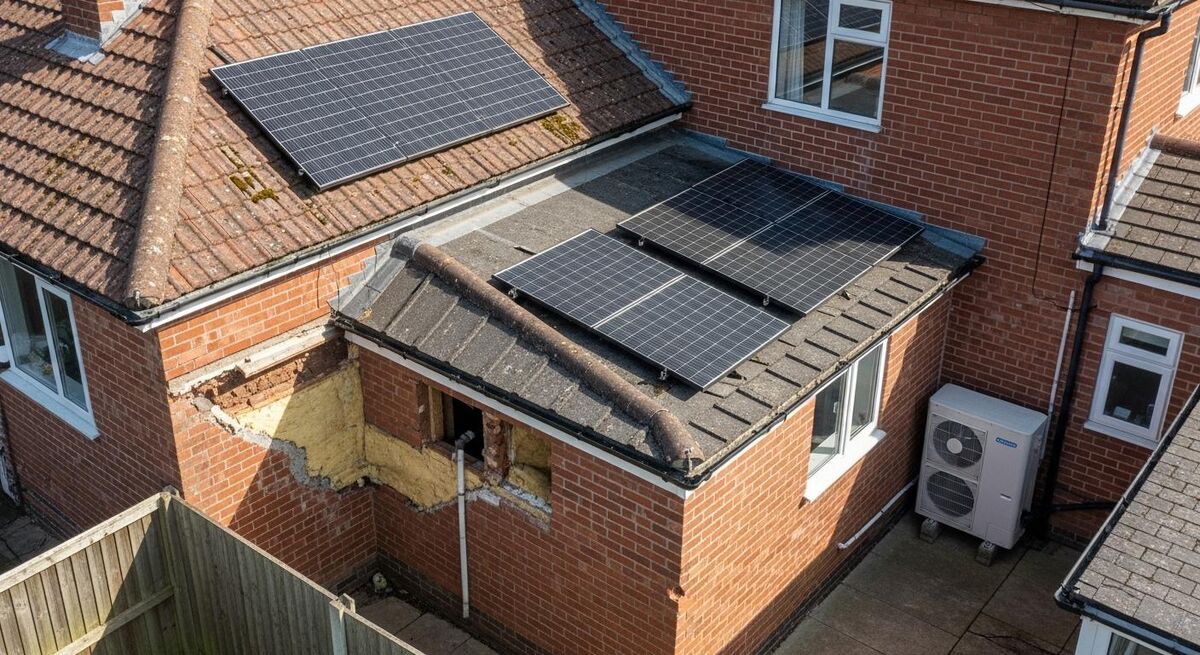
The Warm Homes Plan was published by the Department for Energy Security and Net Zero on 21 January 2026. It is a £15 billion programme over five years, framed by the government as the biggest public investment in home energy upgrades in British history. The aim is to upgrade up to five million homes by 2030, cut energy bills, and lift around a million households out of fuel poverty.
That headline number is real, but it is not a single grant pot you apply to. It is a wrapper around schemes that were already live, plus new commitments. For installers and builders the practical question is which delivery route pays you, what it pays for, and what you need to qualify.
The plan sits behind four main delivery schemes: the Boiler Upgrade Scheme (BUS) for heat pump installs to private owners, the Warm Homes Local Grant for low-income whole-house retrofit through local councils, the Warm Homes Social Housing Fund Wave 3 for registered social landlords, and ECO4 (the energy company obligation), extended to 31 December 2026. Each one routes money differently. Each one has its own certification gate. Each one is open now.
The four funding routes installers can access
If you are a sole trader heating engineer, a plumbing firm doing retrofit, an insulation specialist, an electrician moving into solar, or a builder running domestic refurbishments, one or more of these routes is relevant to you. Pick the route that matches your trade and your appetite for paperwork.
| Route | Who it pays | Typical grant per property | Certification gate | Status (June 2026) |
|---|---|---|---|---|
| Boiler Upgrade Scheme | MCS-certified installers (you claim on the customer's behalf) | £7,500 ASHP and GSHP, £9,000 off-gas oil and LPG, £2,500 air-to-air | MCS, approved consumer code (RECC or HIES) | Live, runs to March 2028 |
| Warm Homes Local Grant | Contractors working under local authority delivery partners | Up to £15,000 per low-income property | TrustMark plus PAS 2030:2023, retrofit coordinator on the job | £88m allocated for 2025 to 2026, councils awarding contracts |
| Warm Homes Social Housing Fund Wave 3 | Contractors framework-procured by social landlords | Variable, multi-measure projects | TrustMark plus PAS 2030:2023, retrofit coordinator | £1.29bn allocated 2025 to 2028, delivery window open |
| ECO4 | Subcontractors to obligated energy suppliers and their agents | Per measure, varies (heating, insulation, ventilation) | TrustMark plus PAS 2030:2023 | Extended to 31 December 2026 |
Two takeaways from that table. First, no certification, no work. The grant money never goes to an uncertified contractor. Second, MCS and PAS 2030 are two different worlds. MCS covers the renewable technology you install (heat pumps, solar PV, solar thermal, batteries). PAS 2030 covers whole-house retrofit (insulation, ventilation, fabric, heating) under the coordination of a retrofit assessor and a retrofit coordinator. Some firms hold both. Most start with one.
Boiler Upgrade Scheme: the £7,500 grant in detail
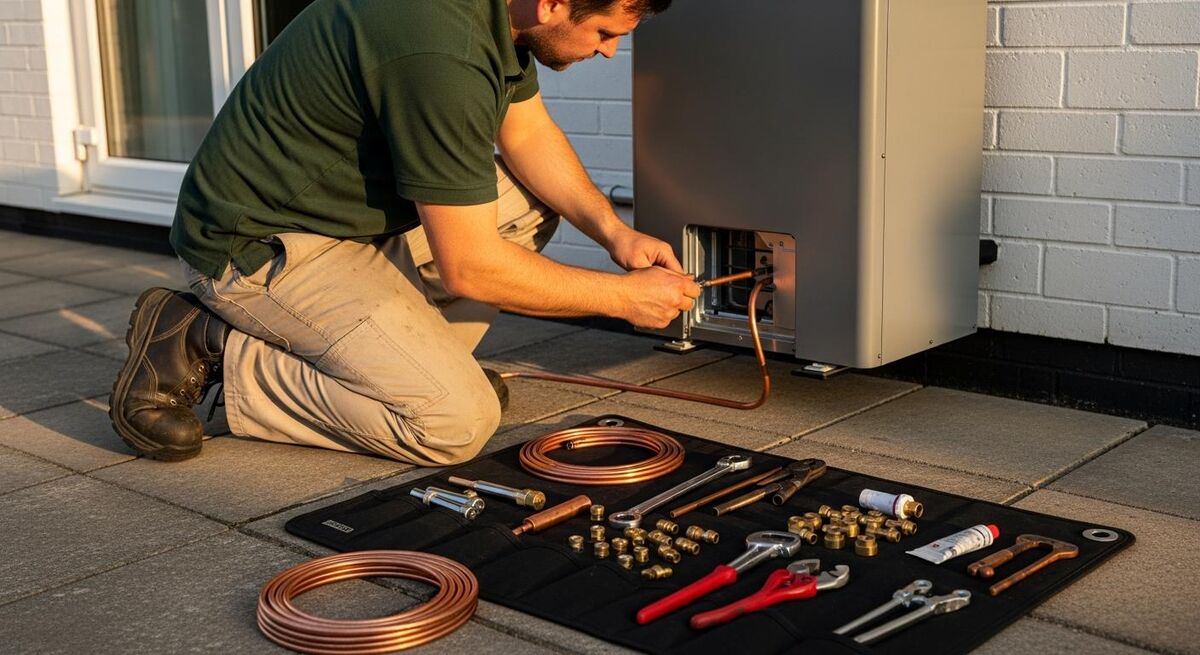
The BUS is the simplest scheme to access. It is funded by the Department for Energy Security and Net Zero, administered by Ofgem, and runs until March 2028. The 2025 to 2026 budget is £295 million and the scheme has now passed 100,000 applications since launch in May 2022.
The grant amounts as of June 2026:
- £7,500 for an air-source or ground-source heat pump replacing a fossil fuel system.
- £9,000 for homes off the gas grid currently using oil or LPG. This uplift was announced on 21 April 2026 and runs from 21 July 2026 to 31 March 2027 in its current form.
- £2,500 for air-to-air heat pumps in domestic properties, brought into scope under the April 2026 amendments.
- £5,000 for biomass boilers in specific off-grid scenarios.
The process is installer-led. You quote the customer including the grant deduction, you apply to Ofgem on their behalf, you get a voucher, you install, you commission, you claim. Ofgem pays you the grant amount and the customer pays the balance. No customer-side application. No homeowner navigating government portals. That is the whole point.
Two operational details that catch installers out. The DNO fuse upgrade for properties needing a larger supply is a separate visit by the network operator and can add up to twelve weeks to your project timeline. Around 45 percent of customers need one. Build that into your quote and your cash flow forecast. And the application has to be submitted before installation completes, not after, or the grant is forfeit.
Warm Homes Local Grant and Social Housing Fund
This is where the bigger pots of money sit. The Warm Homes Local Grant (WHLG) delivers fully funded energy efficiency improvements into low-income households. Between 2025 and 2028, £500 million is allocated, with £88 million available in 2025 to 2026 aimed at upgrading roughly 9,000 homes. Local authorities apply for funding from central government, then procure contractors to do the work.
The Warm Homes Social Housing Fund Wave 3 (the renamed Social Housing Decarbonisation Fund Wave 3) installs energy efficiency upgrades and low-carbon heating measures in English social housing. It runs 2025 to 2028 with £1.29 billion allocated. Recent stats from March 2026 show around 2,800 measures delivered across 1,460 households so far. The pipeline is still building.
Both schemes operate under PAS 2035:2023 (the customer journey and retrofit design standard) and PAS 2030:2023 (the installation standard). PAS 2035:2023 was updated on 30 March 2025 to require Retrofit Coordinators to conduct site visits and to raise qualification standards for Retrofit Designers. You are now installing in a regulated whole-house environment, not just dropping in a single measure.
What measures get funded
- Cavity wall, solid wall (internal or external), loft and underfloor insulation.
- Air source and ground source heat pumps.
- Solar PV and battery storage.
- Mechanical ventilation and improved heating controls.
- Sometimes glazing where it forms part of the retrofit plan.
The grant value per property under WHLG is up to £15,000 in the typical funding award. Wave 3 projects are larger, multi-measure, and quoted as full project packages rather than per measure.
ECO4 to December 2026 and what comes next
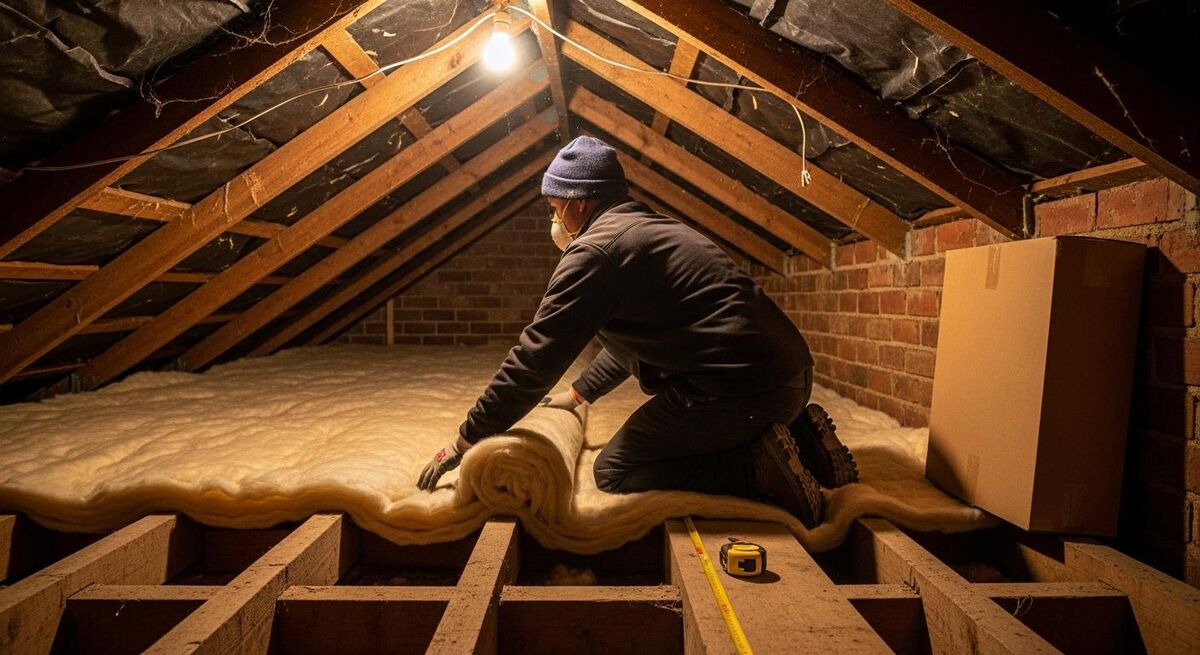
ECO4 is the fourth phase of the Energy Company Obligation. It places a legal duty on large energy suppliers to fund energy efficiency upgrades in low-income and vulnerable households. The scheme was originally due to end in March 2026 but has been extended to 31 December 2026, giving suppliers nine more months to hit their targets and giving the supply chain a continuous pipeline of work.
For installers, ECO4 work comes through obligated suppliers and their managing agents. You do not apply for ECO4 funding directly. You either hold a contract with one of the obligated suppliers (British Gas, EDF, E.ON Next, Octopus Energy, OVO, Scottish Power, Shell Energy, So Energy, Utilita), get appointed by their delivery partners, or subcontract to a Tier 1 contractor that holds the supplier relationship.
Two changes have tightened ECO4 since launch. First, every install has to be delivered under PAS 2035 coordination by a PAS 2030 certified contractor. Second, the audit and inspection regime is much heavier. Suppliers are auditing more sites, energy suppliers face penalties for non-compliant installs, and that pressure flows down to the installer. Loose paperwork costs you future work.
The certifications you need: MCS, TrustMark, PAS 2030
Three certification ecosystems matter. Most installers need at least one. Some need all three.
MCS (Microgeneration Certification Scheme)
MCS is the UK industry standard for businesses that install small-scale renewable and low-carbon technology. It covers heat pumps (air source, ground source, water source), solar PV, solar thermal, biomass, micro wind, and micro hydro. If you want to install heat pumps under BUS, MCS certification is non-negotiable.
You apply to one of the MCS certification bodies (NICEIC, NAPIT, Certsure, HIES Scheme, OFTEC, RECC-approved bodies). The assessment has two stages: an office-based review of your management systems and an on-site assessment of an installation you have completed. You also need a Nominated Technical Person (NTP) for each technology, who is responsible for design, installation, commissioning and handover.
Under the MCS Redeveloped Installer Scheme there is now a six-year workmanship warranty requirement. Every install has to be backed by an Insurance-Backed Warranty (IWA) or equivalent that pays out on labour defects for six years after handover. That changes how you price the job.
TrustMark plus PAS 2030:2023
TrustMark is the government-endorsed quality scheme for work in and around the home. For grant-funded retrofit work (WHLG, Wave 3, ECO4) you need TrustMark registration with the appropriate scope, plus PAS 2030:2023 certification through a UKAS-accredited certification body. PAS 2030 sets the installation standard for each retrofit measure (insulation, heating, ventilation, glazing). Without TrustMark plus PAS 2030 you cannot deliver grant-funded retrofit work, end of story.
PAS 2035:2023 (the whole-house design standard)
PAS 2035 covers the customer journey and the design of a retrofit project. It mandates a Retrofit Assessor (who surveys the property), a Retrofit Designer (who specifies measures), and a Retrofit Coordinator (who runs the project and signs it off). Some firms employ all three roles in-house. Most subcontract the coordination to a TrustMark-registered Retrofit Coordinator.
To become a Retrofit Coordinator you need a Level 5 Diploma in Retrofit Coordination and Risk Management, then to join an approved TrustMark Scheme Provider. This is the bottleneck the whole industry is hitting. There are not enough coordinators. If you can fund a member of your team through Level 5, you give your business a competitive moat for the next decade.
What certification actually costs and how long it takes
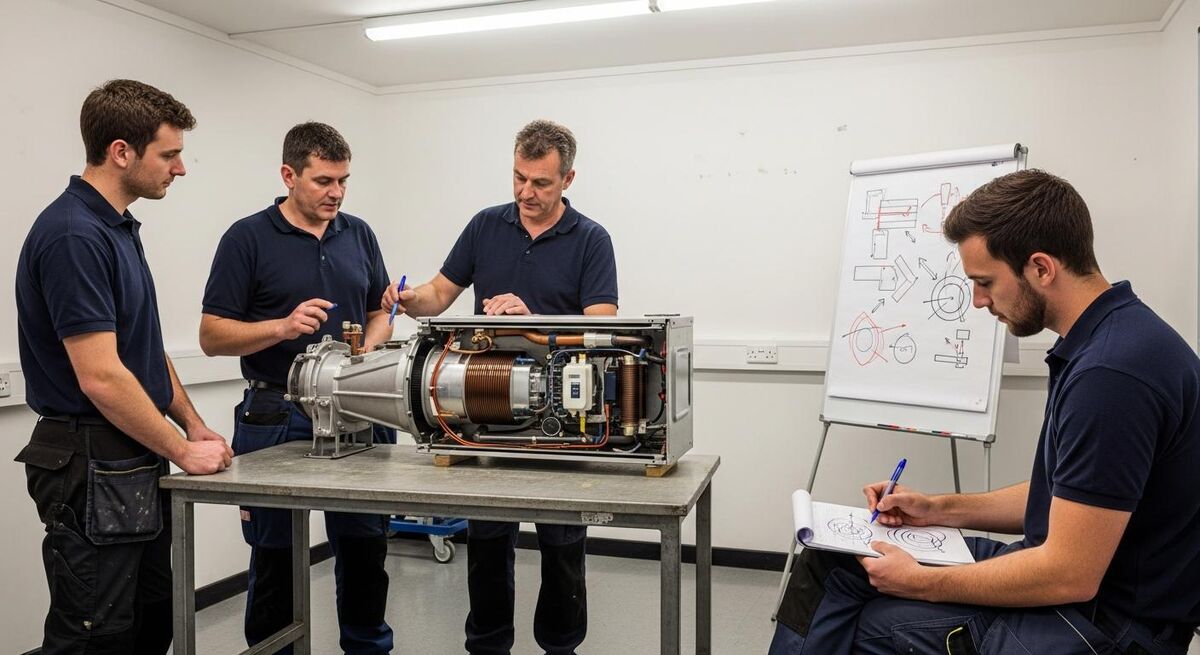
The real cost is not the application fee. It is the time off the tools and the lead time before your first grant-funded install. Here is the order-of-magnitude budget for each route.
Becoming MCS certified for heat pumps
- Training: £800 to £1,500 for a two to five-day course (BPEC Level 3, City and Guilds 6336, or equivalent). Plan for your engineer to be off the tools for the duration.
- MCS initial registration: around £840.
- Annual renewal: around £684 per year per technology.
- Witnessed installation: you need to complete a chargeable witnessed install before sign-off. Add the assessor's day rate to your costs.
- Insurance-backed warranty premium: varies by provider, factor into every quote.
- Lead time from start to first BUS claim: three to six months realistically.
If you are based in Scotland, the MCS Certification Fund covers 75 percent of certification fees, up to £1,000. It runs to March 2027 or until funds run out. Apply through Energy Saving Trust.
Becoming TrustMark and PAS 2030 certified
- PAS 2030 certification: through a UKAS-accredited body. Costs vary by scope (more measures, higher fee), typically £1,500 to £4,000 first year then annual renewal.
- TrustMark registration: annual fee plus scheme provider levy.
- Documented quality management system: the biggest hidden cost. You need written procedures for every measure you install.
- Lead time: four to six months from decision to certification.
Hiring or training a Retrofit Coordinator
- Level 5 Diploma in Retrofit Coordination: typically £2,500 to £4,500, six to twelve months of study.
- Salary cost: experienced coordinators are commanding £45,000 to £65,000 a year as of 2026.
- External coordinator fees: £600 to £1,200 per project if you subcontract.
How to position your business for grant-funded work
The Plan creates demand. It does not create customers who already know about you. The installers and builders winning grant work are doing five things differently from those waiting for the phone to ring.
1. Get listed where customers and councils search
The MCS installer database is the first place homeowners and procurement officers look. Make sure your listing is current, your accreditations are visible, and your service area is set correctly. Add yourself to the TrustMark consumer-facing directory. Apply to be a delivery partner with at least one council in your area, even if the framework is dormant. When the next round opens, you are in the room.
2. Price the grant out of the conversation
The customer is not buying a £15,000 heat pump install. They are buying a £7,500 net install (with BUS) or a fully funded install (with WHLG). Your quote, your website, your van signage should all lead with the net price after grant. The cheapest competitor on a gross price still loses to you on a net price, if you are MCS and they are not.
3. Build a referral pipeline with retrofit coordinators
Retrofit coordinators choose the contractors they trust. They also pull whole projects together. If you are a PAS 2030 certified installer in a region with two or three respected coordinators, get coffee with them. Be the contractor they default to when they need an insulation, heat pump, or ventilation specialist for their next coordinated project.
4. Run the numbers on cash flow before chasing volume
Grant-funded work has different cash flow than private work. BUS pays you on completion, not on staged payments. WHLG and Wave 3 typically pay in arrears after the principal contractor has invoiced the council or landlord. Read our piece on 90-day rolling cash flow forecasting if you are scaling fast. Heat pump retrofits also frequently need a DNO supply upgrade, which is invoiced separately and can sit on your debtor list for months.
5. Track the regulatory cost stack alongside the grant income
Grants are revenue. Compliance is cost. Heat pump installers need to budget for MCS renewals, insurance-backed warranty premiums, and PAS 2035 coordination fees per project. Builders doing retrofit need to factor in the new compliance regime for higher-risk buildings, the Building Safety Levy from October 2026 if you are doing new build alongside retrofit, and the broader Building Safety Act compliance costs every tradesperson should budget for.
The numbers: market size and installer demand
The market is bigger than the headline grant pots suggest. The government's target is 450,000 heat pump installs a year by 2030. Current run rate is well below that. The Boiler Upgrade Scheme passed 100,000 applications in February 2026 (since launch in May 2022), with 3,500 applications that month alone.
The Clean Heat Market Mechanism puts manufacturers on the hook too. From April 2025 large boiler manufacturers must match 6 percent of their boiler sales with heat pump installs. From April 2026 the target rises to 8 percent. Manufacturers that miss pay £500 per missing credit in 2025 to 2026 (down from the originally proposed £3,000). The mechanism has created a manufacturer incentive to subsidise heat pump training, MCS sign-off support, and lead generation for installers carrying their products.
For installers, that means manufacturer schemes like Grant UK's MCS umbrella, Vaillant's installer support, and Daikin's training programmes are real cost savers. If you are an oil or gas heating engineer thinking about moving across, look at the manufacturer-led routes before paying out of pocket.
What tradespeople and trade bodies are saying
Recommended videos

UK Warm Homes Plan Explained: Heat Pump Costs, Grants and Real Savings in 2026
February 2026 walkthrough of the BUS, grant deductions, and what customers actually pay net.

New Solar Grants: What You Need To Know About The Warm Homes Plan
Solar PV and battery storage routes inside the Plan, plus the planned consumer loan scheme.

GOV.uk: Warm Homes Plan
The official government video framing the Plan and the five-year delivery commitments.
An introduction to Warm Homes: Local Grant (RISE webinar)
RISE Retrofit's webinar walking through how local authorities procure WHLG delivery.
Delivering the Warm Homes Plan: Reducing bills, improving health, supporting net zero
Policy-focused webinar with stakeholder commentary on delivery routes and bottlenecks.

The £15 Billion Warm Homes Plan: Who Really Benefits?
Industry analysis on who captures the funding and where the bottlenecks are likely to bite.
Frequently asked questions
Only for renewable technologies. MCS covers heat pumps, solar PV, solar thermal, biomass and similar. For straight insulation work funded through ECO4, WHLG or Wave 3, you need TrustMark plus PAS 2030:2023 instead. Many firms hold both because they install heat pumps under BUS and insulation under ECO4. Pick the route that matches what you actually do.
No. The BUS is installer-led. The MCS-certified installer applies to Ofgem on the homeowner's behalf before installation begins. The grant is deducted from the invoice. If you are a tradesperson and a customer asks how to apply themselves, the answer is they cannot. They need to choose an MCS installer first.
Realistically three to six months. Two to five days of training, then office assessment, then witnessed installation, then sign-off. Budget around £2,500 to £4,000 all in for a one-technology certification including training, fees, and the witnessed install. Scottish installers can claim 75 percent through the MCS Certification Fund up to £1,000.
It targets low-income households in fuel poverty, but eligibility is set by the local authority delivering the scheme. Each council publishes its own criteria, usually a household income threshold combined with EPC rating of D, E, F or G. As an installer your customer is the council, not the homeowner, so the council handles the eligibility check.
Government has signalled a successor scheme but the detail is not yet published. The Warm Homes Plan commits to continued funding through to 2030. Most industry observers expect a redesigned obligation on energy suppliers in 2027 onwards, integrated more tightly with the Warm Homes Plan delivery framework. The work will not stop, the route will change.
Yes, with a £2,500 grant in domestic properties only, brought in under the April 2026 BUS amendments. That is a smaller grant than the £7,500 for air-to-water systems, but it opens up flats and smaller properties where wet system retrofitting is impractical. The installer still needs MCS certification for air-to-air heat pumps specifically, not just air-to-water.
Yes for grant-funded work. The PAS 2030 certified contractor must be the firm physically delivering the install. The Tier 1 firm holds the head contract and the coordination, but the certificate sits with the boots on the ground. Some Tier 1 firms run umbrella schemes that get smaller installers onto their PAS 2030 scope, which can shortcut the route. Ask before signing the subcontract.
Audit failures. Energy suppliers and TrustMark audit a significant percentage of installs. If your paperwork or installation does not match the standard, you face clawback on the grant and exclusion from future work. The hidden cost is rework on jobs you have already booked as revenue. A documented quality management system and tight site discipline are not optional once you cross into the grant-funded world.
My verdict
The plan is real, the money is committed, and the delivery routes are open. But the work flows to certified installers and contractors only. Every grant pot has a certification gate, and the bottleneck is the supply of MCS engineers, PAS 2030 installers, and Retrofit Coordinators. That is not a problem you fix in the year of delivery. It is a six to twelve month investment you make now. If your business installs heat pumps, the BUS is the fastest route to revenue: get MCS certified, get on the database, get the manufacturer relationships sorted, and price net of grant. If you do insulation or whole-house retrofit, the WHLG and Wave 3 pipelines are bigger but procured through councils and social landlords, so build the relationships before the next framework opens. Treat ECO4 as the bridge to whatever the successor scheme looks like in 2027. The next decade of energy efficiency work in UK housing will not be won on price. It will be won on certification, paperwork and reputation.