

Quick Answer
The Employment Rights Act 2025 came into force on 6 April 2026. From that day, statutory sick pay is a day-one right with no three-day wait and no lower earnings threshold. Paternity and unpaid parental leave are day-one rights too. You must keep annual leave and holiday pay records for six years. The Fair Work Agency launched on 7 April 2026 and can inspect your books, demand up to six years of payroll, and issue penalties of up to 200 percent of underpayments (capped at £20,000 per worker). And the biggest change is still coming, from 1 January 2027 the qualifying period for unfair dismissal drops from two years to six months, which means every hire you make from July 2026 onwards needs a proper probation and performance process behind it. If you take one thing from this guide, take this: get your written particulars, your contracts, and your record-keeping right this month.
Table of Contents
- What actually changed on 6 April 2026
- The Fair Work Agency, meet your new enforcer
- Statutory sick pay, now a day-one right
- The paperwork trap that catches trades employers
- The 2027 unfair dismissal clock is already ticking
- Zero-hours, low-hours and the flexible workforce
- Your practical action plan for this month
- The ten-point trades employer compliance checklist
- What tradespeople and small business owners are saying
- Recommended videos
- Frequently asked questions
- My verdict
I have coached trades business owners for over a decade and every one of them has said the same thing at some point, employment law is the bit that keeps them awake at night. Not the tools, not the customers, the people. And I understand it, because when you build a small trades business you do it around your family, your team, your reputation, and the idea that one bad hire or one honest mistake could cost you £20,000 is a seriously frightening prospect.
So let me start with the reassurance you need. Yes, the Employment Rights Act 2025 is the biggest change to UK employment law in a generation. Yes, the Fair Work Agency now has powers that HMRC would recognise. But no, it is not designed to punish good employers, and if you already do the basics well you are most of the way there. What follows is my plain-English walk-through of what changed on 6 April 2026, what the Fair Work Agency can actually do to you, and the practical steps to take this month so you can sleep at night.
What actually changed on 6 April 2026

The Employment Rights Act 2025 received Royal Assent on 18 December 2025. The Government has not switched every change on at once. It phased them, and the first tranche took effect on 6 April 2026 alongside the launch of the Fair Work Agency on 7 April.
The 6 April changes are the ones you need to have already implemented. If you haven't, you are out of compliance right now. They include statutory sick pay from day one with no waiting days and no lower earnings limit, paternity leave and unpaid parental leave from day one of employment, a formal duty to keep annual leave and holiday pay records for six years, and a requirement to give every new hire a written notice of their right to join a trade union alongside their written statement of particulars.
What's coming next matters just as much for how you hire this year. From 1 January 2027 the unfair dismissal qualifying period drops from two years to six months, and the compensation cap disappears entirely. From October 2026 the tribunal claim window doubles from three months to six months, meaning ex-employees have longer to bring a claim. Later in 2027 the zero-hours changes land, giving workers a right to guaranteed hours if they want them and pay for cancelled shifts.
The Fair Work Agency, meet your new enforcer

The Fair Work Agency, or FWA, launched on 7 April 2026. It brought together three enforcement bodies that used to sit in different corners of Government: HMRC's National Minimum Wage team, the Employment Agency Standards Inspectorate, and the Gangmasters and Labour Abuse Authority. In place of three separate bodies you now have one agency with £60.1 million of funding and a single remit, to enforce basic employment rights across the whole UK economy.
The FWA has three powers that trades employers need to understand. First, it can act proactively. It does not need a worker complaint to open an investigation. If a competitor tips them off, if a former employee raises something with ACAS, if a random inspection lands on your yard, they are within their rights to start asking questions. Construction is on their published list of higher-risk sectors, along with care, agriculture, hospitality, and the gig economy, so trades businesses will not be a low priority for them.
Second, they can demand records. If the FWA opens an enquiry they can ask you to produce up to six years of payslips, payroll reports, time sheets, rotas, holiday calculations, and contracts. If you have kept sloppy records, or you have relied on WhatsApp messages instead of proper systems, that is where the trouble starts. The record-keeping obligation is not new, but the enforcement is.
Third, they can issue Notices of Underpayment. If they find you have paid a worker less than they were legally owed for national minimum wage, holiday pay, or statutory sick pay, they can require you to repay it going back up to six years and charge you a penalty of 200 percent of the underpayment. The penalty is capped at £20,000 per worker, but if you have several workers affected the numbers add up quickly. They can also publish the names of non-compliant employers, so the reputational hit lands too.
Statutory sick pay, now a day-one right
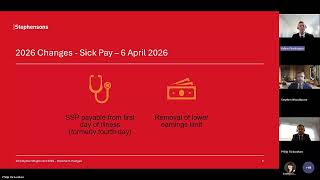
Statutory sick pay is the change that will land hardest in the trades sector, in my experience. Under the old rules a worker had to earn above the lower earnings limit and had to be off for at least four consecutive days before SSP kicked in. The first three days, the so-called waiting days, were unpaid unless your contract said otherwise. From 6 April 2026 both of those tests are gone.
What that means in practice. Any employee, from day one of employment, on any earnings level, gets SSP from the first day of sickness absence. The weekly SSP rate from 6 April 2026 is £123.25. For workers whose average weekly earnings are below the lower earnings limit, they get SSP at 80 percent of their average weekly earnings, whichever is lower.
Two things follow from this. First, your payroll needs to cope with short absences. A plumber who calls in with a stomach bug for one day now costs you SSP. That was never true before. If you use manual payroll, get your bookkeeper to build a process for logging single-day absences. If you use software, check it has been updated for the new rules.
Second, and this is where I get honest with clients, you are going to see a small rise in short absences. Removing the three-day wait removes the financial disincentive for taking a duvet day. That is not everyone, and it is not most people, but it is human nature. The answer is not to become the sick-note police, the answer is to build a culture where people don't want to take the mick because they respect the business and their teammates. I have written about that in staff retention in trades, and everything I said there applies double now.

The paperwork trap that catches trades employers
I have said this to clients for years, and it is more true now than ever. The businesses that get caught out in a Fair Work Agency enquiry are not the businesses that meant to break the law. They are the businesses that meant to sort the paperwork out and never got round to it.
Here is the paperwork you absolutely must have in place, and where I see the most gaps in trades businesses.
A written statement of particulars for every employee. This has been a day-one legal requirement since 2020. Under the Employment Rights Act 2025 the section 1 statement must now include a written notice of the employee's right to join a trade union. If your template hasn't been updated to include that notice, update it today. The written particulars must include the job title, start date, pay, hours, holiday entitlement, sick pay arrangements, notice periods, and place of work at a minimum.
A written contract for every self-employed contractor. Panic hiring is one thing, panic subcontracting is another, and it is where I see the biggest legal exposure in trades businesses. If you engage a self-employed plumber or electrician on a rolling basis with no written contract, HMRC can rule they are actually an employee, which lands you with backdated tax, National Insurance, and now potentially SSP and holiday pay too. A written contract sets out the contractor's responsibility for their own tax and insurance and includes a proper "no employment" clause. I have covered this in more depth in the panic hire is costing you more than the vacancy.
Holiday pay records for six years. This is new from 6 April 2026. You must be able to show, for every worker, what their annual leave entitlement was, when they took it, what they were paid for it, and how you calculated the pay. If your engineer's holiday pay is based on average pay over the previous 52 weeks, you need to be able to reconstruct that calculation from your records for six years back. Spreadsheets and payslips will do, but they need to be complete and accessible.
Sick pay records and fit notes. Every SSP payment needs a paper trail. Keep the fit note if there was one, keep the record of the days the employee was off, and keep the calculation. This has always been good practice but the FWA can now demand it.
Right-to-work checks. Not new, but critical. Every employee, day one, before they set foot on site. The civil penalty for illegal working rose to £45,000 per worker for a first offence in early 2024 and £60,000 for repeat offences. This is a separate enforcement regime but the FWA has close links with Home Office immigration enforcement and shares information routinely.
The 2027 unfair dismissal clock is already ticking
Here is where I need to shake trades business owners by the shoulders. From 1 January 2027 the qualifying period for bringing an unfair dismissal claim drops from two years to six months. The compensation cap is being removed entirely. And the tribunal claim window doubles from three months to six months from October 2026.

Do the maths on that. If you hire someone in July 2026 with a six-month probation period, they will reach the new six-month qualifying period on or after 1 January 2027. That means any dismissal you make from that point onwards could be challenged as unfair. Under the old two-year rule that same employee would not have been able to bring a claim until July 2028.
What this means for you. Every hire you make from July 2026 needs a rigorous, documented probation and performance process. Not a chat over a coffee at week six. A structured monthly review with written notes, clear objectives, honest feedback, and a proper end-of-probation decision. If someone isn't working out, you need to have documented the problem, the support you offered, and the reason for parting company.
None of this is rocket science, and I have coached hundreds of trades businesses through it. But it does require you to make a shift from informal to structured. I called this the shift from "suck it and see" to a proper people process in my book Build and Grow, and it is the single biggest change I ask clients to make when they come off the tools. My guide on coming off the tools covers the mindset side of that transition.
Zero-hours, low-hours and the flexible workforce
Trades employers rely heavily on flexible workers, especially in the busy summer months when a big job needs a second pair of hands. The zero-hours reforms are the change most likely to affect how you use casual or ad-hoc labour, and they land in 2027 rather than 2026, but the practical implications for your hiring model start now.
Once the zero-hours provisions kick in, workers on zero-hours and low-hours contracts will have the right to request guaranteed working hours based on the hours they have actually worked in the previous 12 weeks. If a shift is cancelled, moved, or cut short at short notice, the worker is entitled to compensation. The exact rules are being consulted on through 2026 but the direction of travel is set.
The practical planning question is this, do you actually want to keep engaging people on zero-hours contracts, or would a proper part-time employment contract or a bona fide self-employed subcontractor arrangement work better for your business? Zero-hours makes sense when the work is truly unpredictable. It makes less sense when you know you need someone every Friday for six months but you never got round to writing a contract.
Your practical action plan for this month

I always tell my coaching clients, don't try to fix everything at once, break it down and work through it. Here is the one-month action plan I would run with a trades business owner sitting across from me right now.
Week one, audit your paperwork. List every employee and every subcontractor you engage. For each one, tick off whether you have: a signed written statement of particulars, an up-to-date contract, a right-to-work check on file, and, for subcontractors, a written contract with a proper no-employment clause. Wherever there is a gap, note it.
Week two, fix the written particulars template. Add the mandatory notice of the right to join a trade union. Review the section 1 requirements and check yours covers everything: job title, start date, pay, hours, holiday, sick pay, notice, place of work, benefits, and any collective agreements. Get an employment lawyer or a specialist HR consultant to review the template if you haven't updated it in the last twelve months. The cost of that review is trivial compared to a Fair Work Agency penalty.
Week three, sort your record-keeping. Set up a proper system for logging annual leave, holiday pay calculations, sick absences, and SSP payments. This does not need to be fancy. A shared spreadsheet and a folder of monthly payroll reports will do, as long as it is complete and someone in your business is responsible for keeping it up to date. If you use a cloud payroll platform, learn where these records live and make sure your accountant can extract six years of history if asked.
Week four, upgrade your probation process. Rewrite your probation template to include structured monthly reviews with clear objectives, written feedback, and a documented end-of-probation decision. Brief every supervisor on how to run one. Every hire from now onwards uses the new process, because every one of those hires will be caught by the January 2027 six-month qualifying period.
The ten-point trades employer compliance checklist
Print this out. Stick it on the wall of your office. Work through it once a quarter, ideally with your bookkeeper or your HR consultant sitting alongside you.
| # | Item | Status | Why it matters |
|---|---|---|---|
| 1 | Written statement of particulars issued on or before day one for every employee | ☐ | Legal requirement since 2020, now includes trade union notice |
| 2 | Written contract for every self-employed subcontractor with a no-employment clause | ☐ | Protects you from HMRC re-classification and FWA claims |
| 3 | Right-to-work check on file for every worker, dated before start date | ☐ | Civil penalty up to £60,000 per illegal worker |
| 4 | SSP payable from day one, no waiting days, no lower earnings limit test | ☐ | Live from 6 April 2026, penalty up to 200 percent of underpayment |
| 5 | Annual leave and holiday pay records retained for six years | ☐ | New from 6 April 2026, FWA can demand production |
| 6 | Paternity and unpaid parental leave available from day one | ☐ | Old 26-week and one-year qualifying periods are gone |
| 7 | Fit notes and sick pay records retained and reconcilable to payroll | ☐ | Every SSP payment needs a paper trail for FWA audit |
| 8 | Structured probation and performance process with monthly written reviews | ☐ | Prepares you for the January 2027 six-month unfair dismissal cut-off |
| 9 | Anti-harassment policy updated, third-party harassment addressed on site | ☐ | Reasonable steps duty extends to harassment by clients and subcontractors |
| 10 | Payroll software and processes updated for April 2026 changes | ☐ | Manual payroll needs a written new-rules process, software needs the April update |
Once you have worked through this once, keep it as your quarterly review. Every three months, take an hour, sit down with the checklist, tick off what is done, note what has slipped, and put a date in the diary to fix it. That discipline is what separates the businesses that get caught out from the businesses that never do.
What tradespeople and small business owners are saying
Recommended videos

Acas Webinar: Employment Rights Act 2025
Acas
Employment Law Webinar: Understanding the New Employment Rights Act
Employment Law Specialists

Getting Ready for the Employment Rights Act 2025
HR Practitioner Series

The New Employment Rights Act, What UK Employers Need to Know
Employer Compliance Briefing

UK Labour and Employment 2026: Managing New Recruits
UK Employment Law Programme
Imminent Changes Under the Employment Rights Act 2025
Employment Law Update
Frequently asked questions
Yes. There is no small-business exemption. Every trades business that employs anyone as an employee, from a one-person operation with a single apprentice to a fifty-person firm, is covered by the Employment Rights Act 2025 in full. The Fair Work Agency's remit is national and it covers small firms just as much as large ones.
For most trades employers it is the unfair dismissal change from 1 January 2027, dropping the qualifying period from two years to six months. Every hire you make from July 2026 onwards will fall inside that window. Your probation and performance process needs to be rigorous, documented, and consistent from now on. Get that right and you have very little to worry about.
The FWA can issue a Notice of Underpayment with a penalty of 200 percent of the underpayment, capped at £20,000 per worker per breach. It can require repayment going back six years. Multiply that by several affected workers and the totals get serious quickly. It can also publish the names of non-compliant employers, which is often the more painful punishment for a local business built on reputation.
Only employees are entitled to SSP, not genuinely self-employed subcontractors. But that word "genuinely" is doing a lot of work. If HMRC or the FWA looks at your arrangement and decides your subcontractor is actually an employee in all but name, SSP kicks in retrospectively along with tax, National Insurance, and holiday pay liabilities. A well-drafted written contract with a proper no-employment clause is your first line of defence.
Yes, for new hires. The written statement of particulars issued on day one must now include a written notice of the employee's right to join a trade union. For existing employees, you do not have to reissue every contract on 6 April 2026, but you should update your standard template and use it for anyone new. When existing contracts come up for review, roll in the changes then.
Stay calm and cooperate. The FWA has statutory powers to demand records and interview individuals. Refusing to produce records is a criminal offence. Take advice from an employment lawyer or a specialist HR consultant as soon as possible. Most enquiries are resolved without a penalty if the employer engages properly. The businesses that end up in the newspaper are the ones that stonewalled the inspector.
Start with ACAS for free, government-backed advice at acas.org.uk. The Federation of Small Businesses runs member webinars and has downloadable guides for members. Your local employment lawyer or specialist HR consultant will be able to review your templates and processes for a modest retainer. And please, do let me know how you get on, I love hearing from trades business owners who have got their people processes right.
My verdict
The Employment Rights Act 2025 is being talked about like it is the end of small business. It isn't. What it does is raise the floor on the basics, written particulars, contracts, SSP, holiday pay, right-to-work. If you do those things well already you are most of the way there. What you need to add is more discipline around record-keeping and a proper probation process for every new hire from July 2026 onwards, so you're ready for the January 2027 six-month unfair dismissal cut-off. Do those two things this month, and the Fair Work Agency is not something you need to lose sleep over. Please do let me know how you get on.