

Quick Answer
If you employ people in the trades, you almost certainly pay into a skills pot every month and never see a penny of it come back. In April 2026 the old Apprenticeship Levy became the Growth and Skills Levy, and the rules changed in your favour. You can now spend funding on short courses, not just full apprenticeships. Young apprentices are fully funded. There is a £2,000 payment for taking one on. And if you are a construction employer paying the separate CITB Levy, there are grants of up to £8,500 per apprentice sitting there waiting to be claimed. Most owners never touch it. This guide shows you exactly what changed and how to get your money back.
Table of Contents
- What the Growth and Skills Levy actually is
- Do you even pay it? Levy, non-levy and CITB
- Short courses: the new apprenticeship units
- Young apprentices are now fully funded
- The other levy you already pay: CITB grants
- What is being cut, and the 12 month clock
- Your claim the funding checklist
- What the industry is saying
- Recommended videos
- Frequently asked questions
- My verdict
What the Growth and Skills Levy actually is

Let me start with the thing most owners feel and rarely say out loud. You pay a training tax, you get nothing back, and you have quietly written it off as another cost of trading. I understand why. The old Apprenticeship Levy was clunky, the money expired, and the rules seemed designed for big corporates with a training department, not a firm of nine running flat out.
Here is what has changed. From April 2026 the Apprenticeship Levy in England was renamed and reshaped into the Growth and Skills Levy. The headline rate is the same: employers with a pay bill above £3 million pay 0.5 percent of it, with a £15,000 allowance knocked off. That part did not move. What moved is what you are allowed to do with the money, and how the wider system treats smaller firms who never paid the £3 million levy in the first place.
The big shift is flexibility. The funding no longer only pays for full, multi year apprenticeships. You can now use it for short, modular training as well. The government is also pointing more of the money at young people and at the sectors screaming for workers, and construction is right at the top of that list. So this is not just a rename. For a trades employer it is the difference between funding you could never realistically use and funding you can.
Two different levies, one confusing word
There are two separate levies in play for construction firms, and people muddle them constantly. The Growth and Skills Levy is the national apprenticeship funding system run through your online Apprenticeship Service account. The CITB Levy is a completely separate construction industry levy that pays grants for training. You may pay one, both, or neither. We will untangle exactly which applies to you next.
Do you even pay it? Levy, non-levy and CITB
Know your numbers. That is the first job here, because how you claim funding depends entirely on which camp you fall into, and most trades owners have never been told plainly which one they are in.
If your annual pay bill is above £3 million you are a levy payer. You pay into a digital account and you spend it on training. Most trades firms are nowhere near that threshold, so this will not be you unless you are a sizeable contractor. If it is you, skip to the section on the 12 month clock, because your funds now expire twice as fast.
If your pay bill is under £3 million you are a non levy employer. You never paid the apprenticeship levy directly, but you can still access funded apprenticeship training through the same government system. And this is where 2026 gets good for you. From August 2026 the government fully funds apprenticeship training for apprentices aged 16 to 24 at a non levy employer. Not 95 percent. All of it. For apprentices aged 25 and over you pay a small 5 percent share and the government covers the other 95 percent.

Then there is CITB. If your business carries out construction activities, you are very likely registered with the Construction Industry Training Board and paying the CITB Levy on top of everything else. This is separate money, with its own grants, and we will come to those because they are the ones most firms leave on the table. Roughly seven in ten construction apprentices are trained by small firms, so if that is you, the CITB grants were practically designed for your business.
So the honest starting point is a two minute audit. Work out your annual pay bill. Check whether you are CITB registered. Once you know those two things, you know which pots of funding you can reach. If you have never sat down and read your own numbers properly, my guide on reading your profit and loss is a good place to start, because your pay bill lives right there.
Short courses: the new apprenticeship units
This is the change I get most excited about for smaller firms, because it fixes the biggest complaint about the old system. Apprenticeships are brilliant, but they are long. Committing someone to a two or three year programme when you need a specific skill next month never made sense for a busy trades team.
Enter apprenticeship units. These are short, modular blocks of training, roughly 30 to 140 hours, built from existing apprenticeship standards. They target a specific skill gap rather than a whole occupation. Think a focused block on a new technology, a compliance area, or an emerging skill like solar and battery work, without signing anyone up for years. Levy paying employers can put up to half their annual funds towards these units while keeping the rest for full apprenticeships.
Funding you can actually claim right now
Depending on your size and setup, the pots open to a trades employer include: fully funded apprenticeship training for 16 to 24 year olds, a £2,000 payment for hiring a young apprentice, short apprenticeship units for quick upskilling, and CITB apprenticeship grants worth up to £8,500 per learner. Most firms qualify for at least two of these and claim none of them.
The practical value is speed. If you have taken someone off the tools to run more of the business, or you are trying to build a team that runs without you, targeted training is how you lift the people below them fast. That transition is hard, and I have written about how brutal coming off the tools can be. Short courses are one of the tools that make it survivable.
Young apprentices are now fully funded

The reforms pivot hard towards young people, and if you have ever thought about growing your own rather than fighting over the same scarce experienced hands, the maths just improved a lot.
First, foundation apprenticeships. These are Level 2 entry programmes, a minimum of eight months, designed to get 16 to 21 year olds into a trade and ready to move on to a full apprenticeship. Construction is one of the launch sectors. Take one on and there is an employer payment worth up to £2,000, paid in instalments through your training provider as the apprentice hits milestones. Eligibility stretches to age 22 to 24 for care leavers, prison leavers, and young people with an education, health and care plan.
Second, that same £2,000 incentive applies more widely to small and medium employers taking on apprentices aged 16 to 24 from August 2026. Pair the full funding of the training with a £2,000 payment and the cost of bringing a young person in has really fallen. The barrier was never really the money for most owners though. It was the fear of hiring the wrong person and the hassle of doing it properly. If that is you, my guide to writing job adverts that attract quality candidates will save you a bad hire, which is worth far more than any grant.
The retention point everyone forgets
Funding gets an apprentice through the door. It does nothing to keep them. Fewer than half of construction apprentices finish their training, and a young person who feels ignored will walk long before completion, taking your investment with them. Sort the money, then sort the culture. The six low cost things that make people stay matter more here than the grant.
The other levy you already pay: CITB grants
If you take one thing from this article, take this. Construction firms paying the CITB Levy are sitting on grant money they never claim, and the apprenticeship grants survived the 2026 shake up untouched.
For an approved construction apprenticeship, a CITB registered employer can claim an attendance grant of £2,500 per year while the apprentice is training, paid every 13 weeks, plus a £3,500 achievement grant when they complete a programme lasting at least 12 months. Add those up across a full apprenticeship and you are looking at up to around £8,500 per learner. On top of the national apprenticeship funding, not instead of it.
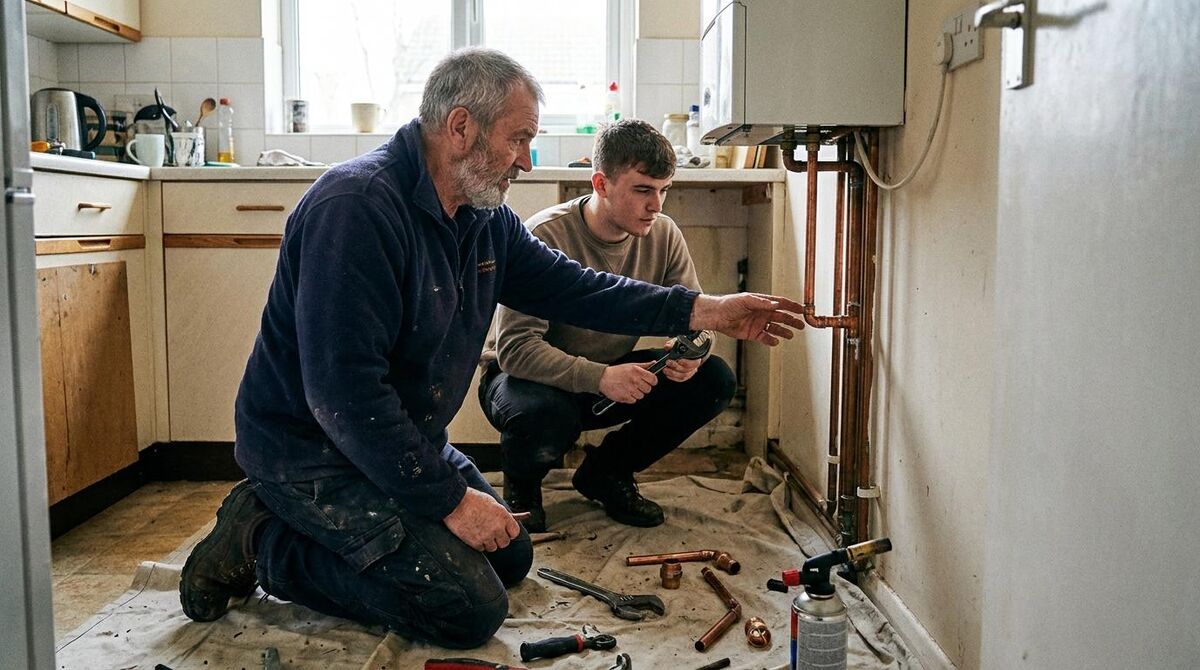
There is a £600 achievement grant for completing an NVQ qualification too. What did change in January 2026 is the short course and attendance grant picture: attendance grants for long qualifications that are not apprenticeships were removed, first aid training is no longer funded, and health and safety short courses like SMSTS and SSSTS are now funded at set rates around £115 each. Annoying if you relied on them, but the apprenticeship grants, the ones with real money in them, are safe.
The catch is simple and it trips people up every year. You only get CITB grants if you are registered and your Levy Returns are up to date. Fall behind on your returns and the grant tap shuts off. Claims go in through the CITB Online Services portal, and payment usually lands by BACS within about four weeks. If you are CITB registered and have never claimed an apprenticeship grant, that is quite literally your own money you have been giving away.
What is being cut, and the 12 month clock
I am not going to sell you the shiny side and hide the rest. Some of this reform takes funding away, and if you are not watching, it will cost you.
Use it or lose it
If you are a levy paying employer, your funds now expire after 12 months instead of 24. The automatic 10 percent top up on your account is going. And once you have spent your levy pot, the government share of any further training drops from 95 percent to 75 percent, so your contribution jumps from 5 to 25 percent. Plan your training across the year or you will watch funding evaporate.
There are cuts to what is funded, too. Level 7 apprenticeships, master's level, are no longer funded through the levy for people aged 22 and over. And a batch of 16 higher level standards is being defunded from September 2026, including some management ones like team leader and operations manager. For most hands on trades firms this will not bite, because your bread and butter is Level 2 and Level 3, and those remain funded. But if you had a manager part way through a higher level programme, check where they stand now.
The industry has been vocal about the risk here. The worry is that letting employers divert up to half the levy into shorter training could pull numbers out of full construction apprenticeships at the exact moment we need more of them, not fewer. It is a fair concern. My take is that the flexibility is a gift if you use it deliberately and a trap if you let short courses quietly replace the proper pipeline of new tradespeople.
Your claim the funding checklist
Enough theory. Here is what to actually do, in order. Work through it once and you will know exactly which funding you can pull down this year.
- Work out your pay bill and CITB status. Above or below £3 million? CITB registered or not? Those two answers decide everything that follows. Fifteen minutes, tops.
- Set up or log into your Apprenticeship Service account. This is the government portal at gov.uk where all apprenticeship funding is managed. Non levy employers reserve funding here before they recruit, so do this before you make an offer, not after.
- Reserve funding for any apprentice you plan to hire. For a 16 to 24 year old, the training is fully funded from August 2026. Reserve the funding, then choose a training provider.
- Claim the £2,000 young apprentice payment. This comes through your training provider in instalments as the apprentice hits milestones, so make sure your provider has it set up against your learner.
- If you are CITB registered, get your Levy Returns up to date. No up to date returns means no grants. This is the single most common reason firms miss out.
- Claim your CITB apprenticeship grants. Log into CITB Online Services and claim the £2,500 per year attendance grant and the £3,500 completion grant for each approved apprentice. This stacks on top of national funding.
- Use apprenticeship units to upskill your existing team. Need a specific skill fast? A short modular unit beats waiting years. Ask your provider what units map to the gap you have.
- Diarise the deadlines. If you are a levy payer, mark the 12 month expiry on every pot. If you are claiming CITB grants, note the claim windows. Funding you forget about is funding you lose.
A quick note before you file this away
This is general guidance, current for 2026, not tailored advice for your business. Funding rules shift, and your exact eligibility depends on your size, your sector activities, and your CITB registration. Confirm the detail with your training provider, your CITB adviser, and the official guidance on gov.uk before you commit.
What the industry is saying
Recommended videos

Growth and Skills Levy Recap for Employers
DfE Sector Comms

Growth and Skills Levy Explained (2026 Rules)
Solveway Apprenticeships

What Is the Apprenticeship Levy, and How Can Employers Use It?
Gen2
How the Apprenticeship Budget Works (Updated June 2026)
DfE Sector Comms

Apprenticeship Levy Explained
Gloucestershire College

Apprenticeship Funding Rules 2026 to 2027
DfE Sector Comms
Frequently asked questions
No. The 0.5 percent levy only applies to employers with a pay bill above £3 million, which is most contractors' territory, not a typical trades firm. But you can still access funded apprenticeship training as a non levy employer, and from August 2026 the training for a 16 to 24 year old apprentice is fully government funded. If you are in construction you may also pay the separate CITB Levy.
They are short, modular blocks of training, roughly 30 to 140 hours, built from existing apprenticeship standards. Instead of committing someone to a full multi year apprenticeship, you fund a focused block that targets one skill gap. Levy payers can put up to half their annual funds towards these units while keeping the rest for full apprenticeships.
For a non levy employer taking on a 16 to 24 year old, the training is fully funded from August 2026, so the training cost to you is nil. For apprentices aged 25 and over you pay a 5 percent share and the government covers 95 percent. On top of that you pay the apprentice's wages, and you may qualify for the £2,000 employer payment.
It is an employer incentive for taking on a young apprentice, including on a construction foundation apprenticeship. It is paid in instalments through your training provider as the apprentice reaches set milestones, not as a lump sum you claim directly. Make sure your provider has it registered against your learner from the start.
Yes, and you should. The CITB Levy is separate from the Growth and Skills Levy. If you are CITB registered and up to date with your Levy Returns, you can claim the £2,500 per year attendance grant and the £3,500 completion grant for an approved apprentice, on top of the national training funding for the same learner. Claims go through CITB Online Services.
For levy payers, the fund expiry drops from 24 to 12 months, the 10 percent top up ends, and the co-investment rate falls from 95 to 75 percent once your funds run out. Level 7 apprenticeships are no longer levy funded for those aged 22 and over, and 16 higher level standards are being defunded from September 2026. Level 2 and Level 3, the backbone of trades training, remain funded.
It depends on your activities. CITB registration is based on the construction work your business carries out, and some trades sit inside its scope while others do not. Check your status directly with CITB rather than assuming. Whatever the answer, the national Apprenticeship Service is open to all English employers, so the apprenticeship funding is available either way.
My verdict
My Verdict
I have spent years watching trades owners treat training funding as somebody else's paperwork, and I understand exactly why. The old system was a maze. But 2026 tilted the board towards you: fully funded young apprentices, a £2,000 payment for taking them on, short courses for quick upskilling, and CITB grants worth thousands that most firms never claim. This is money you are already paying for. Leaving it unclaimed is a decision, even if you never meant to make it.
Best for: Any UK trades employer thinking about apprentices or upskilling their team
Money on the table: Up to £8,500 CITB grants plus a £2,000 incentive per young apprentice
First step: Work out your pay bill and CITB status, then set up your Apprenticeship Service account
Watch out for: The 12 month expiry for levy payers and lapsed CITB Levy Returns
Do the two minute audit, set up the account, and pull down what is yours. Building your own people is still the most reliable way through the skills shortage, and the funding has never made it easier to start. Please do let me know how you get on.