60-Second Answer
If you charge £35+/hour and spend more than 3 hours a week on admin, job management software pays for itself within the first month. Tradify costs £34/month, ServiceM8 starts at free, and both save most sole traders 5-8 hours of admin a week. WhatsApp and spreadsheets are free but the hidden costs, missed jobs, double-bookings, and late invoices, add up to thousands per year.

Table of Contents
- The real problem with WhatsApp and spreadsheets
- The true cost of "free": hidden hours and missed money
- WhatsApp + spreadsheets: what you get (and what you lose)
- Job management software: what it actually does
- Pricing breakdown: free vs paid options
- Break-even calculator: when does software pay for itself?
- Feature comparison: side by side
- What real users say: review sentiment
- Video guides and demos
- What the community thinks
- Frequently asked questions
- Our verdict
The real problem with WhatsApp and spreadsheets
 WhatsApp
 Excel / Google Sheets
 Job Management Software
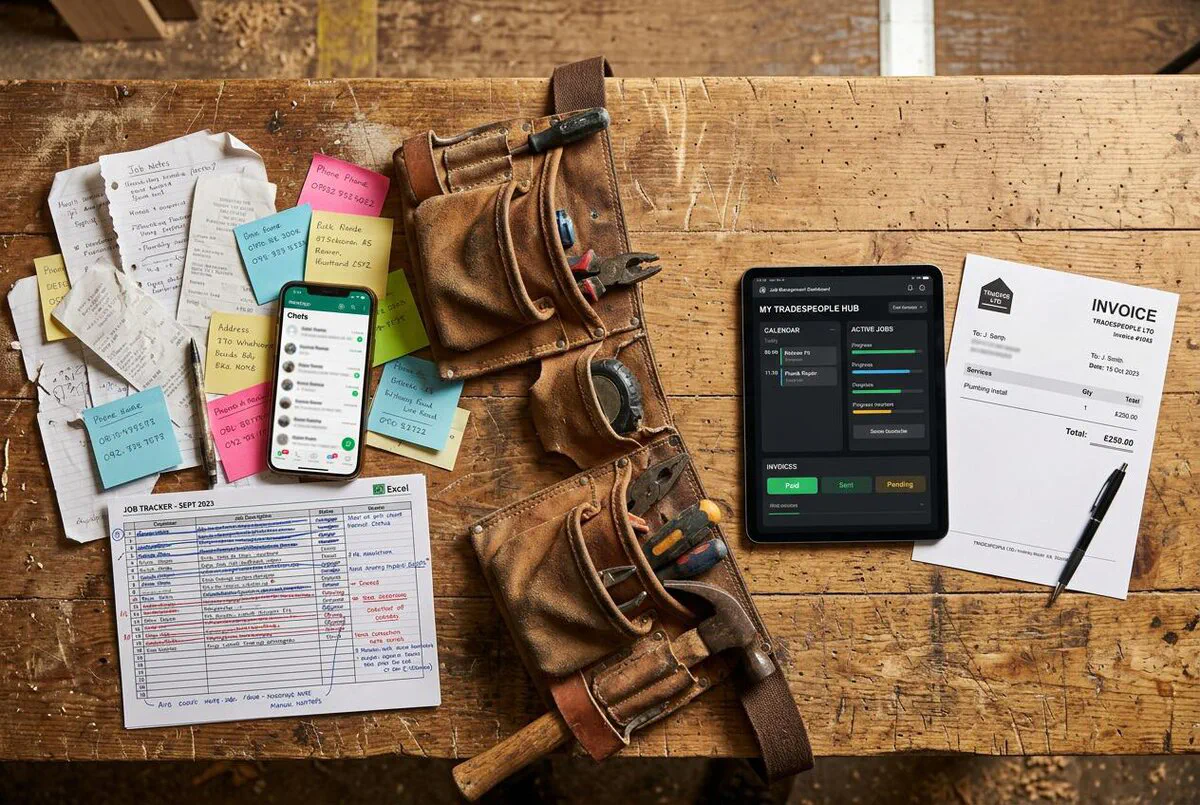
Most UK tradespeople started their business the same way. A phone, a WhatsApp group for the crew, a spreadsheet for jobs, and a notepad for quotes. It works when you have three jobs a week. It starts to fall apart at ten. By twenty it's costing you real money.
This is not a piece trying to sell you software. It's a genuine cost comparison. We want to work out, in pounds and hours, at what point purpose-built job management software pays for itself compared to the free tools you're already using.
The answer depends on your day rate, how many jobs you run, and how much time you lose to admin. We've built a calculator below to run the numbers for your specific situation.

The true cost of "free": hidden hours and missed money
WhatsApp is free. Excel is either free or already bundled with your Microsoft 365 subscription. But "free" is only the upfront cost. The hidden costs come in four forms.
1. Admin time eating into billable hours
On a manual system, the average sole trader spends 6-7 hours a week on admin. That's writing up quotes from memory, chasing invoices by text, updating spreadsheets, re-confirming jobs that got lost in a WhatsApp thread, and hunting for the job address you saved somewhere. At £35/hour that's £245 a week, or £12,740 a year in unbillable time. Even at £25/hour it's £9,100 annually.
The WhatsApp thread problem
WhatsApp groups designed for job management devolve fast. By day three, job updates share space with football scores, memes, and "who took the drill again?" By day ten, critical job details are buried 400 messages deep. Research found one cleaning business lost 40 jobs in a single month when a driver went on holiday and communication collapsed in a group chat. That's £600 in lost revenue from one holiday.
2. Missed jobs and double-bookings
Spreadsheets have no conflict detection. Two engineers booked on the same job at the same time, or a job missed entirely because the cell was edited on the wrong version. These mistakes cost in two ways: directly in wasted time driving to the wrong place, and indirectly in reputation damage when a customer is left waiting.
3. Late invoicing and slow payment
On a manual system, invoicing happens when you get around to it, usually in the evening, usually a few days late. Studies across UK service businesses find that invoices sent within 24 hours of job completion get paid 40% faster than those sent a week later. If your average invoice is £350 and you complete 10 jobs a week, you've got £3,500 of outstanding work at any given time. Getting paid a week earlier changes your cash flow significantly.
4. The opportunity cost of looking unprofessional
Customers increasingly expect a digital-first experience. A WhatsApp confirmation and handwritten invoice is normal for small jobs. For a £5,000 bathroom refit or a commercial maintenance contract, customers compare you against competitors who send professional quotes with photos, automated booking confirmations, and digital sign-off. Losing one contract a quarter because you looked less professional than the next quote costs far more than a year's software subscription.

Annual hidden costs: manual vs software
WhatsApp + spreadsheets: what you get (and what you lose)
WhatsApp + Spreadsheets
4.5/10The default setup for most trades businesses. WhatsApp handles communication with customers and the crew. Spreadsheets track jobs, quotes, and invoices. Works fine at low volume. Breaks down at scale.
Pros
- Free (zero subscription cost)
- Everyone already knows how to use it
- Flexible: build any system you want
- Works offline
- WhatsApp is fast for customer communication
Cons
- No automated invoicing or reminders
- No conflict detection for double-bookings
- Job history scattered across chats
- Spreadsheets break with multiple users
- No customer portal or digital sign-off
- Manual data entry errors cause real problems
- Looks unprofessional for larger contracts
- No reporting or profitability data
When WhatsApp + spreadsheets is fine
If you do 1-5 jobs a week, work alone, and only do repeat customers, the free setup probably works well enough. The tipping point for most tradespeople is around 8-10 jobs a week, or when you take on your first employee or apprentice. That's when the cracks start to show.
Job management software: what it actually does
Job management software replaces the disparate combination of WhatsApp, spreadsheets, paper job cards, and memory with a single system. At the core, it handles: job creation, scheduling, customer communication, quoting, invoicing, and payment collection. The better platforms also do timesheets, materials tracking, photo documentation, and GPS tracking.
Job Management Software
8.5/10Purpose-built tools like Tradify, ServiceM8, Workever, ToolTime, and Fergus that centralise your entire business workflow. Most have a free tier or low-cost starter plan for sole traders.
Pros
- One place for jobs, quotes, invoices, and customers
- Automated invoice generation and payment chasing
- Scheduling with conflict detection
- Customer portal for sign-off and approvals
- Professional branded quotes and invoices
- Integrates with Xero and QuickBooks
- Real-time job tracking and team visibility
- Reporting: revenue, job costs, profitability
Cons
- Monthly subscription cost (£8-£120/month)
- Setup time (typically 1-2 days to migrate)
- Team training required
- Some platforms have steep learning curves
- Over-engineered for very small operations

Pricing breakdown: free vs paid options
The range is wider than most people expect. You can start with a free tier and pay nothing until you outgrow it. Here are the realistic options for UK sole traders and micro-businesses in 2026.
Free / DIY
- WhatsApp Business (free)
- Google Sheets (free)
- ServiceM8 Free (up to 30 jobs/mo)
- Tradify free trial (14 days)
- Manual invoicing
- No automated reminders
Starter
- ServiceM8 Lite (£8/mo, 50 jobs)
- Tradify (£34/mo UK)
- ToolTime (£59/mo office + field)
- Quotes, invoices, scheduling
- Mobile app included
- Basic accounting integration
Professional
- ServiceM8 Growing (£59/mo, 150 jobs)
- ToolTime full team (£59 + £29/field user)
- Workever (from £29/user/mo)
- Full team scheduling and dispatch
- Advanced reporting and job costing
- Customer portal and digital sign-off
The ServiceM8 free plan is genuinely useful
ServiceM8's free plan covers up to 30 jobs a month, which covers most sole traders just starting out. You get job cards, scheduling, quotes, invoices, email and SMS, mobile payments, and accounting integrations. If you do fewer than 30 jobs a month and aren't ready to commit, start here. You can upgrade when you hit the limit.
Break-even calculator: when does software pay for itself?
The question everyone asks is simple: at my rates and job volume, how long before software pays for itself? Use this calculator to find your number.
Job Management Software Break-Even Calculator
Feature comparison: side by side
| Feature | WhatsApp + Spreadsheets | Job Management Software |
|---|---|---|
| Monthly cost | Free | £0-£120/mo |
| Setup time | Minutes | 1-2 days |
| Job scheduling | Manual spreadsheet | Automated with conflict detection |
| Quoting | Email/Word doc | Branded digital quotes with approval |
| Invoicing | Manual, often delayed | Auto-generated, same-day |
| Payment collection | Bank transfer/cash | Card on site, payment links |
| Customer history | Scattered across chats | Full CRM with all job history |
| Team visibility | WhatsApp messages | Live dashboard, GPS tracking |
| Accounting integration | Manual data entry | Xero/QuickBooks sync |
| Professional appearance | Basic | Branded, modern |
| Reporting / profitability | None | Revenue, costs, margins |
| Works offline | Yes | Most platforms, partial offline mode |
What real users say: review sentiment
We looked at Trustpilot and Capterra ratings across the main job management platforms available to UK tradespeople in 2026. The picture is broadly positive, though some platforms score better on ease of use and others on features.
Tradify (Trustpilot)
ServiceM8 (Capterra UK)
ToolTime (Capterra UK)
Workever (GetApp UK)
The common complaint
Across reviews, the most common negative theme is the initial migration. Getting years of job history and customer details out of spreadsheets and into a new system takes time. Most platforms offer onboarding support, but budget a weekend for a proper setup. The reviews that say "wish I'd switched sooner" all mention the same thing: they put it off because of the migration but it took a fraction of the time they expected.

Which platform for which business?
Not all job management software is built the same way. Here's a quick guide by business type.
- Solo operator, under 30 jobs/month: Start with ServiceM8 Free. No cost, no commitment, covers the basics including invoicing and scheduling. Upgrade only when you need to.
- Sole trader, 30-80 jobs/month: Tradify at £34/month is the most-recommended option at this scale. Simple, mobile-first, and built for trades rather than generic field service.
- Small team (2-5 engineers): ToolTime (£59 office + £29/field user) or ServiceM8 Growing (£59/month, 150 jobs). ToolTime is particularly strong for UK-based businesses and has a responsive UK support team.
- Growing business (5+ vans): Workever, Fergus, or BigChange. These platforms handle complex scheduling, multi-engineer jobs, and deeper accounting integration. Budget £29-£70 per user per month.
- Specific trade (gas/heating): Consider Commusoft or Powered Now, which have compliance document management built in, useful for Gas Safe certificates and EPC reports.

Video guides and demos
Best Job Management Software for Tradesmen UK
Pipe App
UK-focused comparison of top job management platforms
Tradify Explained: Electrician Software Review
Artisan Electrics
Real-world review from a working electrician
Fergus Job Management Software Overview
Fergus
Full walkthrough of the Fergus platform for trades

6 Best Time-Saving Apps for Tradesmen
One Base Media
Practical rundown of must-have apps for UK trades

Tradify: Complete Job Management Walkthrough
The Handy Manual
Step-by-step guide through every Tradify feature

Tradify UK Web Walkthrough
Tradify
Official UK-specific product demo and features tour

Why Tradespeople Trust Tradify
Tradify
Customer stories from real tradespeople using Tradify
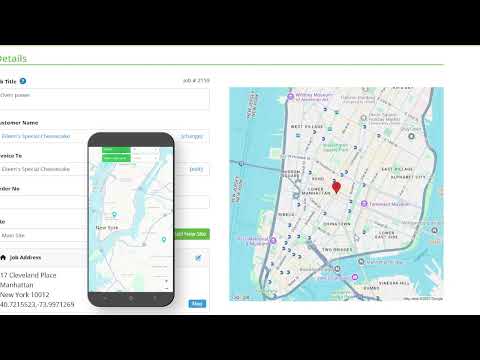
iTrade: Job Management Software for Trades
iTrade
Overview of iTrade platform for UK tradespeople
What the community thinks
Frequently asked questions
WhatsApp Business adds a few useful features: a business profile with address and opening hours, quick reply shortcuts, automated away messages, and catalogue functionality. For customer-facing communication it's genuinely better than regular WhatsApp. But it doesn't solve the core problem: it's still a messaging app, not a job management system. You still can't schedule, invoice, or track profitability from within it.
Most platforms can be set up in a day. Customer import usually takes 1-2 hours if your spreadsheet is reasonably organised. Historical job data is rarely worth migrating in full: most tradespeople just import active customers and start fresh for new jobs. Both Tradify and ServiceM8 offer onboarding calls to help you get started, included in the price.
Most platforms have partial offline functionality. Tradify caches jobs locally, so you can view and update job details without a signal. ToolTime and ServiceM8 both have offline modes. The limiting factor is usually syncing: changes made offline sync back when you reconnect. For most UK job sites with at least partial mobile signal, this isn't a practical issue.
Yes, all the major platforms integrate with Xero and QuickBooks. Tradify, ServiceM8, ToolTime, Workever, and Fergus all have direct two-way integrations that sync invoices, payments, and customer records. Some also integrate with Sage. This is one of the biggest time-saving wins: invoices created in the job management app appear in your accounting software automatically, with no manual re-entry.
All major platforms store data on secure cloud servers with encryption, regular backups, and UK/EU data residency for GDPR compliance. Ironically, this makes them more secure than a spreadsheet saved on your laptop (which could be lost, stolen, or corrupted). Tradify, ServiceM8, and ToolTime are all GDPR-compliant and publish their data processing agreements publicly.
Our Verdict
WhatsApp and spreadsheets are not free. They cost you time, and time is the thing you sell. For any UK tradesperson doing more than 8-10 jobs a week, purpose-built job management software pays for itself within weeks. The only genuine reasons to stay on manual systems are if your job volume is very low (under 30 jobs a month) or you're happy with the current level of admin. If either of those is changing, the switch is worth it.
Best free option: ServiceM8 Free (up to 30 jobs/month, full feature set)
Best for sole traders: Tradify at £34/month, simple and mobile-first
Best for small teams: ToolTime (£59+£29/field user) with dedicated UK support
Break-even point: Typically 1-3 weeks for anyone billing £35+/hour