
Quick Answer
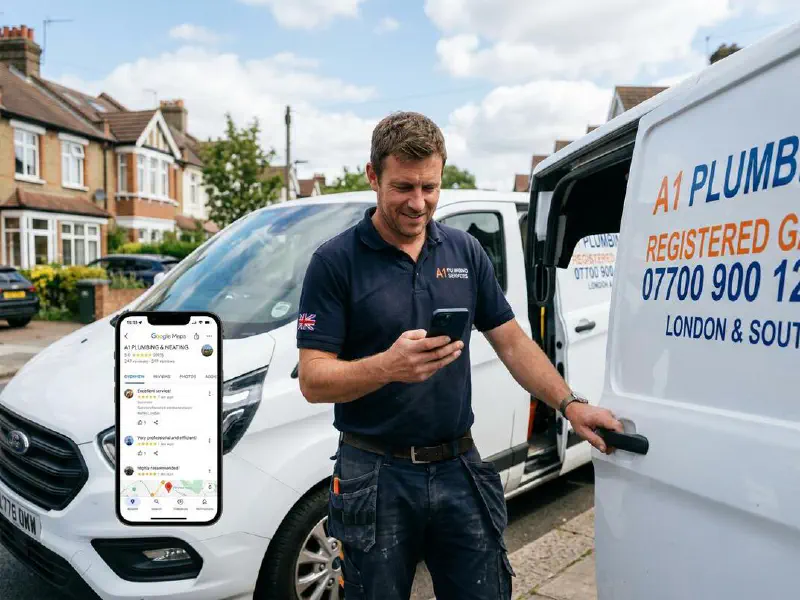
Your service plan is not just a pile of direct debits, pal. It is the single best local SEO asset your business owns, and almost nobody treats it that way. Every plan customer is a review waiting to happen, a repeat search for your name, and a reason to build a page that ranks for the exact jobs you want. Wire your plan into your reviews, your Google Business Profile and one dedicated landing page, and you turn recurring revenue into recurring rankings. Same customers, same visits, twice the return. This time next year, Rodney.
Table of Contents
- The asset sat in plain sight
- What Google actually rewards locally
- Signal one: a review machine on a timer
- Signal two: the page nobody builds
- Signal three: customers who Google your name
- Signal four: the content calendar writes itself
- How to wire it up: the 6-step build
- Your first 90 days
- The mistakes that waste the asset
- What homeowners and trades are saying
- Videos worth your time
- Frequently asked questions
- My verdict
The asset sat in plain sight

Right, quick question. What is your service plan, in your head? Be honest. For most heating engineers I talk to it is a spreadsheet of names, a stack of direct debits, and a diary reminder every twelve months to go and do the annual. Steady money. Nice to have. Keeps the winter quiet-patch fed. And that is exactly where it stops.
Here is the thing though. That plan is not a spreadsheet. It is the best local SEO asset your business will ever own, and you are sat on it like it is a box of old CP12s in the back of the van. Recurring revenue, everyone gets. Recurring rankings, almost nobody does. Same customers, same yearly visit, and you are leaving half the value on the table because you never asked the plan to do a second job.
For me this is the bit that does my head in. You have already done the hard work. You have won the customer, earned the trust, got a foot in the door every single year. That relationship is precisely what Google is desperate to see when it decides who shows up in the map pack for "boiler service near me". The signals are already flowing through your business. You are just not catching them.
So let us fix that. This is not a lecture on keyword density and none of that boring agency waffle. This is how you take the plan you already run and turn it into a machine that feeds your rankings every month of the year, without spending a penny more on ads.
What I mean by "service plan" here
Any recurring maintenance arrangement: a monthly boiler care plan, an annual service agreement, a landlord package, a commercial contract. If a customer pays you on a repeat schedule and you see them again on a predictable clock, that is the asset I am on about. In the UK these plans typically run anywhere from about seven to twelve pounds a month, and the customers stick around for years.
What Google actually rewards locally
Before I show you the plumbing, you need to know what the taps are feeding. Local search is not organic search with a postcode bolted on. Google runs a separate local algorithm for the map pack, that little three-business box that sits above everything on a "near me" search, and it weighs a different set of signals.
Roughly speaking, and every study carves it up slightly differently, it looks like this. Proximity to the searcher is the big one, around 55 percent, and you cannot control where someone is standing. After that it is your Google Business Profile signals at about 32 percent, on-page signals on your website around 19 percent, review signals around 16 to 20 percent and climbing, links about 15 percent, then behaviour and citations behind that.
Look at where you can actually move the needle. Proximity, fixed. But reviews, your profile, and your on-page content? That is three of the four controllable levers, and every one of them is fed brilliantly by a service plan. Reviews come from happy customers you see on a schedule. Profile freshness comes from having something to post about. On-page content comes from having a real, specific service to write a page around. You do the maths.
If you want the full month-by-month routine that keeps a profile ranking, I have written that up separately in my 30-minute monthly local SEO routine. This piece is about the fuel. That one is about the engine.
Signal one: a review machine on a timer
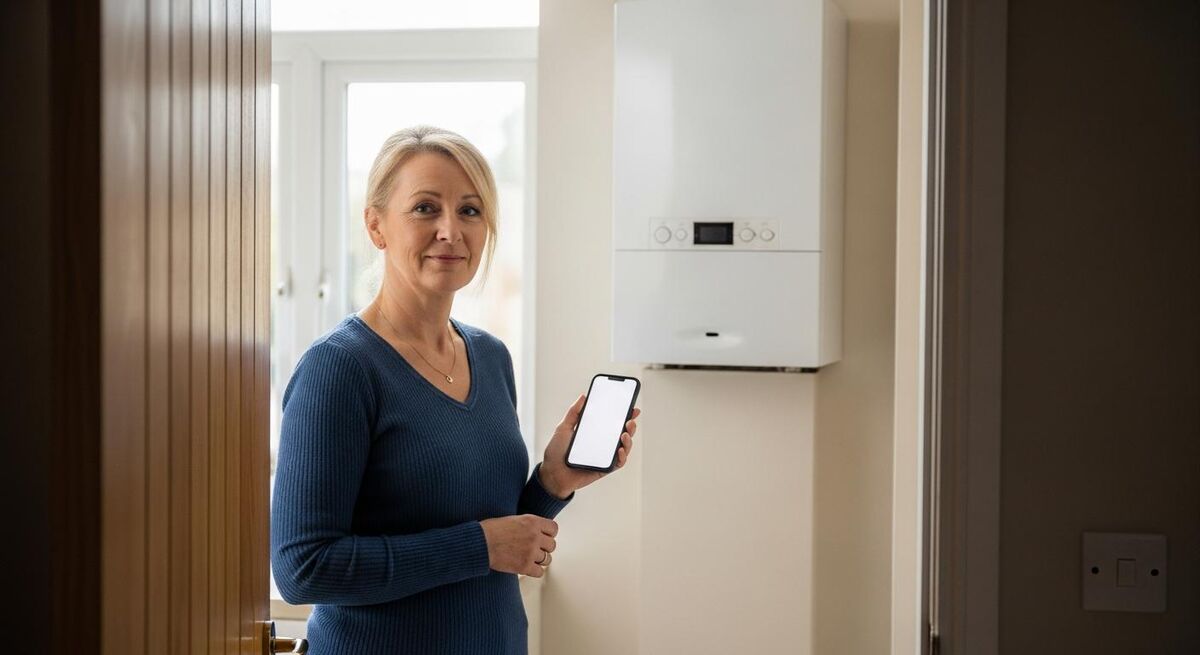
Reviews are the lever that has grown the fastest, and it is the one your plan is built to pull. Here is why it matters so much: Google does not just count your total reviews. It watches your review velocity, the steady drip of fresh ones landing month after month. A business with forty reviews from three years ago looks dead. A business with a new review every couple of weeks looks alive, trusted, and current. Velocity beats volume, every time.
Now think about what a service plan gives you. A predictable, year-round stream of visits to customers who already like you enough to pay you monthly. That is not a cold review ask to someone whose tap you fixed back in 2021. That is a warm, "just serviced your boiler, everything is spot on, would you mind" moment, with the customer stood in their own kitchen while you pack the van. Ask at that exact point and the yes rate is enormous.
Spread your plan services across the year and you have accidentally built a review calendar. Fifty plan customers, serviced across twelve months, is roughly four review opportunities a month landing forever. That is the velocity Google wants, and you are generating it as a by-product of work you were doing anyway. No ad spend. No gimmicks. Just asking, every time, at the right moment.
Ask at the boiler, not from the office
The review dies in the follow-up email three days later. Ask while you are stood there, phone out, job done. Have a saved link to your Google review page as a text ready to fire over before you have left the drive. Make it a two-tap job for them and watch the response rate triple.
One thing to be dead careful about. Never offer money off the plan, or a freebie, in exchange for a review. Google's policy is clear and it will scrub incentivised reviews, sometimes taking the good ones with them. Ask for honest feedback because it helps the business. That is it. And reply to the reviews you get, all of them, because response rate is itself a ranking factor and businesses that reply to most of their reviews get a measurable bump.
Signal two: the page nobody builds
Here is a job for you. Go and Google "boiler service plan" plus your town. Go on, I will wait. What comes up? I will bet my van it is the big national cover firms, a comparison site or two, and precisely zero local engineers. That is a keyword with real buying intent, low competition in your patch, and nobody local is even turning up. That is a gap the size of a barn door.
Most trades websites have a homepage, a vague "services" page, and a contact form. That is your on-page SEO doing about ten percent of its job. Google rewards specificity: one page per service, one page per town. A dedicated service plan page, written properly, targets a commercial-intent search that your competitors are ignoring, and it becomes the single best place to send every enquiry, every quote follow-up and every "how much is your cover" question.

What goes on it? Your plan tiers and honest pricing, because people scanning for "boiler service plan cost" bounce off pages that hide the number. Your town named naturally in the headings and copy. Real photos of your actual engineers, not stock. Three or four of your genuine reviews pulled through. And a proper FAQ section at the bottom, because those question-and-answer blocks can earn you FAQ rich results and, more and more, get your business quoted by the AI answer boxes that now sit above the map pack.
That FAQ bit matters more every month. The AI systems that summarise "who does boiler cover in my area" are hungry for structured, specific, question-shaped content, and they lean heavily on businesses with a solid review base to name. A well-built plan page is how you feed both the old map pack and the new AI answer at the same time. Your website is meant to be a kick-ass sales platform, not a digital business card, and this is one of the few pages that pays for itself. I go deeper on the whole site in my guide to trades websites that actually generate leads.
The compounding maths
One plan customer is worth roughly a monthly payment, plus one fresh review a year, plus a branded search for your name every time their boiler coughs, plus a rebooking you did not have to chase. The revenue you can see on the direct debit. The SEO value, the reviews and searches and rankings, is the bit you have been giving away for free.
Signal three: customers who Google your name

This one is sneaky and almost nobody talks about it. When a plan customer's boiler plays up, what do they do? They do not search "heating engineer near me" and roll the dice with a stranger. They Google your business name, because they are on your plan and you are their engineer. That is a branded search, and branded searches are a quiet, powerful trust signal to Google.
A steady flow of people searching your name specifically, clicking your profile, and calling you tells Google you are an established, in-demand local business. It is behaviour it cannot fake and cannot easily be gamed. Every plan customer you keep is another person who types your name into the box a few times a year instead of your competitor's. Retention is not just revenue, it is a ranking signal in disguise.
This is also why letting a plan customer drift off is more expensive than it looks. You do not just lose the monthly payment. You lose the annual review, the branded searches, the rebookings and the referrals to their neighbour. Losing a plan customer is losing a little SEO engine, not just a line on the spreadsheet. Keep them close, keep them on the plan, and keep them searching your name.
Keep your details identical everywhere
All of this branded-search value leaks away if your Name, Address and Phone number are different across your website, your Google Business Profile and your old directory listings. Google needs to be confident all these signals point at one business. Pick one exact format and use it everywhere, down to the "Ltd" and the way you write your phone number.
Signal four: the content calendar writes itself

Every trade I know goes blank the second someone says "you should post more". Post what? About what? I get it. Staring at an empty Google Business Profile post box is nobody's idea of a good Tuesday. But your service plan hands you a year of content on a plate, and you have not noticed.
Every service you do is a post. "Just completed an annual service on a combi in [town], all safe and running sweet for another year." Every seasonal reminder is a post. "Plan customers, we are booking winter services now." Every plan milestone, every new tier, every landlord gas safety round. Your Google Business Profile wants fresh posts to stay lively, and a stale profile slides down the pack after about a month of silence. The plan gives you a reason to post that is real, local and specific, which is exactly the sort Google likes.
Same fuel runs your email and your socials. A service reminder email is a touch point. A "here is what we check on your annual" video is a piece of content and a review prompt rolled into one. You are not inventing marketing out of thin air, you are just documenting the work the plan already schedules. If you keep letting your profile go quiet, read my piece on why your Google Business Profile is costing you boiler jobs, because a dead profile undoes a lot of this.
How to wire it up: the 6-step build
Enough theory. Here is the actual build. Six steps, and none of them need an agency or a big budget. They need you to treat the plan as a marketing asset, not just an accounting one.
- Build the dedicated plan page. One page, your plan tiers, honest pricing, your town in the headings, real photos, three genuine reviews and a proper FAQ block at the bottom. This is the home base everything else points at.
- Bolt a review ask onto every plan visit. Make it part of the job, like signing off the paperwork. Phone out, saved review link ready, ask at the boiler before you leave. Standardise it so every engineer does it the same way.
- Turn services into profile posts. A quick photo and two lines after each plan job. Aim for one Google Business Profile post a week, and the plan schedule alone will keep you supplied.
- Set the seasonal reminder rhythm. Book winter services in autumn, chase renewals a month before they lapse. Each reminder is a customer touch and a content prompt at once.
- Lock your NAP and reply to everything. Identical business details everywhere, and a reply to every review, good or bad, within a few days. Response rate is a ranking factor, so treat it like one.
- Measure the right thing. Track new reviews per month and branded searches for your name, not just plan revenue. When those climb, your map pack position climbs behind them.
Do not automate the human bit
Automate the reminders, the emails and the scheduling all you like. Do not automate the review ask into a soulless mass text blast. The whole power of the plan is that it is a real relationship. A face-to-face ask from the engineer who just sorted their heating beats a bulk message every time.
Your first 90 days
You cannot do all six at once and you should not try. Here is how I would phase it if I were starting from a plan that is currently doing nothing but collecting direct debits. Steady wins this, not a frantic weekend.
- Days 1 to 30, foundations. Build the plan page and get it live. Fix your NAP across your website, your Google Business Profile and any directory listings. Save your Google review link as a text on every engineer's phone. Nothing fancy, just the plumbing in place.
- Days 31 to 60, the review habit. Start asking on every single plan visit, no exceptions. Reply to every review that lands. Post to your profile once a week off the back of the jobs you are doing. This is the month you build the habit until it is automatic.
- Days 61 to 90, measure and tune. Look at your numbers. New reviews per month up? Branded searches for your name up? Map pack position for "boiler service plus your town" moving? Double down on whatever is working, tidy up whatever is not, and set the seasonal reminder rhythm for the year ahead.
By day ninety you are not running a service plan any more. You are running a local SEO engine that happens to pay you monthly. And unlike an ad campaign, the second you stop paying for it, it does not switch off. It compounds.
The mistakes that waste the asset
I have watched good engineers with brilliant plans get almost none of this value, because of a handful of daft, fixable mistakes. Do not be these people.
| Signal | Set-and-forget plan | SEO-wired plan |
|---|---|---|
| Reviews | Asked occasionally, if you remember | Asked at every plan visit, all year |
| Website | Vague "services" page, no pricing | Dedicated plan page with FAQ and prices |
| Profile posts | Silent for months | Weekly, fed by real plan jobs |
| Branded search | Customers drift, then Google rivals | Retained customers search your name |
| Net effect | Revenue only | Revenue plus rising local rankings |
The biggest one is treating the plan as purely financial. If the only person who knows your plan customer exists is your accountant, you are wasting it. The second is inconsistency, asking for reviews when the mood takes you instead of every time. Sporadic beats never, but systematic beats both. The third is going quiet, letting the profile gather dust between services so it slides down the pack right when the winter rush hits.
And the quiet killer: not fighting for renewals. Every lapsed plan customer is a little engine you switched off. The nationals spend fortunes advertising to win the customers you already have. Do not hand them over because you forgot to send a renewal reminder. If you want the customers still sat on the boiler-versus-heat-pump fence, I cover reaching them in my piece on marketing heat pumps to people still Googling "boiler replacement".
What homeowners and trades are saying
Do not just take it from me. Here is what real homeowners and trades are saying about local plans, loyalty and why people pick a trusted local engineer over the big cover schemes. This is the behaviour underneath every ranking signal above.
Videos worth your time
A few really useful watches on local SEO, reviews and building recurring value. Grab a brew.

Local SEO Masterclass: Ranking Factors and Reviews
Edward Sturm

Local SEO Google Business Profile Best Practices 2026
Surfside PPC

Google Business Profile Optimisation 2026
Sam Bretzmann

Home Service Businesses with Recurring Revenue
Beau Eckstein

2026 Marketing Plan for Plumbing and HVAC
Plumbing & HVAC SEO

2026 Digital Marketing Blueprint for Home Service
Plumbing & HVAC SEO

How to Grow a Boiler Installation Business
FatRank

How to Grow a Boiler Business
James Dooley
Frequently asked questions
More worth it, if anything. A small plan base means every single customer counts double. Ten plan customers who each leave a review and search your name is a stronger local signal than a hundred one-off jobs you never hear from again. Start where you are.
No. One clear page with your tiers, honest pricing, your town named naturally, a few real photos and a FAQ block beats a flashy site with nothing specific on it. Substance over shine. If your platform lets you add a page, you can do this today.
There is no magic number, but momentum matters more than the total. A steady few every month beats a big burst then silence. As a bonus, the AI answer tools tend to start naming businesses once they are well past the hundred mark, so keep the drip going and do not stop.
No, and do not risk it. Incentivised reviews break Google's rules and it will strip them, sometimes taking your legitimate ones down with them. Ask for honest feedback because it helps the business. That is the only script you need.
Most trades see profile visibility and map pack movement within about four to twelve weeks of a consistent review and posting habit. It is not overnight and anyone promising that is having you on. But unlike ads, once it moves it tends to stay, and it compounds.
Not at all. Any trade with a recurring arrangement works the same way: gas, electrical testing, alarm and fire checks, drainage contracts, landlord packages. If you see the same customers on a schedule, you have the asset. The plumbing in this article is identical.
My verdict
My verdict
Your service plan is the most under-worked marketing asset in your business, and it is sat right there under your nose. You already have the customers. You already see them on a schedule. You have already earned the trust that Google is falling over itself to reward. All you are missing is the decision to make the plan do a second job.
Wire the reviews to the visits, build the one page nobody else in your town has bothered with, keep the profile fed off the work you are already doing, and hang on to your renewals like they are gold, because for your rankings they are. Do that and you stop running a service plan and start running a local SEO engine that pays you monthly. Recurring revenue is lovely. Recurring rankings are how you own your patch. Get on it. Toodle pip.
Best for: any trade with recurring plan or contract customers
Biggest win: review velocity, generated as a by-product of work you already do
Cost: zero extra ad spend, just a change in habit
Payoff: rankings that compound instead of switching off when you stop paying