
Quick Answer
In my experience as a female entrepreneur who has been coaching in the trades and construction sector since 2010, I know first-hand what it is like to work in a male-dominated industry. Through Evolve and Grow I have seen the real opportunity that exists for women in this sector. Know your numbers: women make up just 2% of on-site UK construction workers, yet 96% of homeowners say they'd hire one and a third actively prefer it. Female apprenticeship starts have risen 67% in five years. Sound familiar? There is a serious, commercially significant supply-demand mismatch here, and employers who address it first will have a distinct advantage recruiting in a shrinking talent pool.
Table of Contents
- The Numbers That Will Surprise You
- The Real Barriers (and What the Data Says)
- The Business Case for Diverse Trades Teams
- AI in Hiring: Friend or Foe for Female Candidates?
- Training Programmes Actually Working in 2026
- Key Milestones: Women in UK Trades
- Verdict
- What UK Tradeswomen and Employers Say
- Watch: Women in Trades on YouTube
- Women in UK Trades FAQ
The Numbers That Will Surprise You
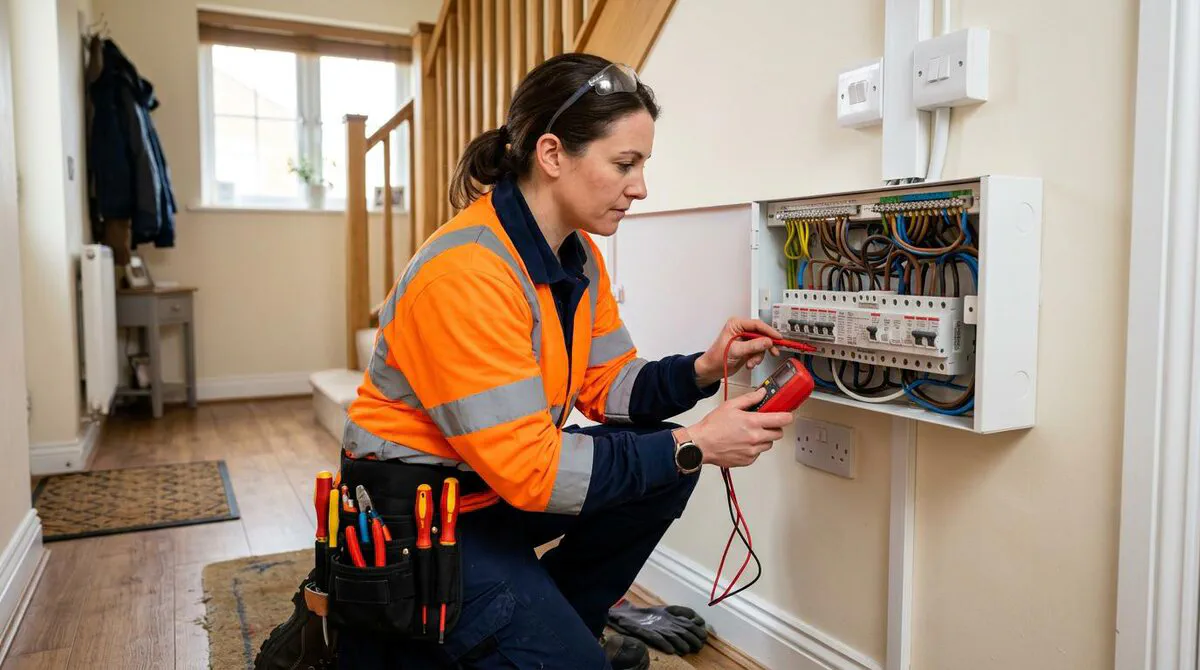
From managing teams at global restaurant and coffee chains to coaching tradespeople, my career path has not been the conventional one. As a female entrepreneur named UK's Best Business Woman for my work in the trades and construction sector, I am proud to work within an industry where I can make a real difference. There is a real opportunity for female tradespeople right now, and it has been proven and tested by the likes of Hattie Hasan. I think a lot of single women would feel more comfortable with a woman coming into their home to carry out work. Start with the headline figure: around 2% of on-site skilled trades workers in the UK are female. That number has barely shifted in decades. But look beneath the surface and you find a data set full of contradictions, surprises, and genuine business opportunity.
The 2% figure refers specifically to craft and operative roles on-site. The broader construction workforce is 15% female when you include professional, technical, and managerial roles. That is still low by most industry standards, but it is not quite the wasteland the headline stat implies. The real bottleneck is in the tools-in-hand trades: plumbing, electrical, bricklaying, carpentry. That is where the 2% number lives.
The apprenticeship trend is the most striking data point. CITB figures show female construction apprenticeship starts increased 67% over five years, from around 1,450 in 2018/19 to around 2,420 in 2023/24. Completions are up 170%. The pipeline is growing fast, even as the broader apprenticeship crisis continues to affect the trades, which means employers who are not actively recruiting women right now are already behind the curve.
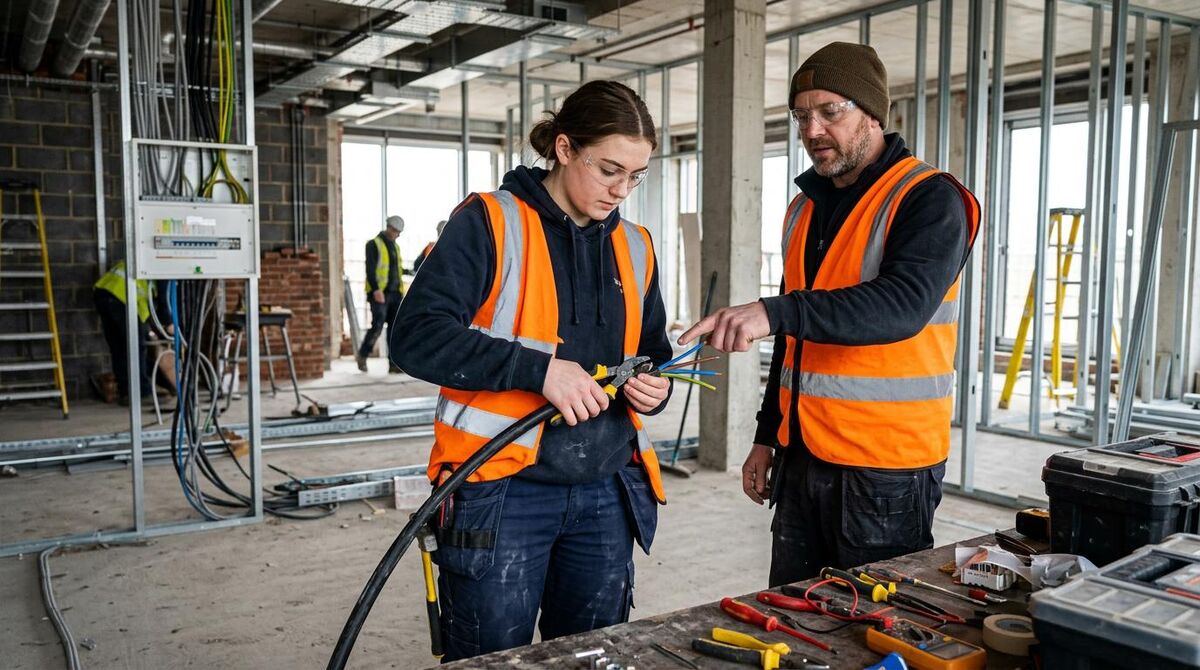
The demand side is equally compelling. Industry surveys suggest 96% of homeowners are open to hiring a female tradesperson, and 33% said they actively prefer one. Google searches for "lady plumber near me" are up 450% over five years. There is a real, unmet market demand that is currently being left on the table.
Women by Trade: Where the Numbers Sit
Not all trades are equally imbalanced. Here is how female representation breaks down by sector, based on CITB and ONS data:
Gender Pay Gap
The gender pay gap in construction sits at 23.7%, compared with the national average of 14.3%. Part of this reflects occupational segregation, with women more concentrated in lower-paid administrative and support roles rather than higher-paid craft trades. As more women move into on-site trades, this figure is expected to narrow.
The Real Barriers (and What the Data Says)
The question is not whether women can do trades work. The evidence on performance, productivity, and reliability is unambiguous on that. The question is why so few enter the profession in the first place, and why attrition is still high in the early years. The same retention challenges that affect the wider trades workforce hit harder for women, and the research points to a cluster of structural and cultural factors rather than any single cause.
| Perceived Barrier | What the Research Actually Shows |
|---|---|
| Physical demands | Most trades rely on skill and technique, not brute strength. Ergonomic tool design has reduced the physical gap considerably. Studies show female tradespeople report fewer musculoskeletal injuries on average. |
| Client reluctance | 96% of homeowners say they are open to hiring women. Some trades report female tradespeople receive higher customer satisfaction scores, especially in occupied homes. |
| Hostile working environment | This one is real. Surveys consistently find a significant minority of women leave the trades within five years due to bullying, harassment, or persistent scepticism from colleagues. The industry has improved, but not enough. |
| Lack of role models | TikTok and Instagram have changed this substantially. Accounts like @mackenziepike_ and @the.girl.sparky have hundreds of thousands of followers. But school and college guidance still lags behind the social media reality. |
| Unsuitable facilities on site | Basic welfare provisions (separate toilets, changing areas) are still absent on a significant minority of UK construction sites. This is a compliance issue, not just a comfort one. |
| Apprenticeship pay | At the National Minimum Wage rate, apprenticeship pay is a barrier for anyone without family financial support. This disproportionately affects candidates from lower-income backgrounds, including many women considering a career change. |
The Attrition Problem
Research from the Chartered Institute of Building found that women leave the construction industry at a much higher rate than men in the first five years. The primary reasons are not physical: they are cultural and structural, often closely linked to mental health and burnout challenges that affect the wider trades workforce. Retention, not just recruitment, is where employers need to focus.
I cover this extensively in my BUILD system and in my book Build and Grow. When you are looking to come off the tools and grow your business, getting the right people in place is everything. As soon as you niche, say by actively marketing towards female customers who would prefer a woman in their home, you will get that particular business and all the rest. It is about thinking of your company as a brand for employees, not just for customers. What makes you different? What makes you a good employer? If in doubt, throw it out applies to bad practices just as much as bad hires.
The Business Case for Diverse Trades Teams
Setting the equality argument aside entirely and looking at this purely commercially, the case for recruiting women into trades is strong. The UK construction industry needs 239,300 extra workers by 2030 according to CITB. The existing talent pool is not large enough to fill that gap. Women represent approximately 50% of the working-age population. The maths is simple.
Beyond the numbers game, research on diverse teams in trade and construction contexts shows consistent performance advantages. Mixed-gender teams on site report fewer safety incidents. Client satisfaction scores are higher. Retention among female employees, once they pass the critical first three years, tends to be stronger than for male counterparts of the same tenure.
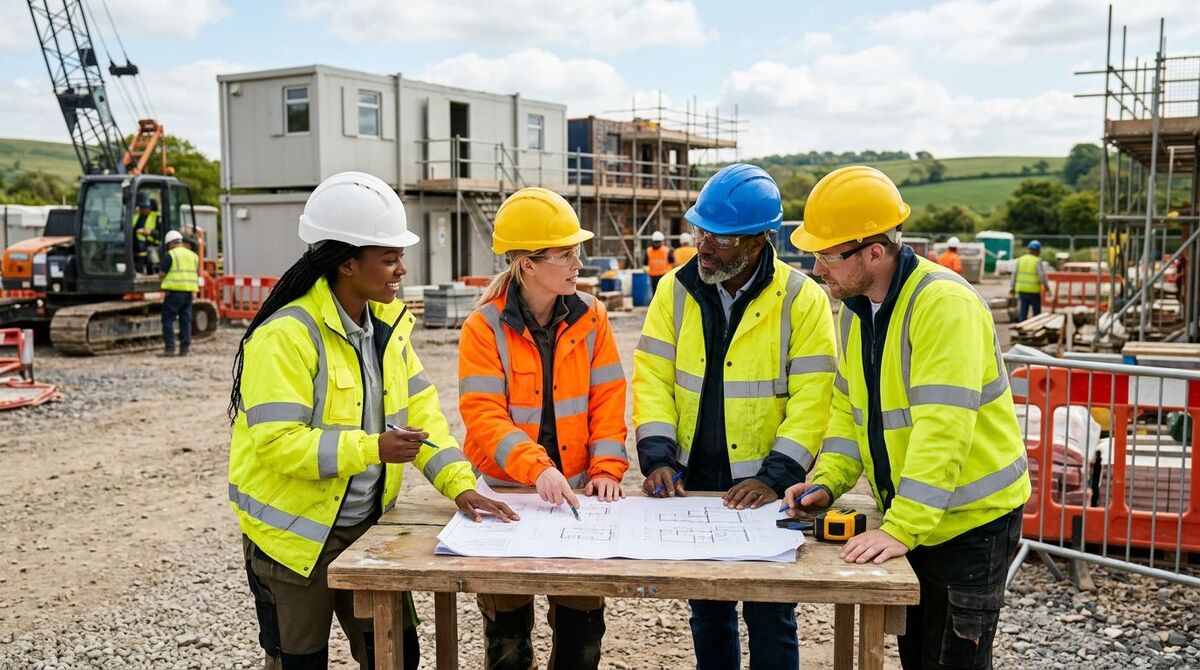
There is also a market-access argument. Female tradespeople report far higher rates of referrals from female homeowners, especially in regulated trades where credentials like Gas Safe registration build customer trust. In a market where word-of-mouth is still the primary source of new business for most sole traders and small firms, having even one female tradesperson in a team can open up a meaningful referral network that would otherwise be inaccessible.
Real Money Opportunity
Google searches for "female plumber near me" and "woman electrician near me" have grown 450% over five years. Tradespeople and firms that market their female team members are capturing a high-intent search audience with almost no competition. This is a genuine SEO and marketing opportunity, not just an equality initiative.
I am proud to have been recognised as a female entrepreneur in a male-dominated environment, and I believe this is an area where trades businesses can gain serious competitive advantage. At Evolve and Grow, I always encourage my clients to think about employer branding. What makes your company an attractive place to work, not just for customers, but for the people you want on your team? The businesses I have seen thrive are the ones that actively market themselves as inclusive employers. It does not require a huge budget. It requires intention, and the willingness to come off the tools long enough to put proper people systems in place.
AI in Hiring: Friend or Foe for Female Candidates?
Roughly 31% of UK businesses now use AI tools in some part of their recruitment process, according to the CIPD. For trades employers, this typically means AI-powered CV screening, automated skills-matching platforms, or AI-generated job descriptions. The technology saves time. It also introduces risks that most employers have not thought through.
The core problem with AI CV screening is training data bias. If a model is trained on a decade of successful hires in a male-dominated industry, it will learn to associate male-pattern CVs with success. It will then quietly penalise female candidates whose CVs look different: shorter employment histories due to career breaks, different terminology for the same skills, or different educational routes into the trade.
AI Bias Risk in Trades Hiring
AI CV screening tools trained on historically male-dominated hire data systematically underrank female candidates. Research consistently shows that AI hiring tools can reflect and amplify existing biases in training data, disadvantaging candidates whose CVs do not match historically dominant patterns. For trades employers using these tools, this means potentially filtering out exactly the candidates you now want to attract.
The fix is not to abandon AI in hiring. It is to use it differently. Our complete guide to AI tools for tradespeople covers the broader landscape, but for recruitment specifically, the most effective approach is to use AI for outbound sourcing (identifying candidates who might not have applied), while keeping human review for all shortlisting decisions. AI job description tools can also be run through bias checkers before posting; male-coded language in job adverts (terms like "strong", "aggressive growth", "dominate the competition") demonstrably reduces female applications.
What Good AI-Assisted Hiring Looks Like
- Audit your current job descriptions: Run them through a free tool like Textio or the Gender Decoder, and read our guide to writing trade job adverts that attract quality candidates. Remove male-coded language. Focus on skills and outcomes, not traits.
- Blind shortlisting: Remove names from CVs before screening. Gender-neutral application forms at the initial stage reduce bias before AI or human review.
- Skills-based assessment: Replace CV screening with short practical tasks or trade simulations. These are fairer to candidates from non-traditional routes and far more predictive of performance.
- Monitor your funnel by gender: If women are applying but not progressing past screening, the screening stage is the problem. If they are not applying at all, the problem is in your sourcing and job advertising.
- Get the paperwork right from day one: Whether hiring employees or subcontractors, use a proper subcontractor agreement and make terms transparent. Clear, professional onboarding signals that your business takes people seriously.
Training Programmes Actually Working in 2026
There are a handful of organisations doing genuine, measurable work to bring more women into the trades. If you are an employer looking to build a pipeline, or a careers adviser looking for programmes to recommend, these are the ones worth knowing about.
Women into Construction runs a pre-employment programme that places women into paid work placements on construction sites, with wrap-around support including tool provision, health and safety training, and mentoring. Since 2008 they have placed over 6,000 women into construction roles, with a 70% progression rate into employment.
CITB's Inspiring Change Programme funds employer-led initiatives to improve diversity across UK construction. Grants are available for training, mentoring, and site-welfare improvements. The application process is straightforward and the grants are underused by smaller employers who simply do not know they exist.
Green Careers Hub focuses specifically on low-carbon heating, solar, and retrofit trades, where female representation is slightly higher than in traditional construction. Their apprenticeship matching platform actively prioritises diverse candidates and connects them with employers who have made public diversity commitments. Businesses pursuing a digital transformation roadmap are well placed to attract these candidates, as modern systems and processes appeal to a younger, more digitally confident workforce.
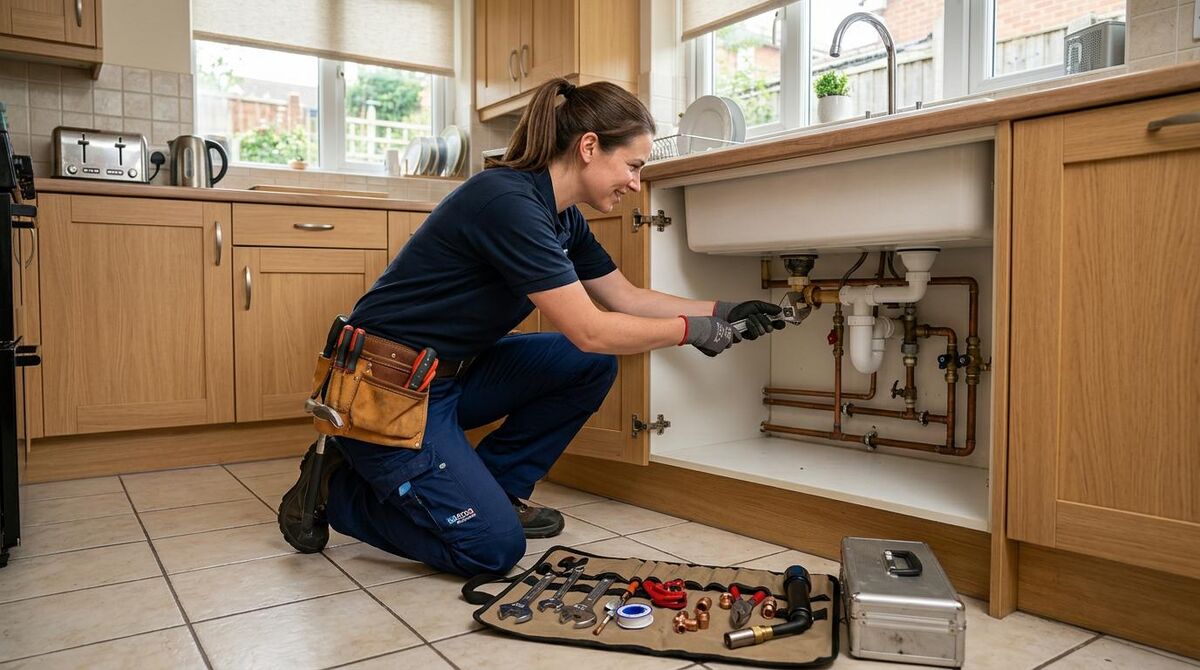
Green Skills Training offers short courses and apprenticeship pathways specifically targeting women looking to enter the retrofit and low-carbon trades. Their "Green Skills for Women" cohorts run quarterly, with subsidised training available for eligible candidates.
Employer Incentive
Employers who hire female apprentices via CITB-approved programmes may be eligible for a diversity uplift in their grant payments. The standard CITB apprenticeship grant is £2,500 per year. Diversity uplift can add a further £1,000 to £1,500 annually. Check with CITB directly for current eligibility criteria, as rates change with each funding cycle.
Key Milestones: Women in UK Trades
The story of women in UK construction is longer than most people assume. Progress has been uneven and frustratingly slow at times, but the direction of travel is clear.
- 1942: Women enter manufacturing and construction en masse during the Second World War, proving on-site competence at scale. Post-war, most are pushed back out as men return from service.
- 1975: The Sex Discrimination Act makes employment discrimination on grounds of gender illegal in the UK for the first time. Construction sites remain informally hostile for decades after.
- 2016: The Construction Leadership Council launches its Diversity and Inclusion Strategy, with a public target of 20% female workforce participation by 2020. The target is missed by a wide margin.
- 2020: CITB launches the Inspiring Change programme with dedicated funding for employer-led diversity initiatives. Participation grows steadily.
- 2022: Female construction apprenticeship starts reach around 2,420 in a single academic year, a record high.
- 2024: CITB data confirms a 67% increase in female apprenticeship starts over five years. Completions up 170%. The pipeline is finally moving at scale.
- 2026: Online search demand for female tradespeople up 450% from 2021 baseline. First employers begin using AI sourcing tools specifically to reach female candidates via non-traditional channels.
My Verdict
The data is clear. Women are severely under-represented in UK on-site trades, but the barriers are structural and cultural rather than fundamental. The pipeline is growing fast, client demand for female tradespeople is real and measurable, and employers who address the retention problem alongside recruitment will have a meaningful competitive advantage in a very tight labour market. This is not an equality exercise. It is a business decision.
Best for recruitment: Use Women into Construction or Green Careers Hub to reach job-ready female candidates, rather than waiting for inbound applications.
AI hiring risk: Review any AI CV screening tools for gender bias. Use skills-based assessments instead of CV ranking wherever possible.
Marketing opportunity: Female tradespeople generate high referral rates from homeowners. "Lady plumber near me" searches are up 450%. This is an underused competitive differentiator.
Retention is the priority: Female tradespeople leave the industry at higher rates in the first five years. Culture, mentorship, and basic site welfare provisions are the levers. Recruitment without retention is wasted investment.
What UK Tradeswomen and Employers Say
The conversation around women in trades is louder than ever, across Reddit, TikTok, and Instagram. If you are weighing up which platforms to focus on, our social media platform comparison for trades breaks down where the audiences actually are. Here is what real people are actually saying.
Watch: Women in Trades on YouTube

It's Time For More Women In The Trades
Roger Wakefield
4,792 views · 8:14
What It's Really Like Being a Female Electrician
Re: News
70,518 views · 5:08
Women in Trades (On the Tools)
Amy Barratt-Singh
6,911 views · 7:59

Week with Kimmy as a Social Housing Electrician
Kimmy The Sparks
5,435 views · 32:29

Working as a Female Apprentice in Electrics
Trade Legends
1,737 views · 1:06:04

Why I Chose to Train as an Electrician
JTL Training
930 views · 3:03

Learning English as a Female Electrician
Trade Legends
2,778 views · 57:14

How to Pick the Right Trade Job For You
Jacob Jordan
23,956 views · 6:03
Build a Stronger, More Diverse Team
The TrainAR Academy has practical guides on writing job adverts that attract quality candidates and keeping your best people once you have hired them. If you are serious about building a competitive trades business, start with the people strategy.
Explore the AcademyWomen in UK Trades FAQ
Yes. Employers registered with CITB can access a diversity uplift on standard apprenticeship grant payments for female apprentices. The standard grant is £2,500 per year; diversity uplifts vary by funding cycle but typically add £1,000 to £1,500 annually. Some local enterprise partnerships and combined authorities offer supplementary grants. Contact CITB directly or speak to your local training provider for current rates.
Under the Construction (Design and Management) Regulations 2015 and the Workplace (Health, Safety and Welfare) Regulations 1992, principal contractors must provide adequate welfare facilities for all workers. Where both sexes are employed, this means separate, lockable toilet and washing facilities (or single-occupancy facilities with a lockable door). Failure to provide adequate facilities is an HSE compliance issue, not just a courtesy matter.
Focus on skills, outcomes, and team culture rather than personality traits. Remove male-coded language (terms like "aggressive growth targets", "dominate", "high performer" all correlate with reduced female applications). Use gender-neutral language throughout. Explicitly state that you welcome applicants from under-represented groups. Mention flexible working arrangements if available. Free tools like the Gender Decoder (available at gender-decoder.katmatfield.com) will score your advert and flag problematic terms.
The gender pay gap in construction is 23.7%, compared with the national average of 14.3%. However, this figure is heavily influenced by occupational segregation rather than equal pay for equal work. As more women move into higher-paid on-site craft roles and management positions, the aggregate gap is expected to narrow. Employers are not legally required to report gender pay gap data unless they have 250 or more employees, so most trade firms have limited visibility on their own position.
The most effective channels are: Women into Construction (womenintoconstruction.org), which runs pre-employment programmes and can connect you with job-ready candidates; Green Careers Hub (greencareershub.com), which specialises in low-carbon trades; local college construction departments, where female enrolment has grown sharply in recent years; and CITB's apprenticeship matching service. Posting on platforms like Indeed and LinkedIn with diversity-focused copy also works, especially if you can point to a clear D&I commitment or existing female team members.