
Quick Answer
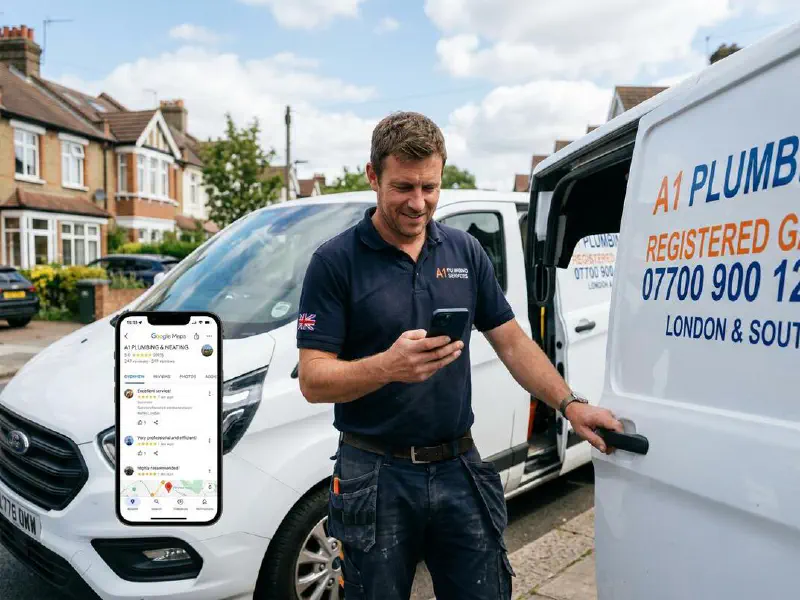
If you are a UK heating engineer and your phone has gone quiet, your Google Business Profile is probably the reason. Most heating businesses are set up as a Service Area Business with the wrong primary category, a home address still showing, a name stuffed with keywords like "Sheffield Boiler Repair Best Plumber 24/7," and zero new reviews in the last three months. Google sees all of that, drops you out of the Local 3-Pack, and quietly hands the calls to the firm down the road. The fix is not complicated, but you have to do it in the right order: pick the correct primary category (Heating Contractor, not Plumber), hide your address and set proper service areas, kill the keyword stuffing, get a steady drip of reviews coming in every week, and start posting photos and updates monthly. Do that, leave the profile alone for the algorithm to catch up, and the calls come back.
Table of Contents
- Why your phone stopped ringing
- The Service Area Business trap most heating engineers fall into
- The category fix worth a dozen Local 3-Pack wins
- Suspension triggers that kill boiler businesses overnight
- The CAT framework: Content, Authority, Technical SEO
- Build a review engine, not a review beg-a-thon
- The 45-minute monthly GBP routine
- What heating engineers are saying about GBP suspensions
- Recommended videos
- Frequently asked questions
- My verdict
Why your phone stopped ringing
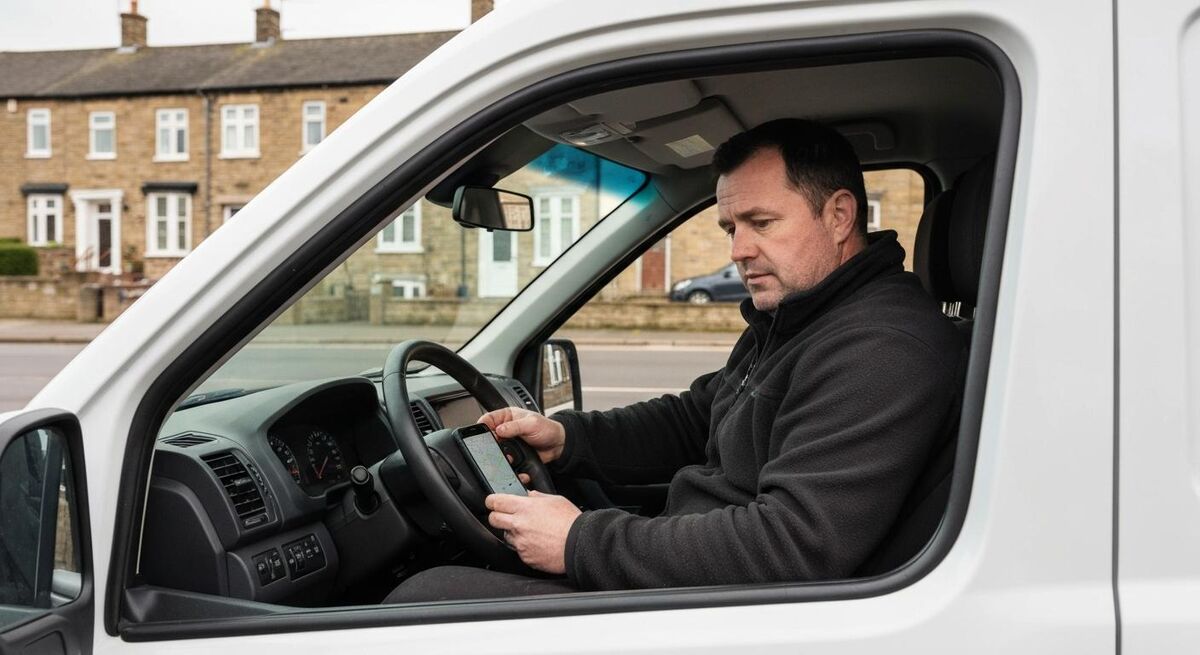
Right, so let me start with a story, because I keep seeing the same one over and over. A heating engineer I spoke to in 2024 had been running a tidy little business for years. Steady. Boiler installs through winter, services through summer, the odd repair in between. Then his Google Business Profile got suspended, he jumped through the hoops to get it back, and twelve months later his revenue was down 50%. Fifty per cent, pal. That is not a soft drop, that is the kind of number that makes you stop putting petrol in the second van.
I sat down and looked at the data on fifteen different heating businesses I have access to. Three of them had been forced to switch to Service Area Business status by Google in the last year. The result, broken down quarter by quarter: minus 12% on calls, minus 40% on calls, minus 57% on calls. That last one was a clean, proper, Gas Safe registered business. They just had not played by the new Google rules. And Google does not send you a letter saying "Dear Sir, your Local 3-Pack ranking will now be reduced." It just quietly stops showing you to the homeowner who is typing "boiler installation Sheffield" into their phone at 7am because their flat is freezing.
This is the bit nobody talks about. Your website might be fine. Your prices might be fair. Your reviews might be five stars. But if your Google Business Profile is broken, leaking, or asleep, you are paying for a van and a stock of system filters that nobody will ever get to use because the homeowner is already on the phone to the bloke down the road who fixed his profile last Tuesday.
Your Google Business Profile does more for your phone than your website does. About 32% of local ranking signals come directly from your GBP, only 19% come from the website. If you are spending £3,000 on a website refresh and £0 on your GBP this year, you have got it the wrong way round.
The Service Area Business trap most heating engineers fall into
Here is the bit that catches almost every heating business out, and it is not your fault, because the rules changed in 2019 and Google did not exactly buy you a pint to explain them. A Service Area Business, or SAB, is any business that goes to the customer rather than the customer coming to you. If you fit boilers in people's airing cupboards, you are a SAB. Simple as that. You are not a coffee shop. You are not a mechanic with a forecourt. You are a heating engineer who turns up at the customer's door with a Vaillant on the back seat.
The vast majority of UK trades businesses set up their old Google My Business profile somewhere between 2010 and 2018. Back then you put your home address in, you stuck your phone number, job done. Then Google rewrote the policy in 2019 and again in 2024, and the new rule is hard: if you are an SAB, your physical address must not be publicly visible on your profile. You must specify service areas instead, named towns or cities, not the whole country. Google now allows you to add up to 20 service areas, but you only get one address, and it has to be hidden.

If you still have your home address visible, you are sitting on a ticking bomb. Google might leave you alone for a year. Two years. Then one Tuesday morning, the algorithm does a sweep, your van has been parked in the same residential road for years, and bang, suspended. Profile gone. Calls vanish. And the appeal process is a slow, painful, screenshot-everything job that takes weeks if you are lucky. I have spoken to one business owner who lost half his year of work waiting for Google to reinstate him.
The fix is not difficult, but the order matters. Hide your address first. Add your service areas next, listing the actual towns you serve, not "the United Kingdom" and not "a 50 mile radius." Real town names: Sheffield, Rotherham, Chesterfield, Doncaster, Worksop, that sort of thing. Then leave the profile alone for a week. Do not change five things at once. Google flags profiles that have been edited too quickly, and flagged profiles get extra scrutiny, and extra scrutiny is where suspensions live.
This is the single biggest cause of permanent suspension I see in the heating industry. Some bloke at a networking event tells you "just rent a virtual office, it makes you look bigger." It does not. It gets your profile killed, sometimes for good. Google rebuilds its understanding of your business from the verification address, so if that address is a co-working space in town that you have never set foot in, you are toast. Your home counts as a valid address if you hide it. A virtual office never does.
The category fix worth a dozen Local 3-Pack wins
This one is the gift nobody opens. Your primary category on your Google Business Profile is, hands down, the single most important ranking factor in the Local Pack. The 2025 BrightLocal Local Search Ranking Factors survey puts primary category at number one. Not your reviews. Not your website. Your category. And most heating engineers I look at have it set to "Plumber" because that is what the wizard suggested when they signed up in 2014.
You are not a plumber. You are a heating engineer. Or a gas engineer. Or a boiler installer. Google has dozens of trade-specific categories, and the right one for you depends on what you actually do most of the time. Heating Contractor is the strongest primary category for a heating-focused business that installs and services boilers. Boiler service & repair shop is solid if you are mostly servicing. Plumber is fine if you actually do plumbing too, but it should be a secondary category, not your primary one.
Here is the trick. You can have up to nine additional categories on top of your primary one. Most heating engineers leave that empty. Big mistake. Fill them in. If you fit boilers, add Boiler Service & Repair. If you do heat pumps, add HVAC Contractor or Heat Pump Installer. If you do gas safety checks, add Gas Engineer. If you do power flushing, plumbing, or unvented cylinders, add those too. Each additional category is another search query that can match your profile.
But here is the warning that comes with it. Do not add categories that are not actually what you do. Adding "Locksmith" because you want to capture more clicks will not work, and the dodgier the combination of categories looks, the more likely Google is to flag your profile for a manual review. There is a reason HVAC, locksmiths, and lawyers all get extra scrutiny: those categories have been spammed for years, so the algorithm is twitchy about them.
The right primary categories for UK heating trades
| What you do most days | Best primary category | Secondaries to add |
|---|---|---|
| New boiler installs and services | Heating Contractor | Boiler Service & Repair Service, Plumber, Gas Engineer |
| Boiler servicing and repair-led | Boiler Service & Repair Service | Heating Contractor, Plumber, Gas Engineer |
| Heat pumps and renewables | HVAC Contractor | Heating Contractor, Solar Energy Equipment Supplier, Air Conditioning Contractor |
| Plumbing with some heating | Plumber | Heating Contractor, Boiler Service & Repair Service, Drainage Service |
| Gas safety checks and landlord work | Gas Engineer | Heating Contractor, Boiler Service & Repair Service, Plumber |
Change the primary category, wait a fortnight, watch the data. Do not change it back if rankings wobble for the first week. Google needs time to rebuild its understanding of who you are. The dip is temporary; the gain is permanent.
Suspension triggers that kill boiler businesses overnight
Suspensions are not random. There are a handful of triggers that I see again and again on heating businesses that go offline, and every one of them is avoidable. Get these wrong and you will not just lose a week of calls, you will spend a fortnight chasing an appeal that may or may not be approved.
1. Keyword stuffing the business name. Calling yourself "Sheffield Best Boiler Repair Plumber 24/7" gets you suspended fast. Your business name must match what is on the side of your van, your invoices, and Companies House. Just the trading name. Nothing more.
2. Listing a virtual office or co-working space as your address. Auto-suspension trigger.
3. Showing your home address when you are an SAB. Hide it.
4. Changing the business name, address, and phone number in the same week. Google reads that as suspicious. One change at a time, with a fortnight between them.
5. Adding wildly mismatched categories. Boiler installer plus locksmith plus rehab clinic is going to draw the wrong kind of attention.
6. Photos that look stock or that include obvious watermarks from someone else’s site. Use your own van, your own jobs, your own face.
The keyword stuffing one is the most common, and it is usually the marketing agency that did it, not you. Some chap convinced you it would help you rank for "boiler repair Sheffield." It does not. It triggers a "Deceptive Content" suspension, and once you have one of those on your record, you are flagged for the foreseeable. Rename yourself back to your proper trading name today. Today. Not next week.
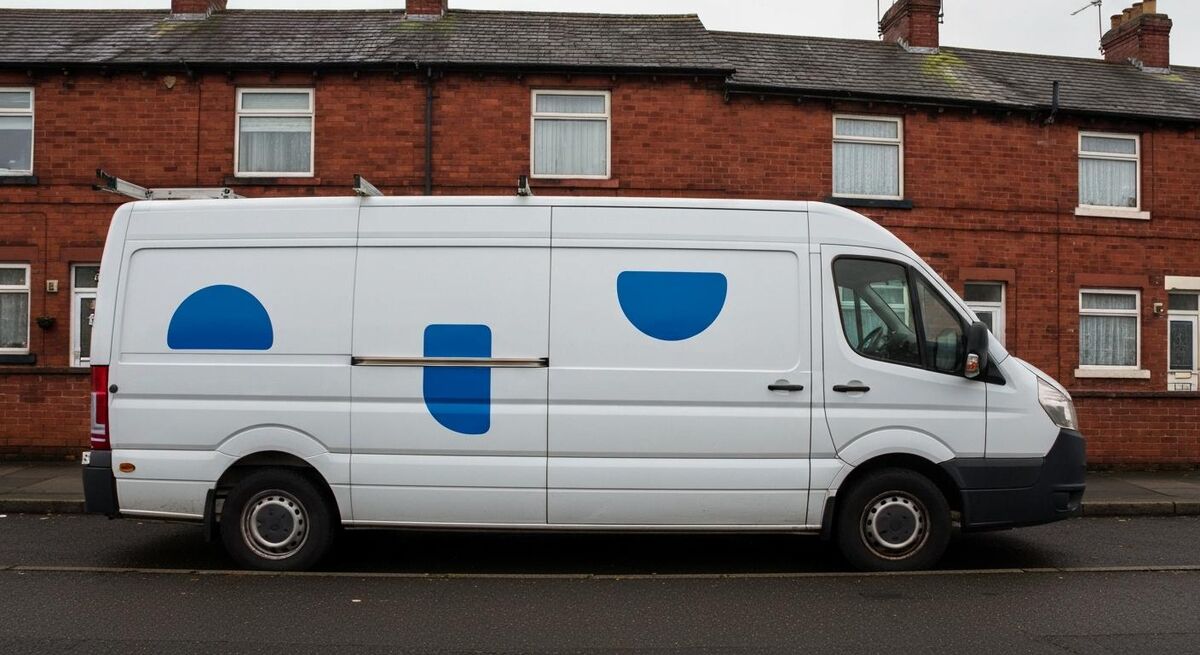
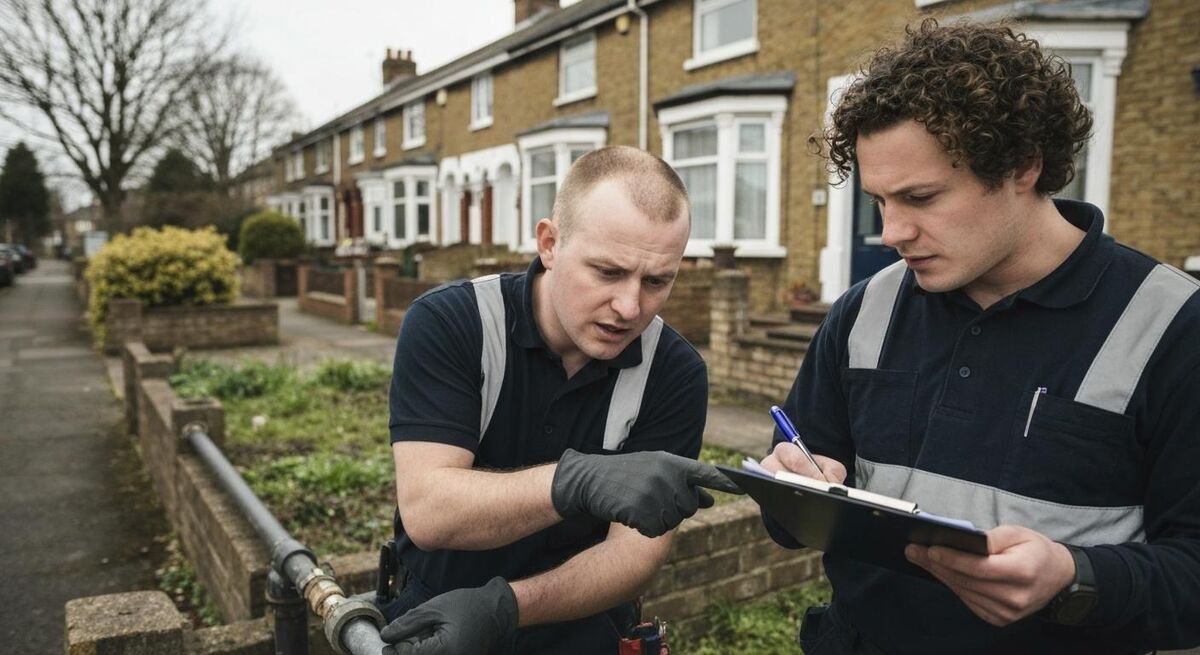
And the photo one keeps catching people out. If you have lifted a "stock" boiler photo from a manufacturer’s brochure and stuck it on your profile, Google’s reverse image lookup will spot it. Take your own photos. Your van outside a customer’s house with permission. A boiler you fitted, with the customer’s say-so. Your face. Your team’s faces. Yorkshire weather, terraced streets, the back of a system filter you just bench-tested. Real, scruffy, on-the-job photos beat stock every single time.
What to do if you have already been suspended
First, do not panic-edit. Do not log in and change five things at once. Do not delete the profile. The suspension is recoverable but only if you follow the path Google wants you to follow.
Read the Google guidelines for representing your business end to end. All of them. Make a list of every single thing on your profile that does not match those guidelines. Fix those things. Then submit one appeal through the Google Business Profile reinstatement form. Include photos of your van, your signage, your trading paperwork. Include your Gas Safe registration certificate. Be polite, be specific, be patient. The reinstatement queue can take anywhere from two days to six weeks.
If the first appeal is denied, you can submit a second appeal but you need to provide new evidence. The same email saying "please reconsider" will not work. Add a video walkthrough of your office or workshop, a HMRC letter to your trading address, your insurance documents, anything official that proves the business is real and operating from where you say it is.
The CAT framework: Content, Authority, Technical SEO
This is the framework I have been teaching at The Boiler Business for years, and it is the cleanest way I have found to think about everything that makes a Google Business Profile actually rank. Three letters, three jobs, in this order: Content, Authority, Technical. I call it CAT because it sticks. Once you have got the CAT sorted, the rest follows.
Content is what you put on your profile and your website. Photos, videos, services, descriptions, posts, the lot. Most heating engineers upload three photos when they create the profile and never touch it again. Google reads that as "this business is barely alive." You need to add new content monthly. New photos of jobs. New service descriptions. New posts about a recent install or a heat pump survey. Two or three uploads a month is enough. Just keep the profile breathing.

Authority is reviews and citations. Citations are your business listed on other websites. Trustpilot, Yell, Checkatrade, Gas Safe Register, MyBuilder, Rated People, Free Index, every local trade directory you can find. Each one is a signal to Google that you are a real business. The Name, Address, Phone Number combination needs to be identical across all of them. "Sheffield Heating Ltd, 12 Sample Road, S1 2AA, 0114 123 4567" everywhere. Not "Sheffield Heating Limited" on one and "Sheffield Heating Ltd" on another. Same string, every site.
Reviews are the loudest authority signal. According to the 2025 BrightLocal Local Consumer Review Survey, 87% of UK consumers read online reviews before choosing a local business, and 76% read review responses too. The number of reviews matters, the average rating matters, the recency matters, the keywords in the review matter, and your response to each review matters. A business with 150 reviews averaging 4.7 stars will outperform a competitor with 8 reviews averaging 5 stars. Every time.
Technical SEO is the boring plumbing of the profile. Address hidden, service areas set, business hours filled in, every section completed, no broken links to your website, phone number consistent with your website’s contact page, the website itself fast and mobile-friendly. Google’s data shows complete profiles get seven times more clicks than incomplete ones. Fill every field. Every field, pal. Not just the ones you can be bothered with.
Sort the Content first. Get fresh photos going up monthly, services listed properly, posts going out. Then move to Authority. Build up reviews and citations consistently. Then tidy up the Technical: address, areas, hours, schema, the lot. People try to do Technical first because it feels like "fixing" something. It will not move the needle on its own. Content does the heavy lifting.
Build a review engine, not a review beg-a-thon
Reviews are where most heating engineers leak the most calls. You have got a happy customer, the system is heating up, the kettle is on, you say "if you wouldn’t mind leaving us a review on Google that would be brilliant." She says yes, I will. You leave. She forgets. Three weeks later you remember and send her a text. She is on holiday. The window has closed. That review is never coming.
The fix is to make the review request happen at the exact moment of the warmest feeling, which is when the engineer is finishing the job, before the dust settles. Not the day after. Not the week after. While you are stood on the kitchen tiles with your tools packed. Open Google on her phone, find your profile, tap "Write a review," hand her the phone, walk back to the van for a minute, come back, thank her, leave. Done. Reviewed.

If you cannot do it in person every time, the second-best option is a tap-to-review card or QR code. Stick a QR code on the back of your service stickers, on your invoice, on the inside of the boiler door. Anywhere the customer is going to glance at the boiler in the next fortnight. The link wants to go directly to the Google review form, not to your website, not to a "leave us a review" landing page. Friction kills review rates. Every extra click loses you a percentage of customers.
The other side of reviews is the response. You have to reply to every single one. Five-star reviews get a "thank you for the feedback Sarah, really pleased the new Worcester is running well, give us a shout next year for the service." Three-star reviews get an honest, calm response that acknowledges the problem and offers a fix. One-star reviews get a polite, professional, never-defensive reply that lets the next homeowner reading it see that you are a reasonable human being. Google ranks businesses that respond to reviews higher than businesses that ignore them. The data is clear and it has been clear for years.
The cadence that wins
| Stage | Target | Reality for most heating engineers |
|---|---|---|
| Reviews collected per month | 4 to 8 | 0 to 1 |
| Average rating | 4.7+ stars | 4.2 to 4.5 |
| Owner response rate | 100% | Under 30% |
| Time to respond | Within 48 hours | Within 6 to 8 weeks |
| Photos uploaded with reviews | 1 in 4 reviews | 1 in 30 reviews |
Four reviews a month. That is one a week. If you are doing five jobs a week, you only need to convert one of them. That is not difficult, but it requires a system. Put it in your closing-the-job checklist. Make it the last thing you do before you write out the invoice. Test it for a month. The data will look after itself.
The 45-minute monthly GBP routine
Right, this is the bit you put in your calendar. First Monday of the month, 45 minutes blocked out, kettle on, laptop open. Same routine every time. Do this every month for a year and your Local 3-Pack ranking will look entirely different.

Minutes 0 to 10: Review the data. Log into your Google Business Profile dashboard. Look at the Performance section. How many calls last month? How many website clicks? How many direction requests? How many searches you appeared for? Compare with the previous month and with the same month last year. Note any sharp drops, those are usually a sign that something has changed on the profile or in the area.
Minutes 10 to 20: Upload new photos. You should have between six and twelve new job photos on your phone from the previous month. Pick four or five of the best, ones that show your van, your work, your team, a happy customer where you have got their permission. Upload them. Tag them with a short caption. "Vaillant ecoTEC Plus fitted in Sheffield, S6" beats "boiler install."
Minutes 20 to 30: Write one post. Use the Posts feature on your profile to share an update. A new product you are now fitting. A heat pump survey you have just done. A seasonal reminder for boiler servicing. Keep it short, 80 to 150 words, with one photo and one call-to-action button. Posts decay after 6 to 12 months but the freshness signal lasts a month.
Minutes 30 to 40: Respond to reviews. Every review from the last month gets a response. Five-stars get a quick, warm thank you with a personal touch. Anything below five stars gets a longer, calmer response that takes ownership where appropriate.
Minutes 40 to 45: Check the basics. Are your opening hours still correct? Have you added a bank holiday? Are your service areas still right? Have you added any new towns to your patch? Is your phone number still answering? It sounds daft but I have seen heating businesses lose months of calls because the phone number on the profile pointed to a number they had ported a year ago.
The heating businesses I work with that do this 45-minute routine every month, over twelve months, see a 30 to 50% increase in Google Business Profile-driven calls compared to the businesses that "set and forget" the profile. That is real money. At an average install value of £3,500 and a Local 3-Pack conversion rate of around 6 to 8%, every extra ten calls a month is potentially £2,800 in monthly revenue you were not getting before.
What heating engineers are saying about GBP suspensions
Recommended videos
How to Set up a Service-Area Google Business Profile
Torie Mathis | Digital Marketing

Google Business Profile Set Up: 2025 Step-By-Step Tutorial
Ranking Academy

25 Tips for Ranking Your Google Business Profile in 2025
Zanet Design
Marketing for more boiler Installations Ep 32
RJ Martindale Plumbing & Heating

GBP Optimisation for 2025 (in less than 12 minutes)
Thencan Designs Bend Web Design + SEO

How to Optimise Your Google Business Profile in 2025 to Get More Leads!
Momentum 360
Frequently asked questions
It might wobble for a fortnight while Google rebuilds its understanding of you. After that, if you do nothing else, your rankings usually settle close to where they were. If you also fix categories, photos, reviews and posts at the same time, rankings can actually go up. The SAB switch is not the villain people make it out to be. The villain is doing nothing else.
No, not if you go out to customers. That is what Google calls an SAB and the address has to be hidden. If you have got a proper office or workshop the public can visit, by appointment, with a member of staff there during opening hours, then yes you can show that address. A van parked on the drive does not count.
Anywhere from two days to six weeks. The fastest appeals are the ones with a complete, polite, evidence-backed submission first time. The slowest are the ones where you keep editing the profile while the appeal is in the queue, which I have seen reset the clock more than once.
You can report them. Go to their profile, click "Suggest an edit," choose "Change name or other details," and report the violation. Google does act on these, though it can take weeks. Do not respond by stuffing your own name. That gets you suspended too. Win clean.
No. Service Area Businesses can rank in the Local 3-Pack just fine. The data is clear. What matters more than the physical address is your category, reviews, photos and consistency across other sites. Plenty of one-van heating engineers outrank big firms with offices because they actually look after their profile.
For most UK towns, you want to be at or above what your nearest three competitors are showing. Look them up. If they have 40 to 80 reviews averaging 4.6 to 4.8 stars, that is your benchmark. Recency matters as much as the total. A business with 200 reviews from 2018 will not outrank a business with 60 reviews from this year. Keep the drip going.
If they will do the 45 minutes a month I described above and charge you a fair fee, yes. If they want £500 a month and the only thing they do is "upload one stock photo," no, do it yourself. Plenty of marketing cowboys make a living out of selling GBP management to heating engineers who could do it in less time than it takes to do a service.
My verdict
Your Google Business Profile is doing more work for your business than your website is, and most heating engineers are treating it like a Yellow Pages ad they put together in 2014. Fix the category. Hide the address. Add the service areas. Sort the photos. Get a steady drip of reviews. Spend 45 minutes on it once a month. Do that for twelve months and you will not recognise your call sheet at the end of it. Do not sit on this. The longer you leave it, the more boiler jobs are landing on the doorstep of the firm down the road who fixed their profile last spring. Toodle pip.
If you have read this far and you are thinking "right, I need to actually look at my profile properly," I would start by reading my piece on local SEO for trades and the 30-minute monthly routine next, because it dovetails with everything above. If you have been throwing money at Google Ads and getting nowhere, my piece on what to do instead of spending £500 a month on Google Ads will save you a few quid. And if you are weighing up whether to bother with Local Services Ads at all, the UK 2026 analysis of LSAs covers the maths. The phones are not going to ring themselves, pal. Get on with it.