
Quick Answer
Zero-rate VAT on the installation of energy-saving materials runs until 31 March 2027 in Great Britain and Northern Ireland, then reverts to 5 percent. The qualifying list covers solar PV and solar thermal panels, air, ground and water source heat pumps, insulation, draught stripping, central heating and hot water controls, micro CHP, wood-fuelled boilers, wind and water turbines, heat batteries and electrical battery storage. The relief only applies when you supply and install. Materials sold over the counter for a customer to fit themselves stay at 20 percent. Ancillary work like making good walls or running new pipework is in scope, but only if the ancillaries are less than 60 percent of the total job. There is no claim form. You apply the rate on the invoice and account for it on your VAT return. Get the boundary wrong and HMRC will reassess the whole job at 20 percent.
Table of Contents
- What zero-rate VAT on energy-saving materials actually is
- The complete qualifying materials list
- Solar PV, panels and inverters
- Heat pumps: air, ground and water source
- Battery storage and the February 2024 expansion
- Insulation, draught stripping and controls
- The supply-and-install rule
- Ancillary work and the 60 percent test
- How to invoice and what to put on your VAT return
- The April 2027 reversion to 5 percent
- What tradespeople are saying
- Recommended videos
- Frequently asked questions
- My verdict
What zero-rate VAT on energy-saving materials actually is
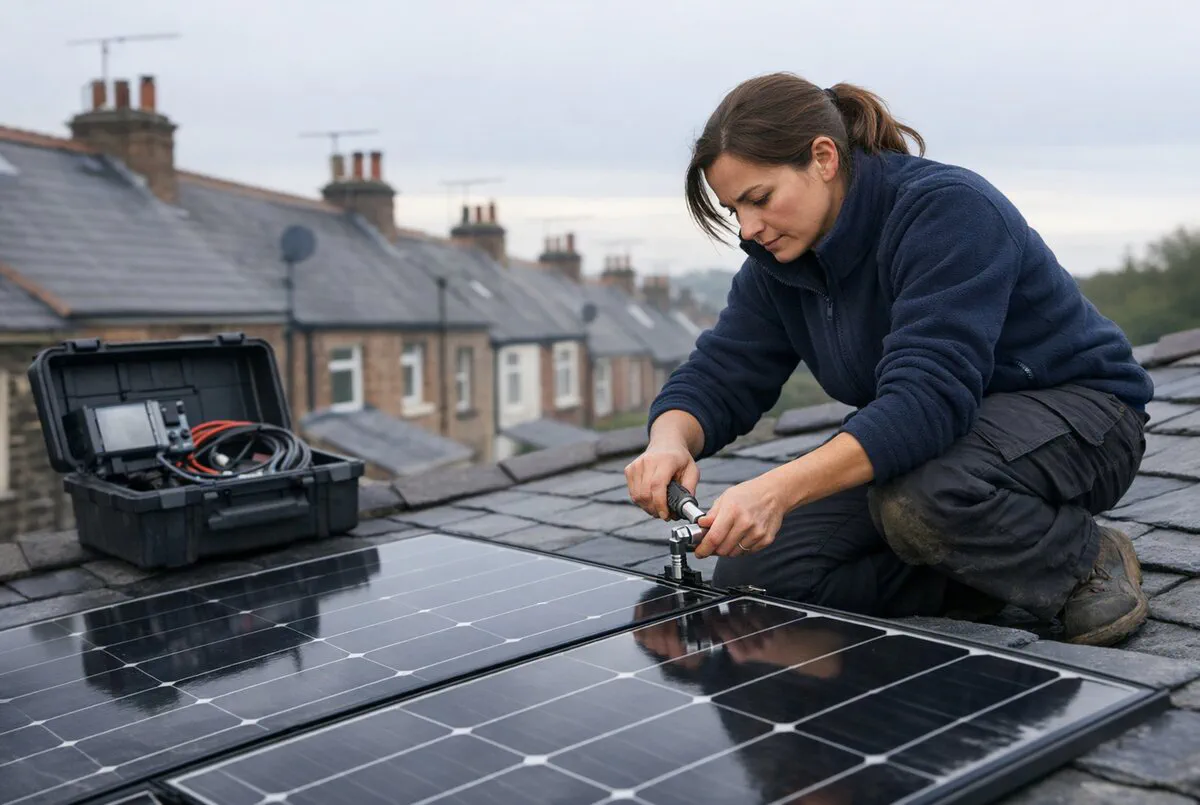
The zero rate is a temporary VAT relief. It was introduced on 1 April 2022 in Great Britain at a flat 0 percent, extended to Northern Ireland from 1 May 2023, and expanded again on 1 February 2024 to add electrical battery storage, water source heat pumps, smart diverters and a clearer route in for charitable buildings. It runs to 31 March 2027 across the UK. After that, supplies revert to the 5 percent reduced rate that applied before the temporary zero rate.
The relief is governed by Group 23 of Schedule 8 to the VAT Act 1994 and explained in detail in VAT Notice 708/6. It applies to supplies of services and goods made in the course of installing qualifying energy-saving materials in residential accommodation or in buildings used solely for a relevant charitable purpose. Residential includes houses, flats, multiple-occupation buildings, residential park homes and houseboats with permanent moorings.
The key phrase is "in the course of installing." Group 23 zero-rates the service of installation plus the goods supplied as part of that installation. A retailer who sells you a heat pump over the counter is not installing anything, so the sale stays at 20 percent. A heating engineer who arrives in a van, fits the unit, runs the pipework and commissions it is in scope. The whole invoice for that single job comes through at 0 percent.
The complete qualifying materials list
HMRC keeps the qualifying list in section 2.7 of Notice 708/6. It is a fixed list. If a product is not on it, the installation is not zero-rated, no matter how energy efficient it is. Air conditioning is the classic example. A heating-only air-to-air unit is not on the list, so installation is 20 percent. An air source heat pump used for space heating and hot water is on the list, so installation is 0 percent.
The current list runs to thirteen categories. Here they are, set out the way HMRC describe them, with the practical scope for each:
- Controls for central heating and hot water systems. Thermostatic radiator valves, room thermostats, programmers, hot water tank thermostats, weather and load compensation controls, smart heating controls and zone valves.
- Draught stripping. Seals around doors and windows, including draught proofing strips and brushes.
- Insulation. Loft, cavity wall, solid wall, floor and roof insulation, plus insulation on hot water tanks, pipes and other plumbing fittings.
- Solar panels. Both solar PV systems generating electricity and solar thermal panels heating water. Includes inverters, mounting hardware, cabling and the labour to fit them.
- Wind turbines. Including the turbine, mast, controls and grid connection work where it forms a single installation.
- Water turbines. Domestic-scale micro-hydro systems.
- Ground source heat pumps. The pump, manifold, distribution pipework and the ground array. From 1 February 2024 the groundworks and any dredging required to install the ground loop or pipework are explicitly zero-rated.
- Air source heat pumps. Including monobloc, split and high-temperature units used for space heating and hot water.
- Water source heat pumps. Added 1 February 2024. Includes the pump, intake pipework and the works to install it.
- Micro combined heat and power units. Domestic mCHP, typically gas-fuelled, generating electricity as a by-product of heating.
- Wood-fuelled boilers. Includes log, pellet and chip boilers.
- Heat batteries. Phase change thermal stores that store heat for later use.
- Electrical battery storage. Added 1 February 2024. Includes batteries fitted at the same time as solar PV, retrofitted to an existing PV system, and standalone grid-connected batteries with no solar at all.
Solar PV, panels and inverters
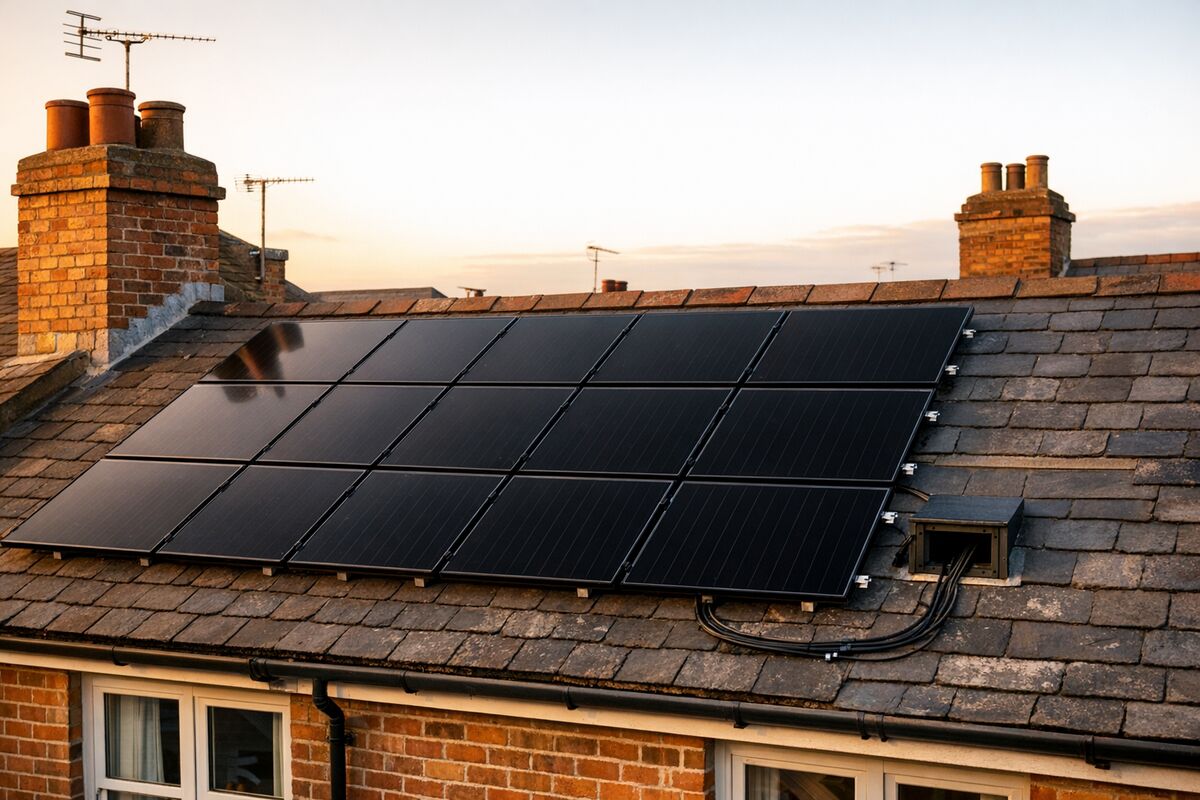
Solar is where the zero rate gets used most. A typical residential PV installation runs to between £5,000 and £9,000 in 2026 depending on roof size and inverter spec. On a £7,500 system, zero rating saves the customer £1,500 in VAT they would otherwise have paid at 20 percent. That is real money and it directly affects the payback calculation.
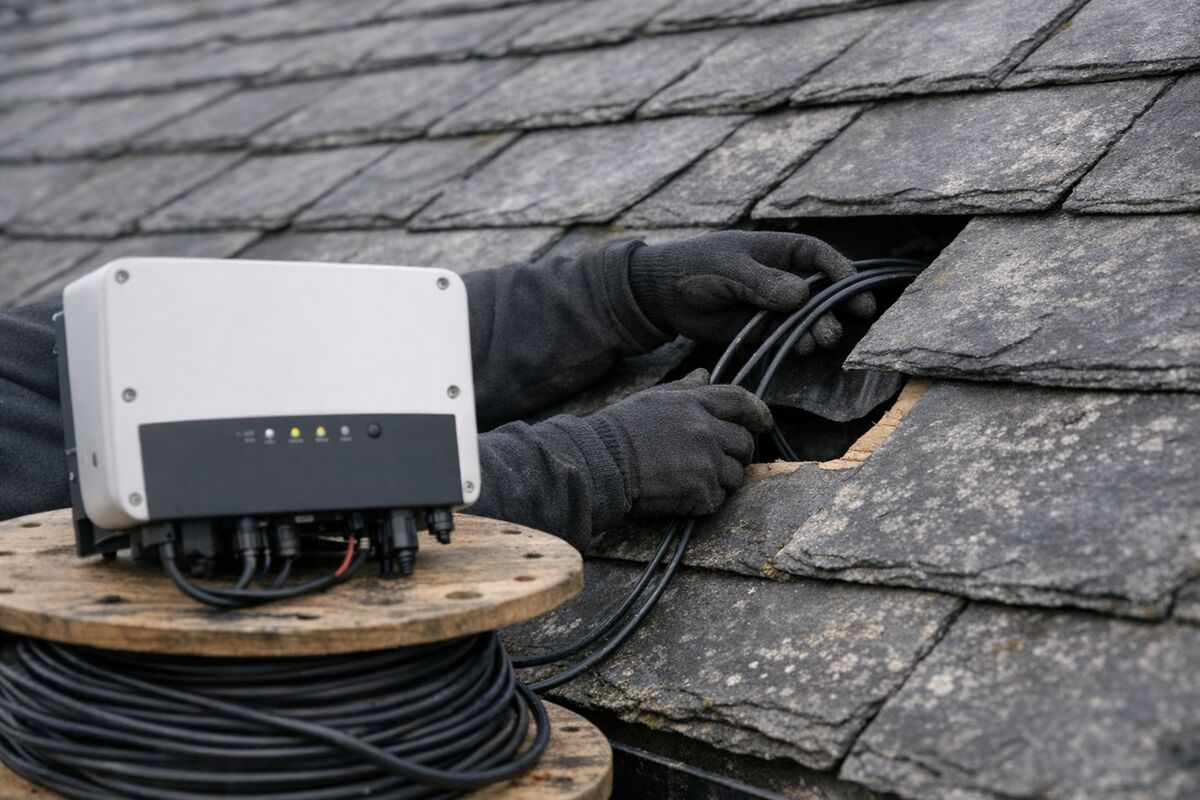
The scope is broad. A single zero-rated supply for a PV installation includes the panels themselves, the inverter, the mounting rails and clamps, the cabling, the AC and DC isolators, the bird mesh or pigeon proofing where it forms part of the install, the labour, and any scaffolding used to access the roof. Scaffolding hired separately for a non-installation purpose stays at 20 percent, but scaffolding that you procure as part of the install and re-invoice on the same job is zero-rated as part of the single supply.
Optimisers and DC switches that form part of the PV system are in scope. Smart diverters that send surplus generation to a hot water cylinder were explicitly added on 1 February 2024, so iBoost, Eddi and similar diverters fitted as part of a PV install or retrofitted to an existing PV system are zero-rated.
Heat pumps: air, ground and water source
Heat pumps are the highest-value installations in scope. Air source units typically run £10,000 to £15,000 fitted in 2026, ground source £20,000 to £30,000. At those numbers the 20 percent VAT alone is £2,000 to £6,000. Zero rating turns that into hard savings the customer keeps.
The relief covers the heat pump unit, all internal pipework, the hot water cylinder where supplied as part of the install, radiator upgrades or underfloor heating that form part of the heat pump fit, the controls, the commissioning, and the labour. For ground source, the ground array, manifold, groundworks and any dredging required to install the loop or pipework are zero-rated. That last point matters. Before 1 February 2024 there was real uncertainty about whether groundworks were ancillary or a separate standard-rated supply. The amendment put that to bed.
Water source heat pumps were added on 1 February 2024. If you are fitting a unit that draws heat from a borehole, lake, river or aquifer for a residential property, the install is in scope. So is the pipework to and from the water source. The same supply-and-install rule applies.
Battery storage and the February 2024 expansion
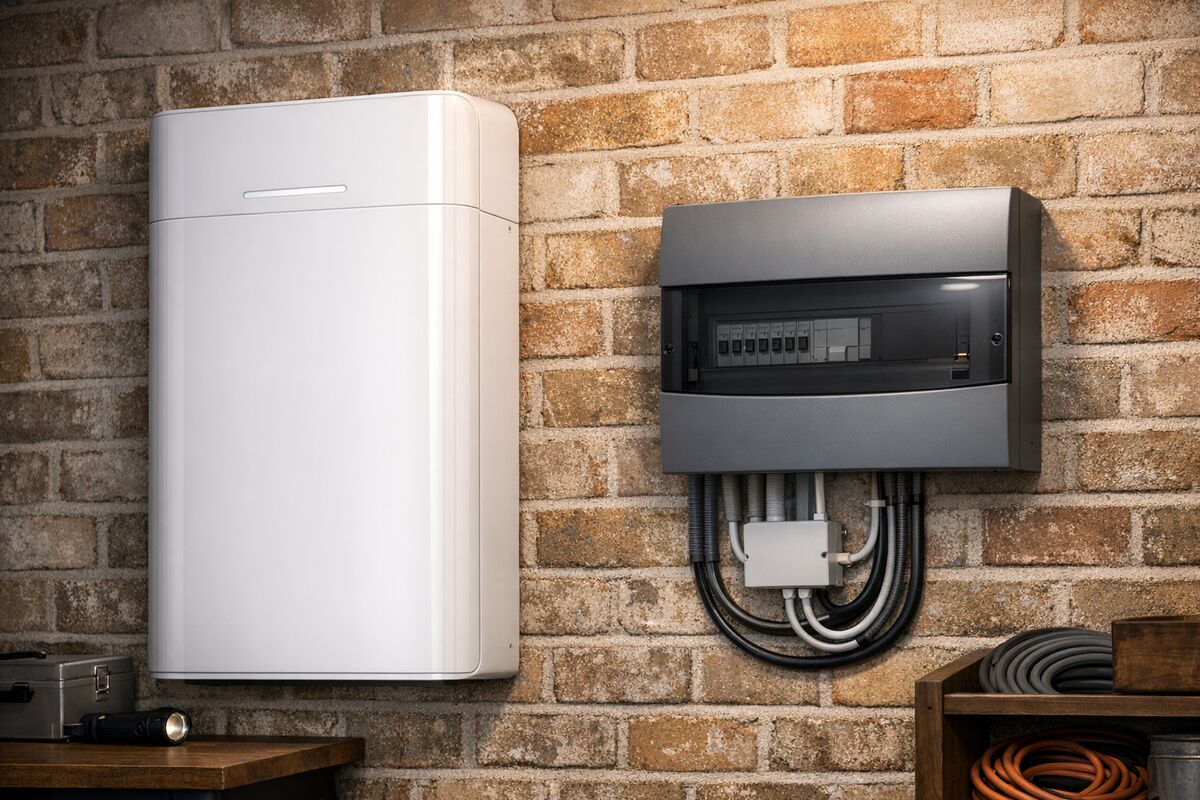
The battery storage rules changed completely on 1 February 2024. Before that date, a domestic battery only qualified for zero rate if you fitted it at the same time as a new PV system. Add a battery later and the customer was paying 20 percent on the whole package. That was the rule that drove installers to fit a single token solar panel with every battery just to keep the relief in play.
HMRC fixed it. The current position is straightforward. A battery installed as part of a new solar PV system: zero rate. A battery retrofitted to an existing solar PV system: zero rate. A battery installed standalone, connected to the grid, with no solar anywhere on the property: zero rate. The only requirement is that you supply and install it in residential accommodation. Self-install does not qualify. The customer fitting a Tesla Powerwall they bought online does not get the rate.
The Federation of Master Builders welcomed the expansion in its summary of the 2024 changes, noting that retrofit batteries are now the most common installer query. If you are a heating engineer, electrician or PV installer and battery storage was a guarded area for you, the door is now open. The relief is the same as for solar.
Insulation, draught stripping and controls
The unglamorous side of the relief is also the most common. Most homes in the UK already have heating, so the day-to-day work that qualifies for zero rate is insulation, draught proofing and controls.
Insulation is broadly drawn. Loft insulation, cavity wall, internal wall, external wall, underfloor, pipe insulation and hot water cylinder jackets all qualify. The product just has to be designed and installed because of its insulating qualities. Plasterboard with an insulating backing fitted as part of an insulation job is in scope. Plain plasterboard fitted for any other reason is not. HMRC will look at what the dominant purpose of the work is.
Heating controls are a quiet win for plumbers. A thermostatic radiator valve fitted in isolation, as part of a routine service or upgrade, qualifies for the zero rate. A set of TRVs across a property as part of a controls upgrade is zero-rated. So are programmers, smart thermostats like Nest or Hive when supplied and installed, hot water tank thermostats, and zone valves on a multi-zone system. Boilers themselves are not on the list. A boiler swap is 20 percent. The controls fitted as a discrete upgrade alongside it are 0 percent. The split matters on the invoice.
The supply-and-install rule

Supply-and-install is the single biggest source of mistakes. The rule is this. If you, the VAT-registered business, supply both the materials and the labour to install them at a residential property, your invoice is zero-rated. If you only supply the materials, the sale is 20 percent. If only you install materials the customer has bought, your labour invoice is 0 percent and the materials you did not supply stay at whatever rate the original supplier charged.
There is one trap that catches installers. If you sell materials over the counter or invoice them as a separate supply and then book a separate installation visit, HMRC may treat the two as separate supplies. The materials supply is standard rated, and you have lost the protection of the single zero-rated supply. The fix is to invoice the whole job as a single installation, with materials itemised within the supply rather than billed as a distinct sale.
Subcontracting adds another wrinkle. If you subcontract the install to another VAT-registered business who is doing the work on a residential property, that subcontractor's invoice to you is also zero-rated under Group 23, provided they are installing qualifying materials. Where you are the main contractor on a larger residential project that includes other standard-rated work, the energy-saving installation is a separate supply that you zero-rate. The non-qualifying work stays at 20 percent.
For commercial property and new-build, the rules are different again. New-build residential construction is zero-rated under Group 5, so the question of energy-saving materials does not arise in the same way. Commercial buildings and offices are 20 percent unless they qualify as a relevant charitable building, in which case the same Group 23 relief applies from 1 February 2024.
Ancillary work and the 60 percent test
Real installs are never just the unit. A heat pump goes in alongside new radiators, new pipework, electrical upgrades, and the obligatory making-good of walls. Group 23 expects this. The relief covers the qualifying material plus any ancillary work that is needed to install it, all as a single zero-rated supply.
The HMRC test for what counts as ancillary is a 60 percent ceiling. If the cost of the qualifying material is at least 60 percent of the total cost of the materials in the job, you can zero-rate the whole installation including the ancillary work. If the qualifying material is less than 60 percent of the total materials cost, the qualifying material gets the relief, but the rest is taxed at the rate that would normally apply, generally 20 percent.
The 60 percent test only applies to materials cost, not the overall job. Labour does not enter the calculation. So a heat pump install with £8,000 of qualifying heat pump kit and £3,000 of standard plumbing materials passes the test, because the heat pump is 72 percent of materials. Add another £4,000 of radiators and the heat pump becomes 53 percent of materials, and the radiators get standard-rated.
How to invoice and what to put on your VAT return
There is no claim form. There is no separate certification. You apply the zero rate on your invoice at the point of supply and account for the supply as a zero-rated sale on your VAT return. That is the whole process.
What needs to be on the invoice is straightforward but important. Show your VAT number. Show the installation address and confirm it is residential or charitable. Itemise the qualifying material and the installation labour as part of a single supply, not as two separate sales. Show the VAT rate as 0 percent on the relevant lines. Many installers add a single line to the invoice that reads "Zero-rated supply under Group 23, Schedule 8, VAT Act 1994" to make the position explicit. That habit pays off on inspection.
On the VAT return, the value of the zero-rated supply goes into Box 6 alongside your other sales. You do not enter any VAT in Box 1 for this supply, because the rate is zero. The input VAT on the materials you bought to install is fully recoverable in Box 4 in the normal way. Zero-rated supplies preserve your right to recover input tax. That is a real cash flow advantage over fully exempt supplies, which do not.
If you operate the Flat Rate Scheme, the zero-rated sales still count towards your turnover for the flat rate calculation, which is one of several reasons why the FRS is rarely the right answer for installers doing this work. You can model the split in our Flat Rate VAT versus Standard VAT decision guide.
The April 2027 reversion to 5 percent
The temporary zero rate ends on 31 March 2027. From 1 April 2027, qualifying installations revert to the 5 percent reduced rate that applied before April 2022. The qualifying list does not change, only the rate.
The practical implication is that quotes and contracts straddling that date need to be clear about which rate applies. The tax point matters. For a service, the tax point is normally the earlier of the date of supply, the date of the invoice or the date of payment. For an installation, the date of supply is typically when the install is complete and the customer takes possession. A job quoted in February 2027, installed in March 2027 and invoiced on 2 April 2027 is at risk of being assessed at 5 percent if HMRC takes the view that the tax point is the invoice date.
The safer approach for any installer with a forward order book through Q1 2027 is to invoice and complete by 31 March. If the customer pays in advance, the tax point can be the date of payment, which locks in the zero rate even if completion runs over. Customers are alive to this. Expect a rush of bookings in the second half of 2026 and through Q1 2027 as homeowners try to secure the saving before the rate moves.
If you are juggling a forward book of work and want to model the cash flow implication of the rate change on your VAT return, our 90 day rolling cash flow forecast guide walks through the mechanics.
What tradespeople are saying
The zero rate generates a steady stream of practical questions on UK forums and the HMRC customer site. The most common queries are around battery storage, the supply-and-install rule, and the boundary between qualifying materials and the broader job.
Recommended videos

10 Things You Need To Know Before Getting Solar Panels Installed in 2026
Artisan Electrics

Tesla Powerwall 3 Installation UK: Solar Panels and Home Battery Storage
Infinity Energy Services Ltd

Installing a Sigenergy Solar and Battery System with Full Home Backup, Slate Roof UK
Alps Electrical

We Installed an £8,000 Battery With No Solar. Here's What Happened
iHeat

Air Source Heat Pump Installation Guide
GreenMatch UK
Heat Geek's Heat Pump One Year Later, The Verdict
Skill Builder
Frequently asked questions
No. You apply the rate on the invoice at the point of supply and report the value of the sale in Box 6 of your VAT return alongside your other sales. There is no separate certification or pre-approval from HMRC. The responsibility is on you, the supplier, to know the rules and apply the rate correctly.
No. Homeowners are not VAT-registered and cannot reclaim VAT. The relief is delivered at the point of installation, not as a refund. If the homeowner buys a heat pump from a merchant and hires an installer separately, the materials sale stays at 20 percent. The installer's labour can still be zero-rated, but the customer has paid VAT on the kit they will never see back.
Second homes are residential and qualify. Rental properties are residential and qualify. The relief is tied to the use of the building, not the ownership status. A buy-to-let landlord installing a heat pump in a rented property gets the zero rate on a supply-and-install job in the same way an owner-occupier would.
Yes. Scotland was always in scope from the original 1 April 2022 start. Northern Ireland was added on 1 May 2023 and is now treated the same way as Great Britain. The full qualifying list and the supply-and-install rules apply UK-wide until 31 March 2027.
The tax point determines the rate. For most installations that is the date of supply, normally when the install is complete and handed over, or the earlier of an invoice or payment date. A job completed and invoiced by 31 March 2027 is at 0 percent. A job invoiced on or after 1 April 2027 is at 5 percent. If you take payment in advance before 31 March, the tax point can be the payment date, which locks in the zero rate even where completion overruns.
Boilers are not on the qualifying list. A gas or oil boiler swap is 20 percent. Wood-fuelled boilers are on the list and qualify. Air conditioning units used purely for cooling are not on the list and are 20 percent. A unit that is properly a heat pump used for space heating and hot water is in scope. If a unit does both, you need to apportion sensibly or take advice on the dominant use.
Keep what you would for any VAT job. Itemised invoices showing the supply-and-install nature and the residential address. Quote acceptance from the customer. Photos of the install. MCS certificates where issued. Calculations behind any 60 percent test where the qualifying material is bordering on the threshold. HMRC have six years to inspect, so build the habit now of writing the rate basis on the invoice.
The qualifying list stays the same. The rate moves from 0 percent to 5 percent on 1 April 2027. The same supply-and-install rules apply. The same 60 percent ancillary test applies. The Building Safety Act 2022 and other parallel cost pressures on UK trades are covered in our Building Safety Act financial impact guide, which is worth reading alongside this one if you are quoting forward work that straddles the rate change.
My verdict
The zero rate is one of the most generous VAT reliefs in the UK system right now and a lot of installers underclaim it because they are not confident on the boundary rules. The fix is simple. Read Notice 708/6 properly, keep your invoicing clean, and apply the 60 percent test on borderline jobs. The relief covers solar, heat pumps, battery storage, insulation and controls in residential supply-and-install. That is the bread and butter of every heating, electrical and renewables installer in the UK. From 1 April 2027 it moves to 5 percent. Build a steady book through 2026 and Q1 2027 to give your customers the saving while you still can. After that, plan your pricing for the 5 percent rate and keep the rest of the rules close. The qualifying list will still be the qualifying list. Only the rate will change.